
Updated on: 15th October, 2025 06:15 PM
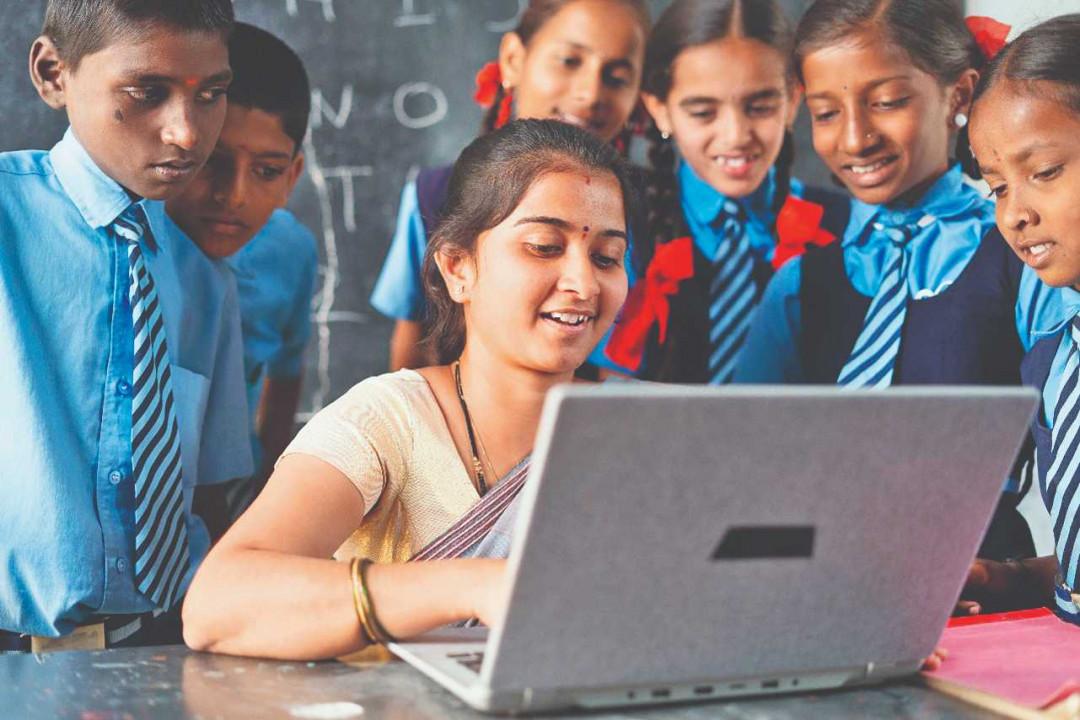
Walk into a classroom today, and it might look much the same as it did a decade ago students with books open, teachers at the front, the murmur of questions and answers filling the air. But look closer, and you’ll see something quietly revolutionary happening. A tablet on a desk giving personalized feedback. An app helping a child learn algebra at her own pace. A teacher using a dashboard to see which students are struggling with grammar. Artificial Intelligence (AI) is no longer just a futuristic idea it’s becoming a daily companion in the world of school education.
Across India, from CBSE and ICSE schools to IB, Cambridge, and state board classrooms in Maharashtra, AI is starting to shape how children learn, how teachers teach, and how schools function. This shift is not about robots replacing teachers, it’s about technology helping them reach students more effectively, creating classrooms that are more inclusive, adaptive, and imaginative than ever before.
A new kind of learning partner
For years, the traditional classroom followed a one-size-fits-all model. Every student moved at the same pace, studied from the same book, and took the same test, regardless of individual strengths or challenges. AI is gently changing that rhythm.
Today, adaptive learning tools powered by AI can assess a student’s performance and tailor lessons to their level. A child who finds fractions tricky can get extra practice and visual explanations, while another who grasps the concept quickly moves ahead to problem-solving challenges. The idea is simple: learning that adjusts to the learner.
Such tools don’t just make studying easier they make it personal. They give children agency over how they learn, making education less about memorizing and more about understanding. For teachers, this also means real-time insights into their students’ progress, allowing them to step in with the right support at the right time.
Teachers: The heart of an AI driven classroom
There’s a common fear that AI might one day replace teachers. In reality, AI is doing the opposite, it’s making their jobs more meaningful.
Teachers spend enormous amounts of time grading, maintaining records, and preparing lesson plans. AI can automate much of that routine work, freeing teachers to focus on what truly matters: mentoring, motivating, and connecting with students.
Imagine a teacher who can instantly access which students didn’t understand a concept yesterday, which ones need a confidence boost, and which ones are ready for advanced challenges. That’s what AI-enabled classrooms are making possible.
Instead of being burdened with administrative tasks, teachers can devote time to creative discussions, critical thinking exercises, or just listening to students a crucial aspect often lost in rigid systems. AI, then, becomes a co-teacher, not a competitor.
Beyond books and blackboards
AI is also changing the nature of what and how students learn. For instance, schools following boards like IB and Cambridge have already begun incorporating AI-based projects and research components into their curricula. Students learn to analyze data, understand ethical implications, and explore how machines “think.”
Even in CBSE and ICSE schools, AI modules are being introduced not just as a subject but as a mindset. The emphasis is shifting from rote learning to problem-solving, creativity, and design thinking.
A student might use an AI app to simulate a science experiment that would otherwise need a lab setup, or use a virtual assistant to practice public speaking. In language classes, speech-recognition tools can help with pronunciation; in math, visual algorithms can simplify abstract concepts.
The goal isn’t to turn every student into a coder it’s to make them AI-literate, capable of understanding, questioning, and using technology responsibly in whatever field they choose later.
Schools in Maharashtra: Finding a balance
In Maharashtra, like in many parts of India, schools are at an interesting crossroads. On one hand, urban private schools especially those affiliated with international boards are already experimenting with AI tools and blended learning. On the other, government and state board schools are taking gradual steps towards digital integration.
The key challenge lies in ensuring that AI doesn’t widen the gap between the two. Fortunately, many initiatives are focusing on equity: digital resource centers, teacher training programs, and AI-driven education dashboards that help schools track learning outcomes more efficiently.
Maharashtra’s educational vision has also emphasized something important, while embracing AI, schools must stay rooted in culture and values. Technology should enhance, not erase, our sense of identity. So while students may learn about machine learning, they’ll also learn to ask what it means for society, fairness, and humanity.
The student’s view: Learning becomes lively
For students, AI makes learning more interactive and even fun. A history lesson might come alive through virtual reality tours of ancient civilizations. A geography class might involve predicting climate patterns using data.
These experiences engage multiple senses, making information easier to remember. For children who struggle with traditional methods whether due to learning differences or language barriers AI offers new pathways. Text-to-speech tools, translation aids, and visual learning platforms make classrooms more inclusive.
And because AI can provide instant feedback, students don’t have to wait until the next day to know whether they’ve understood a topic correctly. The learning loop becomes immediate, active, and responsive.
Ethics and empathy: The new lessons
As AI becomes a larger part of education, schools are also realizing the importance of teaching about AI, not just with it. What does it mean for a machine to make a decision? How do we know if an algorithm is fair? Should students use AI tools to write essays or solve homework?
These are real ethical questions that today’s children will face tomorrow as adults. Schools are beginning to weave discussions on digital ethics, data privacy, and responsible technology use into everyday subjects.
Interestingly, this shift has also brought empathy and values back into focus. As AI takes over mechanical tasks, the distinctly human qualities creativity, compassion, moral judgment are gaining renewed importance in education. The best schools are now talking as much about emotional intelligence as artificial intelligence.
There’s the question of balance. Children already spend so much time on screens. Schools must ensure that AI doesn’t replace human interaction or reduce education to data points. The best classrooms of the future will blend technology with touch, ensuring that learning remains as human as it is intelligent.
A classroom without walls
AI is also extending learning beyond the classroom. Students can now access lessons, quizzes, and feedback from home. In hybrid and online models, teachers can continue to track progress and offer guidance even outside school hours.
This has made education more resilient something the world discovered during the pandemic years. If schools can use AI to support learning continuity, it ensures that education remains flexible and inclusive, even in times of disruption.
Moreover, global collaborations are becoming easier. A student in Mumbai can work on an AI-driven project with a peer in Singapore or London, learning not only science and coding but teamwork and cross-cultural understanding. Education, once confined to textbooks and timetables, is now open-ended, borderless, and dynamic.
Parents and the AI generation
Parents, too, are part of this evolving story. Many initially view AI tools with suspicion will they distract more than they help? But as they see how these platforms track progress, highlight strengths and weaknesses, and even suggest revision methods, trust grows.
AI can also help parents stay connected to their child’s academic journey, offering updates and insights that go far beyond report cards. This builds a shared responsibility between schools and families, creating a more holistic learning ecosystem.
The heart of it all:
Human intelligence
Despite all the innovation, one truth remains constant: education is, at its core, a human endeavor. AI can analyze, assist, and automate but it cannot inspire. That spark still comes from the teacher who knows when a child needs encouragement, or the peer who explains a tough problem in a new way.
In the end, the goal of AI in education isn’t to outsmart humans, it’s to empower them. It’s about helping teachers teach better, helping students learn better, and helping schools function better. When used thoughtfully, AI can be the silent partner that lets the classroom thrive.
Looking ahead
The next decade could be transformative for school education in India. If used well, AI can help bridge learning gaps, promote critical thinking, and prepare students for jobs and challenges that don’t even exist yet.
CBSE, ICSE, IB, Cambridge, and Maharashtra’s state board schools are all at different stages of this journey. Some are running pilot projects; others are integrating AI subjects; many are simply experimenting. But the direction is clear education is moving towards personalization, inclusivity, and lifelong learning.
The dream is a classroom where every child, regardless of background, learns at their own pace, in their own style, guided by teachers who have the time and tools to truly nurture curiosity. A classroom where AI amplifies not replaces the magic of learning.
From artificial to
authentic
AI in school education isn’t about replacing chalk with code. It’s about making learning authentic. It’s about understanding that intelligence whether artificial or human works best when guided by empathy, imagination, and ethics.
As schools in Maharashtra and across India embrace this new era, the focus should remain clear: technology is a means, not the end. The real success of AI in education will not be measured by how many tablets a school owns, but by how deeply students think, how creatively they act, and how responsibly they live in an AI-powered world.
The future of learning, then, is not just artificial it’s profoundly human.
Copyright © 2025 Mid-Day Infomedia Ltd. All Rights Reserved