Home / Mumbai / Mumbai News / Photos /
IN PHOTOS: Tiny tots from Mumbai playgroup lead procession on eve of Gudi Padwa in Lower Parel
Updated On: 18 March, 2026 08:33 PM IST | Tarun Verma
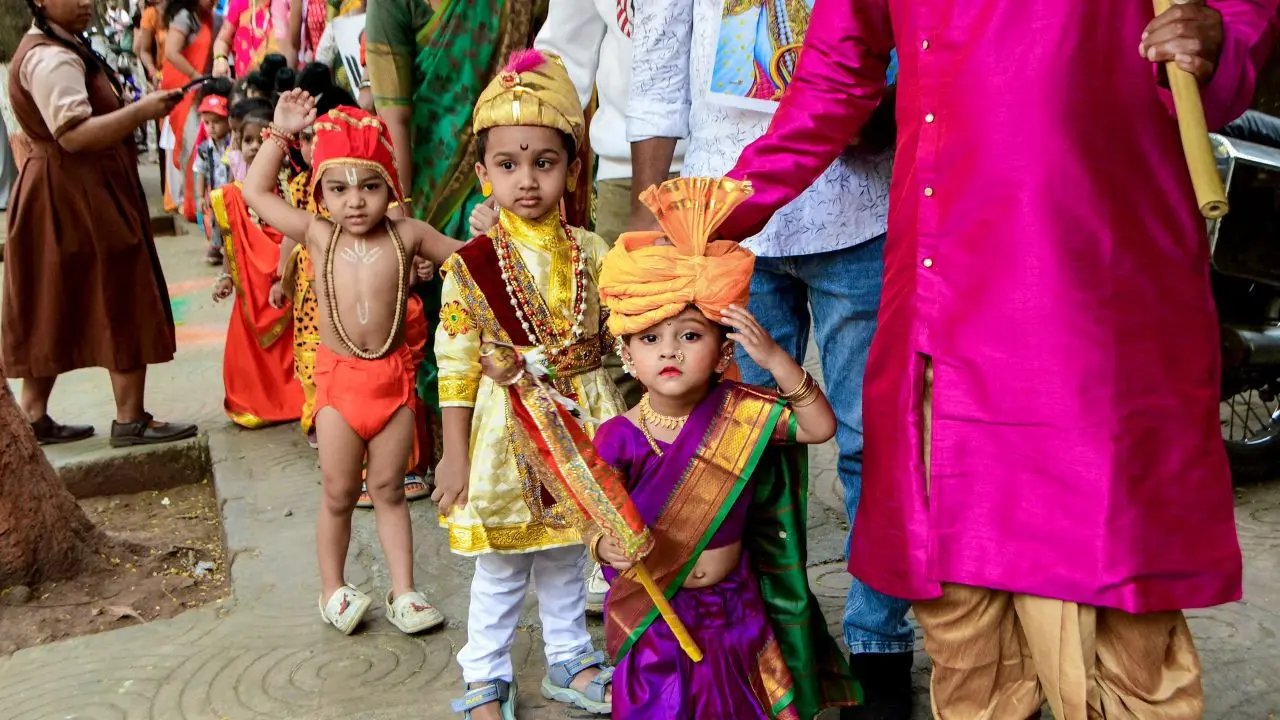
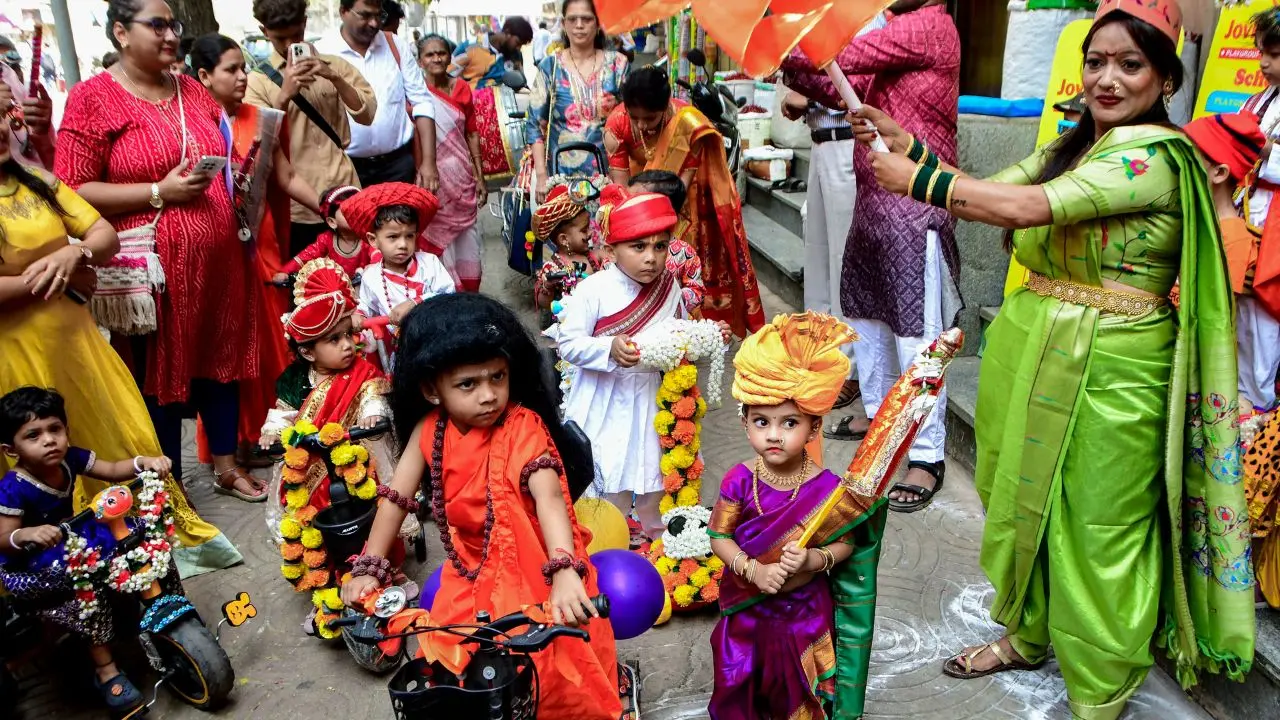
Children from a playgroup, dressed in colourful traditional and themed costumes, took part in a cheerful welcome procession on the eve of Gudi Padwa in Lower Parel, adding joy and festive spirit to the Marathi New Year celebrations (Pics/PTI)



1/6
2/6
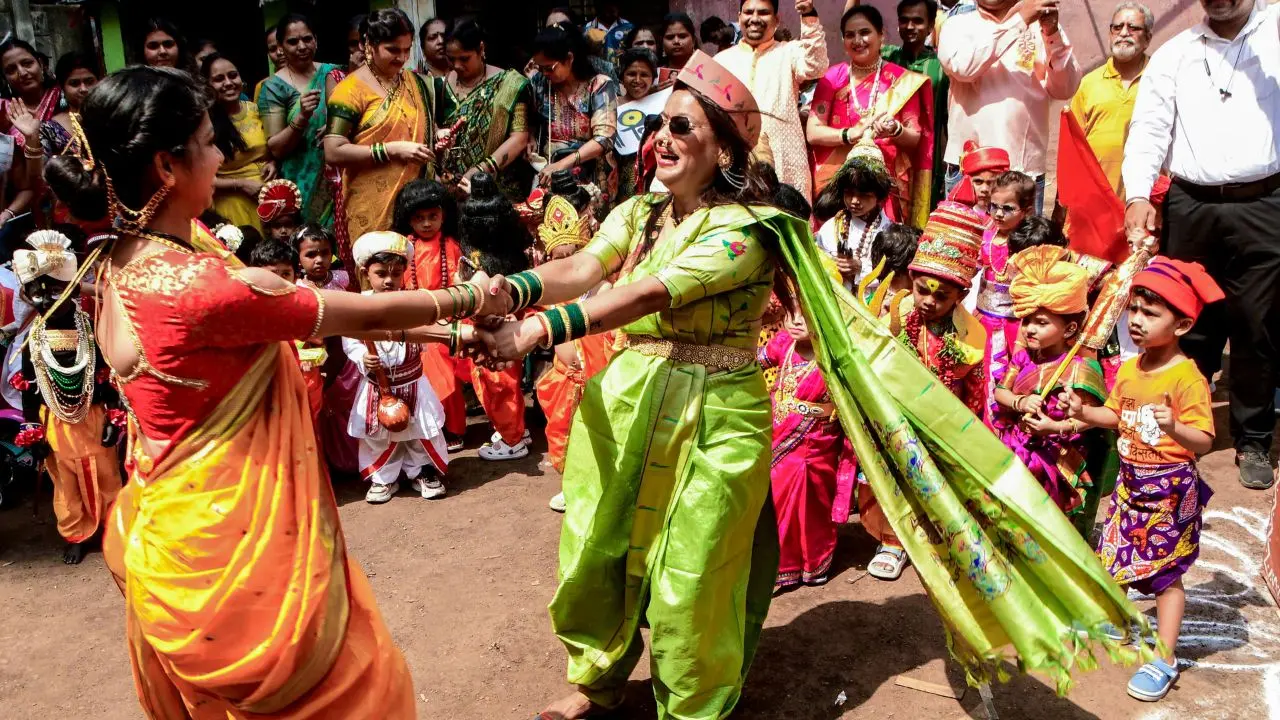
Women dressed in traditional nauvari sarees play fugdi during a Gudi Padwa procession in Mumbai
ADVERTISEMENT
3/6
Gudi Padwa is the vibrant traditional New Year festival celebrated by Marathi and Konkani Hindus on the first day of the Chaitra month (March–April), marking the arrival of spring and the new harvest. It symbolises victory, prosperity and new beginnings, and is marked by hoisting a “Gudi” flag, creating rangolis, and enjoying festive sweets

4/6
The Gudi itself represents victory, often associated with Lord Rama’s return to Ayodhya or the triumph of King Shalivahana. Marathi families wake up early, take an oil bath, and hoist the gudi outside their homes, windows or doors. Many also consume a mixture of neem leaves and jaggery, symbolising acceptance of both bitter and sweet experiences in life. Streets fill with processions and traditional dances such as lezim, while homes are decorated with lights and colourful rangolis
ADVERTISEMENT

5/6
A 25-foot-tall effigy of Veer Savarkar has been put up ahead of the Gudi Padwa celebrations in Girgaon
6/6
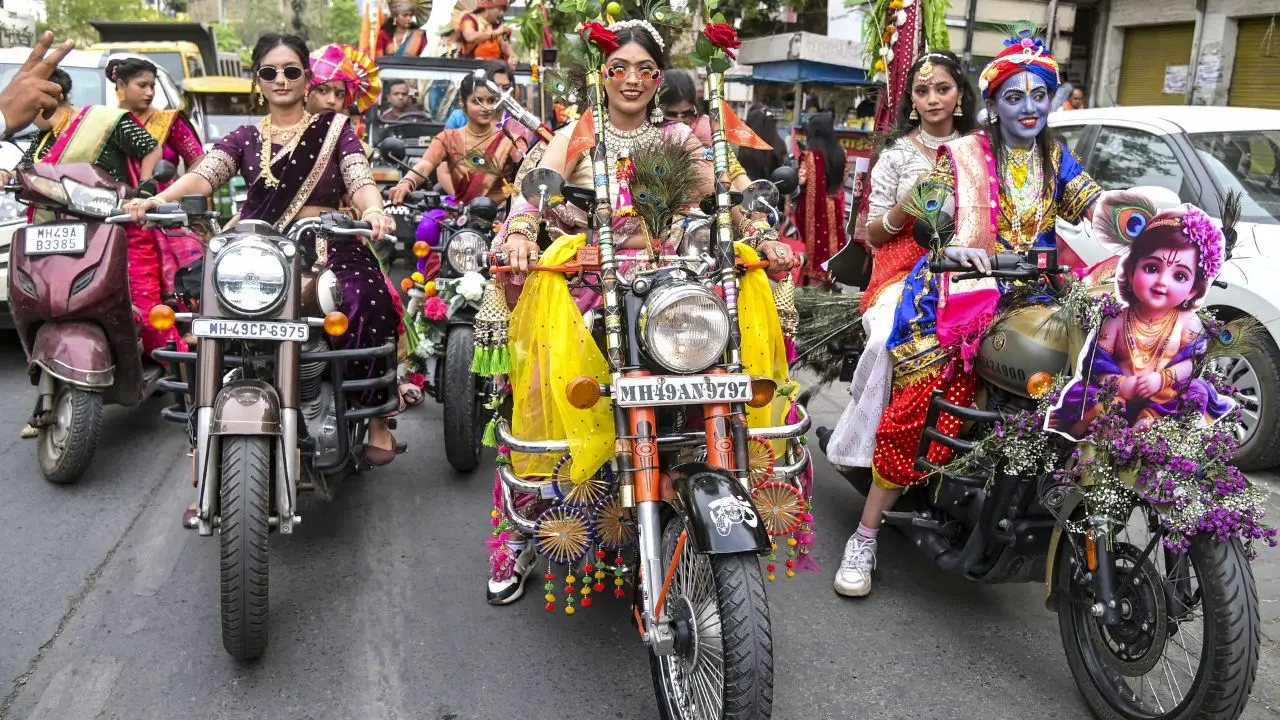
Meanwhile, in Nagpur, women dressed as Lord Krishna took out a bike rally on the eve of Gudi Padwa
ADVERTISEMENT
ADVERTISEMENT
Photo of Day
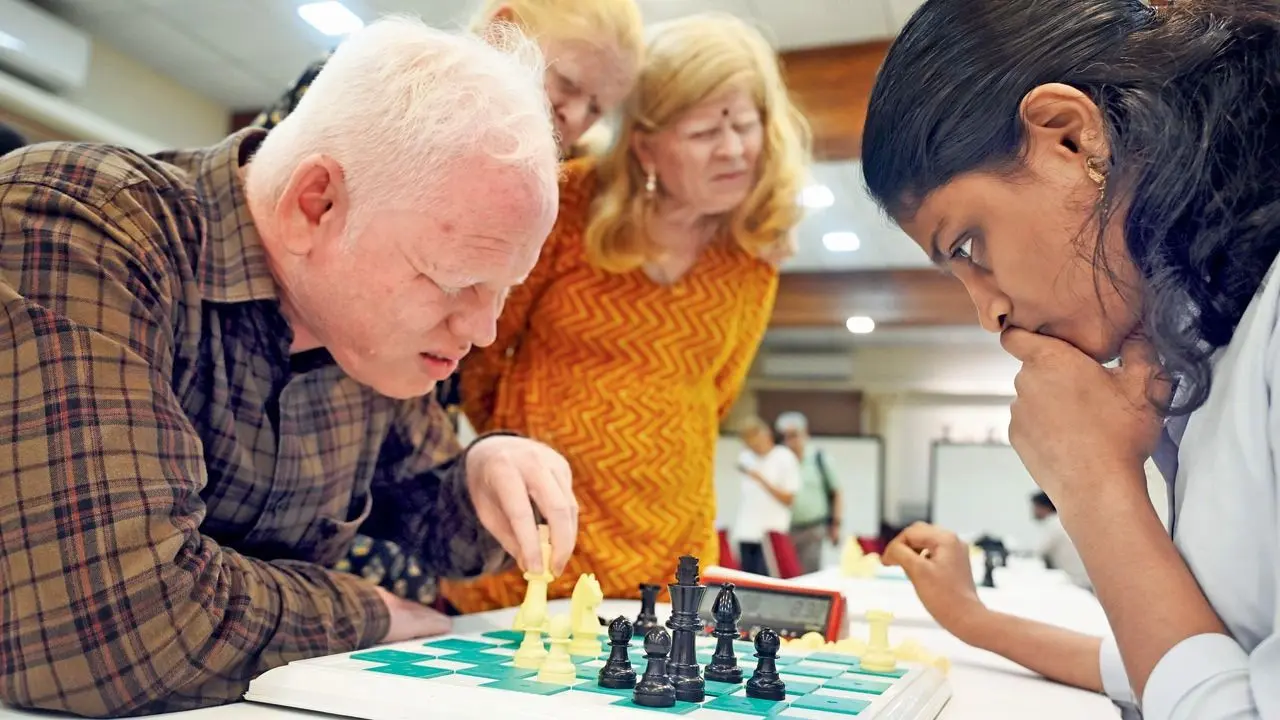
Silent checkmate
Roshan Diware (left) plays against Pragti Tupe while sisters Sarita Karde and Vaishali Savarkar watch, at the Mind Over Sight Chess Championship in Churchgate on Sunday. Pic/Ashish Raje
ADVERTISEMENT