Home / Mumbai / Mumbai News / Photos /
IN PHOTOS: Heavy vehicles cause peak-hour traffic congestion on Mumbai flyovers
Updated On: 06 March, 2026 01:43 PM IST | Asif Ali Sayed
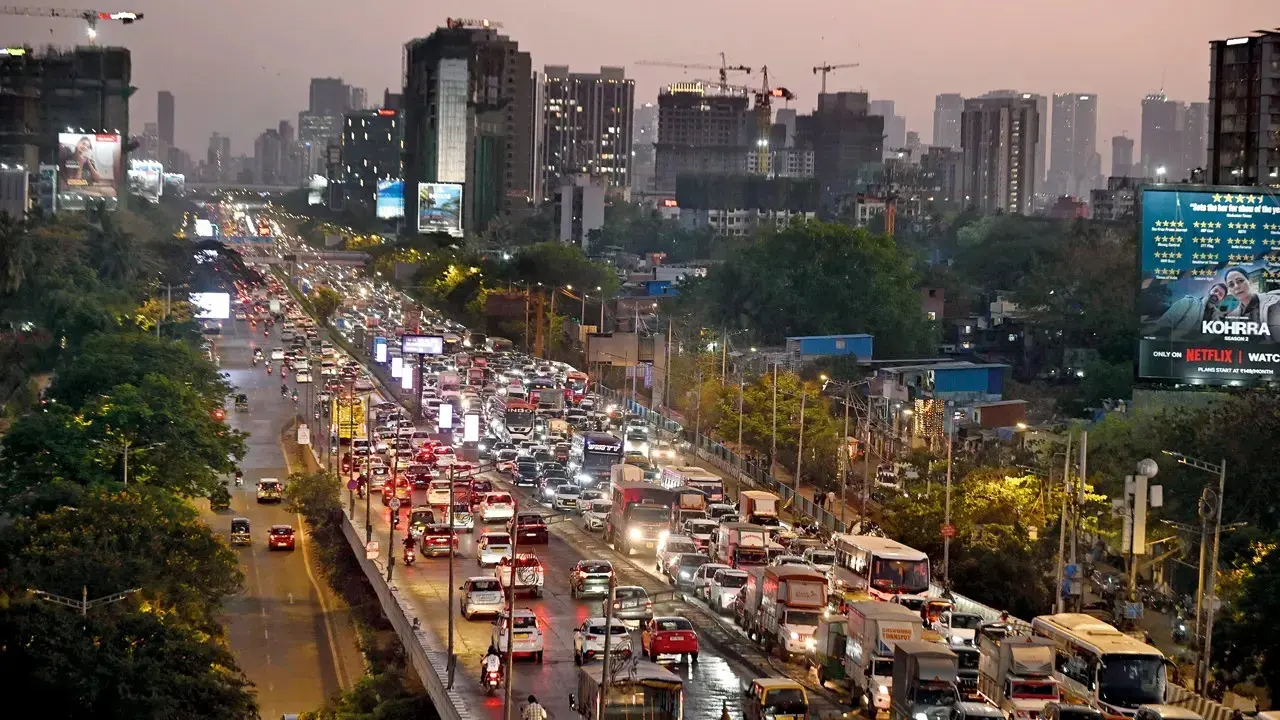
Mumbai’s flyovers, built to ease traffic at junctions and signals, are increasingly clogged during peak hours due to the movement of heavy vehicles. Mid-day recently conducted a test drive on both corridors to reveal that the extensive use of flyovers by outstation buses and goods carriers is causing congestion. City-based transport experts believe that easing congestion on arterial routes requires barring heavy vehicles from flyovers. According to the traffic police, the movement of heavy vehicles is restricted from 8 am to 11 am and 5 pm to 9 pm. Pics/Satej Shinde, Ashish Raje and Ranjeet Jadhav (Story/Ranjeet Jadhav and Rajendra Aklekar)



1/6
2/6
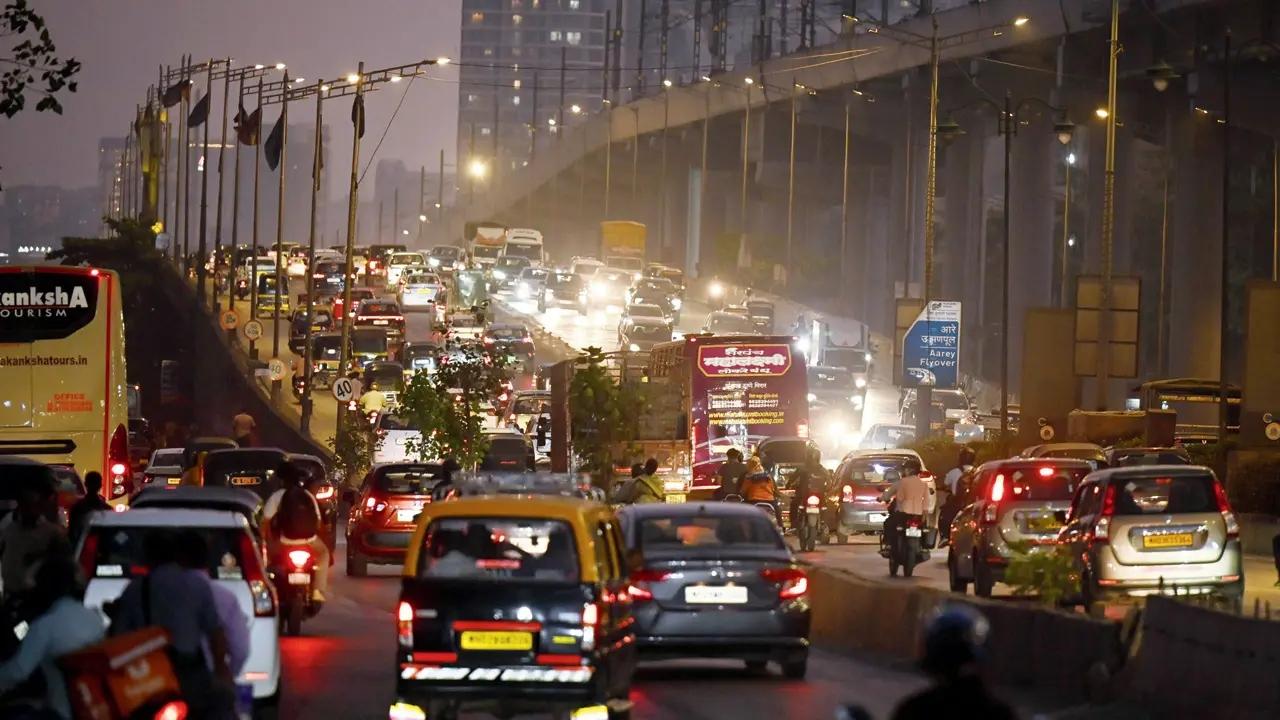
Aarey Colony flyover: A visit during evening peak hours revealed that congestion on the flyover and its approach roads was caused by slow-moving goods carriers, heavy vehicles, and outstation buses. In contrast, the northbound lanes below the flyover were mostly vacant
ADVERTISEMENT
3/6
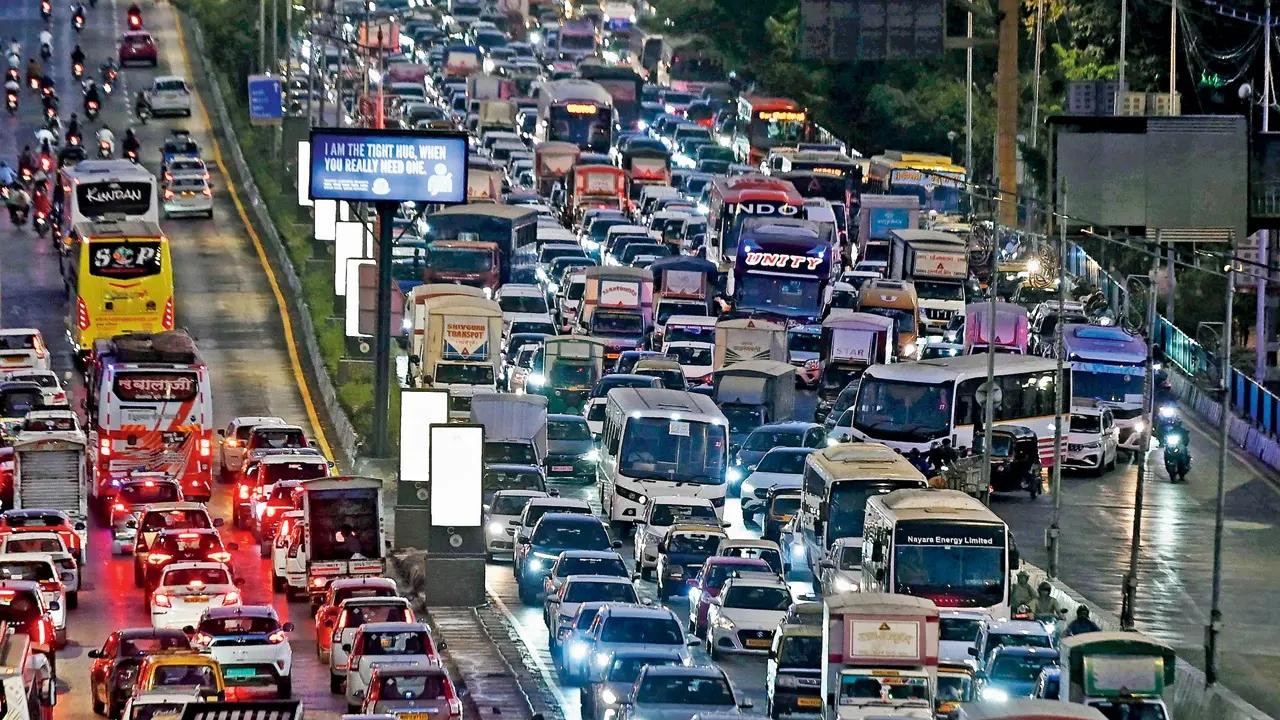
Kalina Vakola flyover: During evening peak hours, traffic slowed to a crawl on the flyover and approach lanes primarily due to the movement of goods carriers, heavy vehicles, and outstation buses. It was also observed that the northbound lanes beneath the flyover were largely empty. Diverting goods carriers, outstation buses, tempos, and trucks onto these lanes could make a difference
4/6
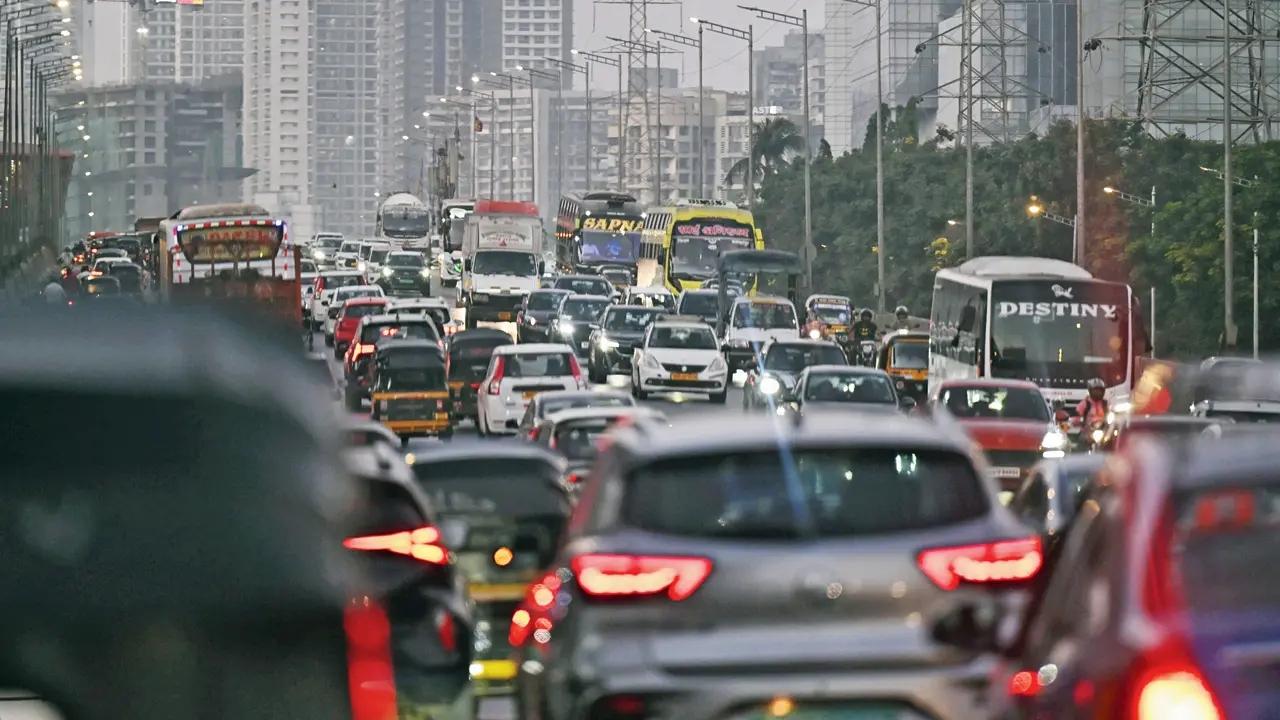
An official from the transport department said, “Allowing slow heavy vehicles on steep flyover gradients during peak hours can reduce effective capacity — but legally, unless notified otherwise, they are permitted. Restrictions, where imposed, are usually time-based”
ADVERTISEMENT
5/6
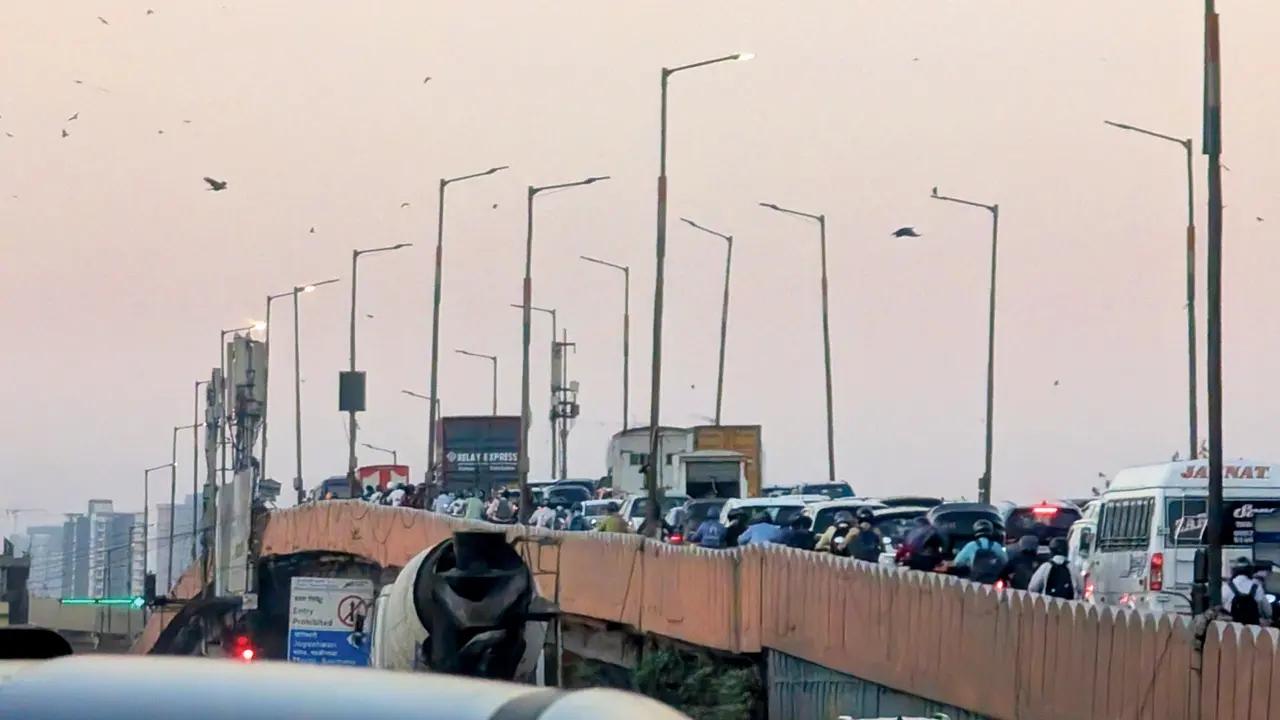
Kanjurmarg flyover: While traffic congestion on the Eastern Express Highway (EEH) is relatively lower than its western counterpart, during a trio from Sion to Ghatkopar similar issues were witnessed. Buses and small- to medium-sized goods carriers were seen plying the Kanjurmarg flyover, leading to congestion, even as the lanes beneath remained largely empty. Diverting buses, goods carriers, and other heavy vehicles to the service lanes below the flyover could ease congestion considerably
6/6
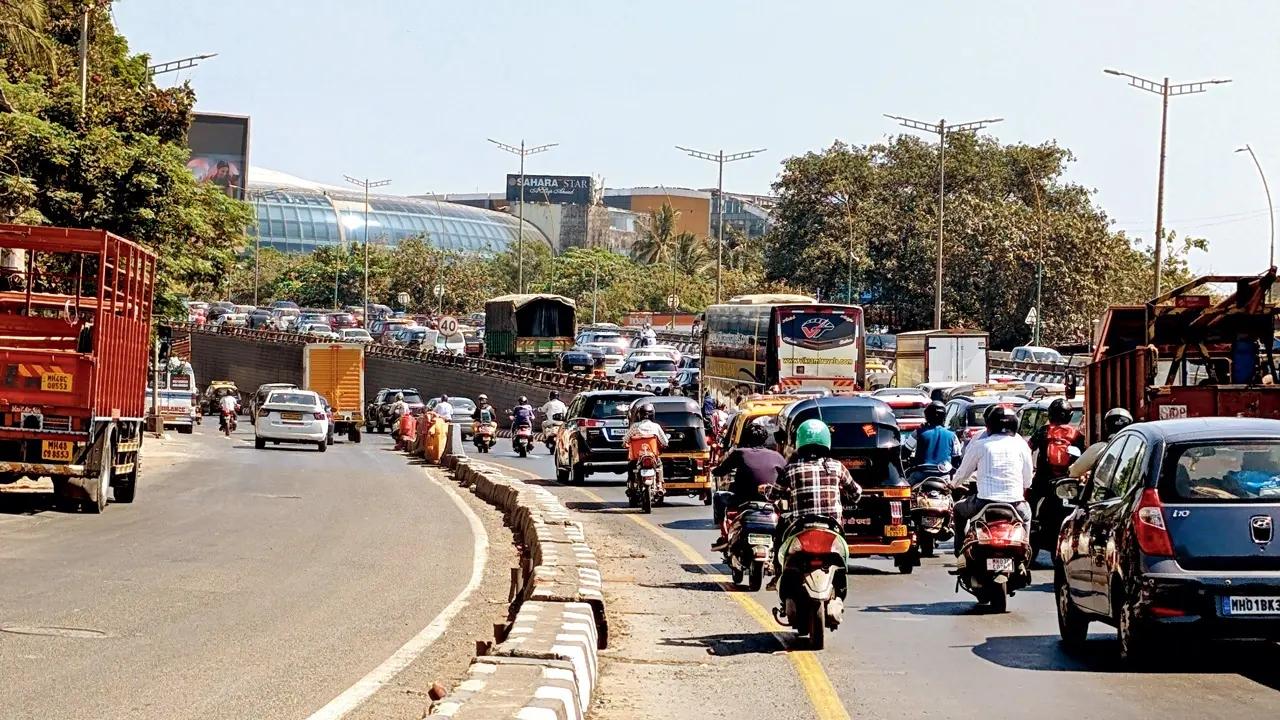
Domestic airport flyover: In the northbound direction, tempos, small and medium goods carriers, and buses could be seen using the flyover, which appears to be a key reason for bumper-to-bumper traffic in this area during both morning and evening peak hours
ADVERTISEMENT
ADVERTISEMENT
Photo of Day
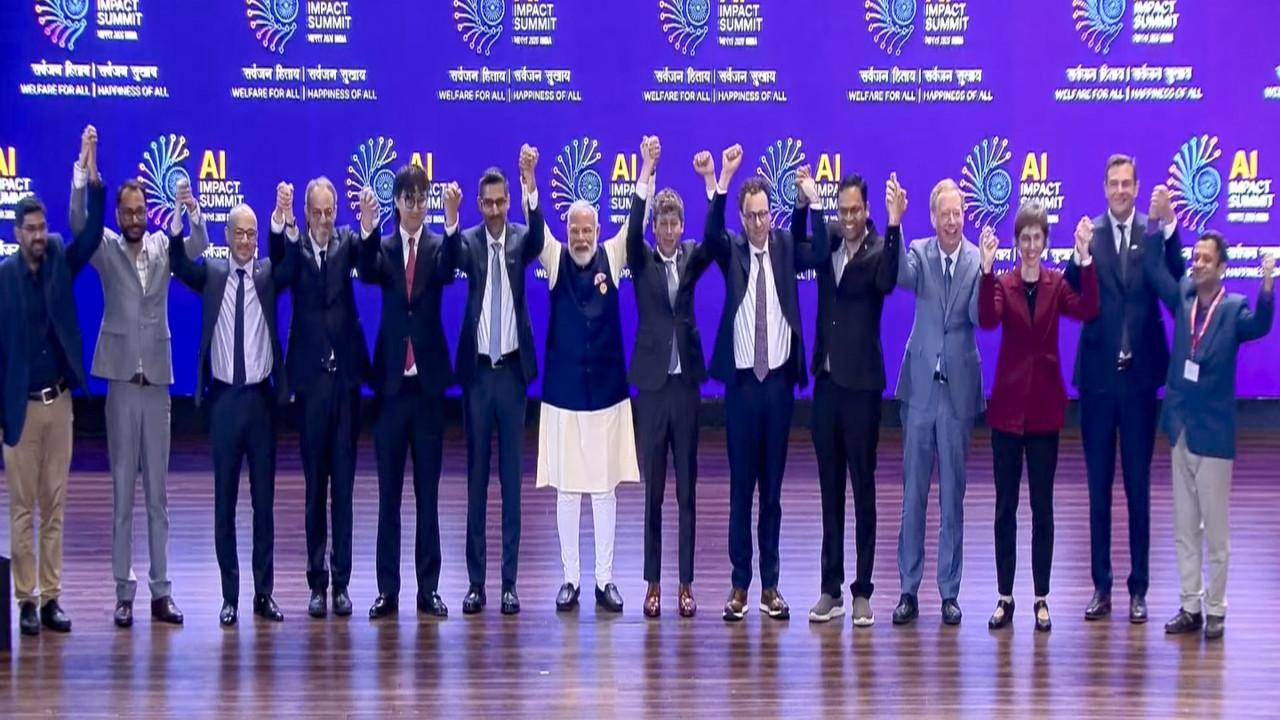
Global AI leaders join PM Modi in a bid to push for a smarter, inclusive future
PM Narendra Modi joins hands with Google CEO Sundar Pichai, OpenAI CEO Sam Altman, and others during the India AI Impact Summit 2026, in New Delhi. PIC/PTI
ADVERTISEMENT