‘My kids will never know the Bandra I grew up in’

06 September,2026 09:02 AM IST |  Mumbai  |  Arpika Bhosale

An eight-year-old boy getting run over just outside his neighbourhood park in Bandra is yet another sign to lifelong residents that their once sleepy, safe suburb is quickly becoming history amid rampant gentrification and redevelopment

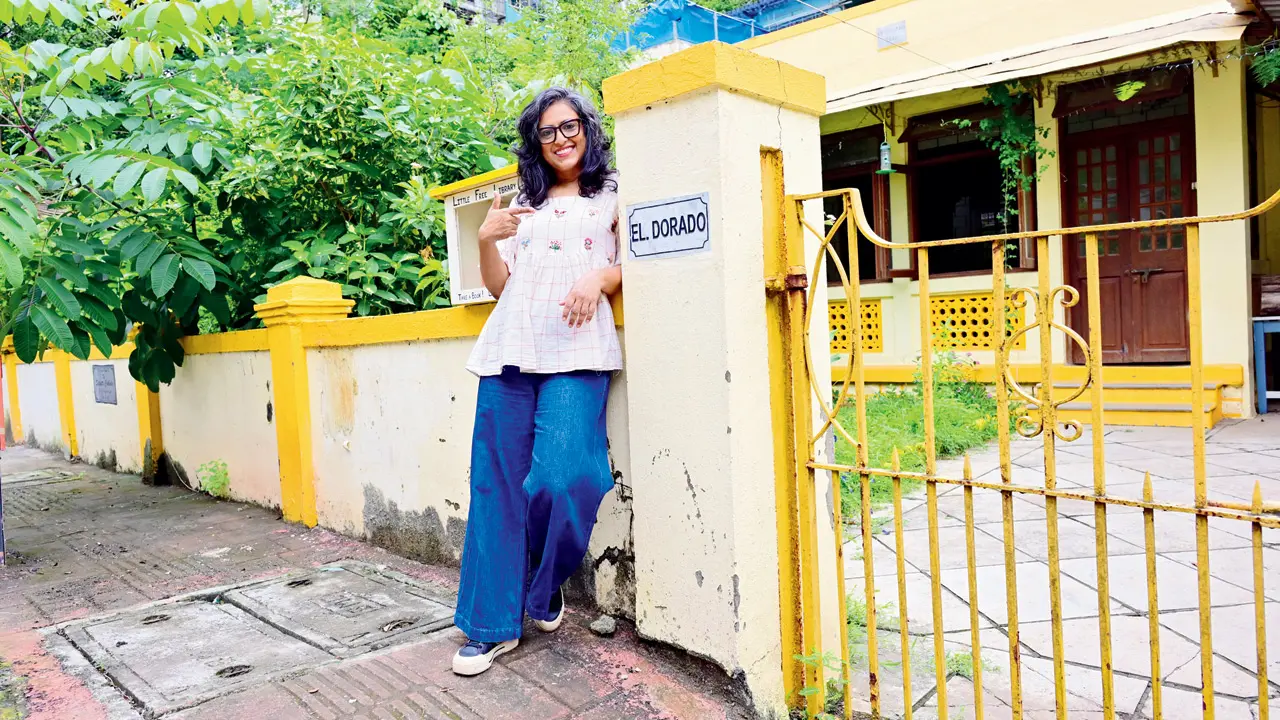
Shormishtha Mukherjee outside one of the Bandra homes, EL DORADO, that still remains standing in a wave of redevelopment. PICS/SHADAB KHAN


Your browser doesn’t support HTML5 audio

When we heard that an eight-year-old was run over by a car in Bandra, we wanted to see for ourselves if it was infrastructure failure to blame, negligence, or none of the above. So a couple of days after the accident, on a Tuesday afternoon, we headed to the spot on John Baptist Road.

To our left was the Veermata Jijabai Bhosale Kridangan, and on the right, the boundary walls of housing societies. The lane itself was almost too quiet; the vendor at a milk stall a little ahead of the garden was the only one willing to speak to us.

"The road hardly has any traffic, to be honest, and the accident happened on a Sunday afternoon, so it was even quieter than it is now," he tells us. "To be honest, it was a freak accident. The boy was playing cricket in the garden, the ball bounced out onto the road, he chased it, and the woman ran him over. It is no doubt a tragedy," he adds.


The area in which the eight-year-old lost his life in the accident

While early reports had alleged that the woman at the wheel was distracted by her phone, the milk vendor's account seems to match what the motorist, 45-year-old nutritionist Megha Rawal, has stated: that her call data record (CDR) proves she wasn't on a call while driving.

While the facts of the case are yet to be established by the police, the accident has made the locals confront an uncomfortable truth: Bandra is no longer the slow, safe haven where a child can simply play in his neighbourhood - he lived just a building away from the garden - without the fear of oncoming traffic rushing towards the latest cafe to sprout in the suburb.

In the last six to seven years alone, residents have witnessed Bandra become increasingly unrecognisable. Redevelopment is steadily stripping the villages of the charming bungalows that have always been Bandra's highlight. Meanwhile, bougie cafes (no pun intended) are a dead giveaway of gentrification of historically East Indian and Koli hamlets. One can't help but liken it to what happened in Brooklyn, New York City, in the 1940s and 1950s, as African-American and Latinx residents were edged out of their neighbourhoods as beanie-wearing hipsters and overpriced artisanal cafes took over the borough.

This story is Sunday mid-day's love letter to the suburb that this paper also calls home. Much like Brooklyn, Bandra is now unaffordable for many of its original inhabitants, whether that's because of skyrocketing rent, or the impossible cost of maintaining bungalows. At the same time, the need to make way for the new generation of Bandraites cannot be dismissed.

We cannot stop progress, but we can always tarry a little longer.

‘Managing chaos and traffic is the cafe owner's responsibility'

Shormistha Mukherjee came to live in Bandra 24 years ago and is the mind behind the Instagram page @housesofbandra

We tell Shormistha Mukherjee about our conversation with Bernie Tellis, and Mukherjee is very conscious of the fact that, in comparison, she is a newbie to Bandra. "Most people think I am very new. Just 24 years," she says. We tell her that not everyone needs to live in Bandra for 100 years to love and treasure it, like she has. She chuckles.

Talking about the genesis of @housesofbandra, the Instagram page where she documents the hood via architecture, culture and oral history in the Queen of Suburbs, Mukherjee says it started with her obsession for walking and cycling around the suburb. "As I walked and cycled, I thought that maybe I should document it all. Because for me, if you don't know your past, how will you make sense of your present?" she says.

Mukherjee believes that change is the natural order of things, but she just wanted to bear witness to what we're losing in the process. "So the idea was not make judgment or anything like that, but just document how Bandra was before," she adds.

To newer residents now making this suburb their home, she says, "If people want to come in and live here, but don't want to know anything about its history, I am very non-judgmental on these things. But if even one out of 10 people wants to know more, then this [Houses of Bandra] is for you." The digital archive on Bandra has a print avatar as well, with Mukherjee publishing a book titled Pudding. It is now going for a second reprint.

As far as the overcrowded cafes that most locals cannot afford, Mukherjee feels it's the responsibility of the cafe to manage the chaos. "I feel like the responsibility lies with the cafes. You come, open a cafe in a village, then it's your responsibility to manage the traffic and crowd, to ensure you don't disturb the fabric of the village. That culture is why you opened a shop there, right? So you can't go and ruin that calm," she says.

‘Earlier, we'd spot maybe one car in the entire neighbourhood'

Bernie Tellis, is a third-generation Bandra resident, will soon see her childhood home turn into a high rise

Bernie Tellis, an educationist, freelance writer, social activist sounds like a woman with a can-do spirit and who wears her opinion well. After initial introductions, Tellis wants to get down to business. "Okay now, let's get started. Tell me what you want to know," she commands, and we can't help but smile over the call.


Bernie Tellis is third generation Bandra resident and says that change is inevitable

The 79-year-old was born and raised in Bandra. "My family has been living here for around 92 years. Our house was at the crossroad of Mount Carmel and Rebello Road just behind Mehboob Studio. It's gone for redevelopment. It was once named Belvedere; now 9 Belvedere, and it's going to be 19 floors tall," she says, adding that she is staying on rent nearby until the house is handed over to the new owners.

Everything around the house is changing too. Now, cars parked along the roads make it near impossible to take a walk. Tellis recalls a time when "There was maybe one car that you might spot in the neighbourhood.

And that too would be a car given by the office; no one owned a personal car here in those days," says Tellis whose family has lived in Bandra for 92 years and counting.

Tellis reminisces about a childhood spent fishing and staying in tents behind her home during summer vacations, building a clubhouse in the backyard, and roads that had not a drop of cement.

We ask how she feels about the changes. "You cannot stop change; at the same time, with the towers will come new people who don't know us, don't understand the culture and community of this hamlet. Infrastructure hasn't kept pace with rapid redevelopment" she rues.

Before we even ask her if she'd ever move out of Bandra, perhaps to her native home in Mangaluru, she quotes a Walter Scott poem - The Lay of the Last Minstrel - "Breathes there the man, with soul so dead, Who never to himself hath said, This is my own, my native land!"

"I have lived here all my life and hope to be buried here I will be buried here," she finally says.

‘Community spaces are shrinking'

Footballer Brian D'souza has petitioned the Bombay HC and got a stay on the conversion of the iconic Neville D'souza ground into an exhibition centre

Brian D'souza, 50, has realised that he doesn't know most of his neighbours anymore. "When riding around to meet friends, I realised how much had changed, not only open spaces lost , each bungalow had a garden, which is now a parking space, but you hardly know anyone in the new buildings. Earlier we knew almost 80 per cent of the residents by name. Today, as the high rises come, we are losing our sense of community," he says.


Brian D'souza at Neville D'souza ground that might be levelled for a exhibition turf says its a key socialisation ground

The threat to iconic Neville D'Souza football ground - tipped to become an exhibition centre - is another symptom of what is happening to the suburb, he says. "It's not just a playground; it's more a place for the football community to gather. Where kids start their initiation into the game, from under eight , onwards. It's almost like a right of passage. Its where players who have trained here who have gone on to play for the state and country," he says. The footballers here remain friends for a lifetime. "The bond the players have with the ground is indescribable," he adds.

‘Can't even take my kids out for a walk here'

Born and raised here, Joan Fernandes, moved out with her family to escape the constant digging, chaos and dust

Bandra-born Joan Fernandes took a call to move to Goa in 2022. Her son suffered from bronchitis, and needed some space to breathe, especially with the spectre of COVID-19 still looming over their heads. "In Goa, my kid's bronchitis was in control, and they wouldn't get as sick as much. But it was quite bad when we were in Bandra," she says.

And unlike her childhood memories of walking and cycling with abandon in the villages, Fernandes's children could barely step out because of the rampant construction, broken footpaths, and dug-up roads. "It had become difficult to take my kids out even for a walk, which was something we could enjoy in the nature in Goa," she adds.


Joanna moved away from Bandra after it became unlivable

The final nail in the coffin were the exorbitant school fees Bandra schools sought, as the suburb was steadily occupied by the affluent. "They told us to pay Rs 5 lakh for KG and Junior KG," she recalls.

As luck would have it, the family was already pursuing emigration to Australia by this point, and it ended up working out. "We have been in Melbourne since 2025. It just came down to wanting a better life, education, and health for our children. Here we get all. Every time we return to Bandra, we realise just how much we were missing when we lived here," she adds.

‘The policy now, spells doom'

Alan Abraham, a well-known architect who lives in Bandra, feels that maintaining the balance between businesses and community is the need of the hour

Alan Abraham has been a advocating for better fusing of community and development for years.

So when we really wanted to know what he felt about the rampant development of his neighbourhood. "Bandra's population is increasing, but its civic spaces, parks and social infrastructure - including hospitals, schools and open spaces, and other basic amenities - are not keeping pace," he says.


Architect Alan Abraham. FILE PIC/ASHISH RAJE

Abraham also points out that current infrastructure policy does not work. "We need a balance where businesses can grow without pushing out the local community or destroying the culture and charm that made Bandra special. This has to happen through policy, and it has to happen now. The current policy is causing doom," he adds.

We ask Abraham if he feels that this feels akin to Brooklyn's gentrification. "I agree there are some parallels, especially the way rising property values and new businesses can change a neighbourhood. But Bandra is different because its history, communities and cultural mix are very unique. We should learn from other cities, but find a solution that works for Bandra." he adds.

"Exciting news! Mid-day is now on WhatsApp Channels Subscribe today by clicking the link and stay updated with the latest news!" Click here!
mumbai Bandra Lifestyle news culture news infrastructure development
Related Stories