Civis CIPCA 2026 highlights inclusive public consultations in India, improving transparency and participatory governance.

Civis CIPCA 2026
As public consultations gain greater visibility in India’s law- and policy-making process, the question is no longer only whether governments seek feedback, but how meaningfully they do so. The Civis India Public Consultation Awards (CIPCA), a flagship initiative by Mumbai-based civic technology organisation Civis, recognises exemplary public consultations and helps set standards for more inclusive, accessible, and accountable governance.
Civis hosted the third edition of the Civis Public Consultation Awards (CIPCA) 2026 in New Delhi, bringing together senior policymakers, regulators, researchers, and practitioners to recognise institutions advancing more transparent, inclusive, and responsive governance.
The Best Consultation – Ministry award was presented to the Ministry of Electronics and Information Technology (MeitY) for its consultation on the Report on AI Governance Guidelines Development from Public Consultation. The Best Consultation – State Government category saw a tie, with awards going to the Government of Maharashtra for the Draft Maharashtra Factories (Amendment) Rules, 2025, and the Government of Odisha for the Odisha State Data Policy. The Best Consultation – Statutory Body award went to the Telecom Regulatory Authority of India (TRAI) for its consultation on the Regulatory Framework for Ground-based Broadcasters. The Special Mention – Volume of Consultations was awarded to the International Financial Services Centres Authority (IFSCA) for integrating consultations across 66% of its regulatory activity.
This year, CIPCA assessed 390 public consultations conducted in FY 2024–25, from which 45 were shortlisted and 18 nominated across Ministry, State Government, and Statutory Body categories, alongside a Special Mention for sustained consultation volume. The jury included Dr. K.P. Krishnan, former Secretary, Ministry of Skill Development and Entrepreneurship; Dr. M.S. Sahoo, former Chairperson, Insolvency and Bankruptcy Board of India; and Dr. Ajay Shah, Co-founder, XKDR Forum. Dr. Renuka Sane joined as Amicus.
Through its work, Civis has now facilitated feedback on over 1,000 draft laws and policies, gathering more than 8 lakh citizen inputs from 700+ cities and towns across India. Now in its third edition, CIPCA serves not only as a platform to celebrate exemplary consultations, but also as a lens on how public institutions are evolving. In a policymaking landscape where practices remain uneven, the awards spotlight institutions taking consultation seriously while underlining a wider opportunity of not just increasing the number of consultations, but building the systems, culture, and vision to make participatory policymaking more consistent, credible, and consequential over time.
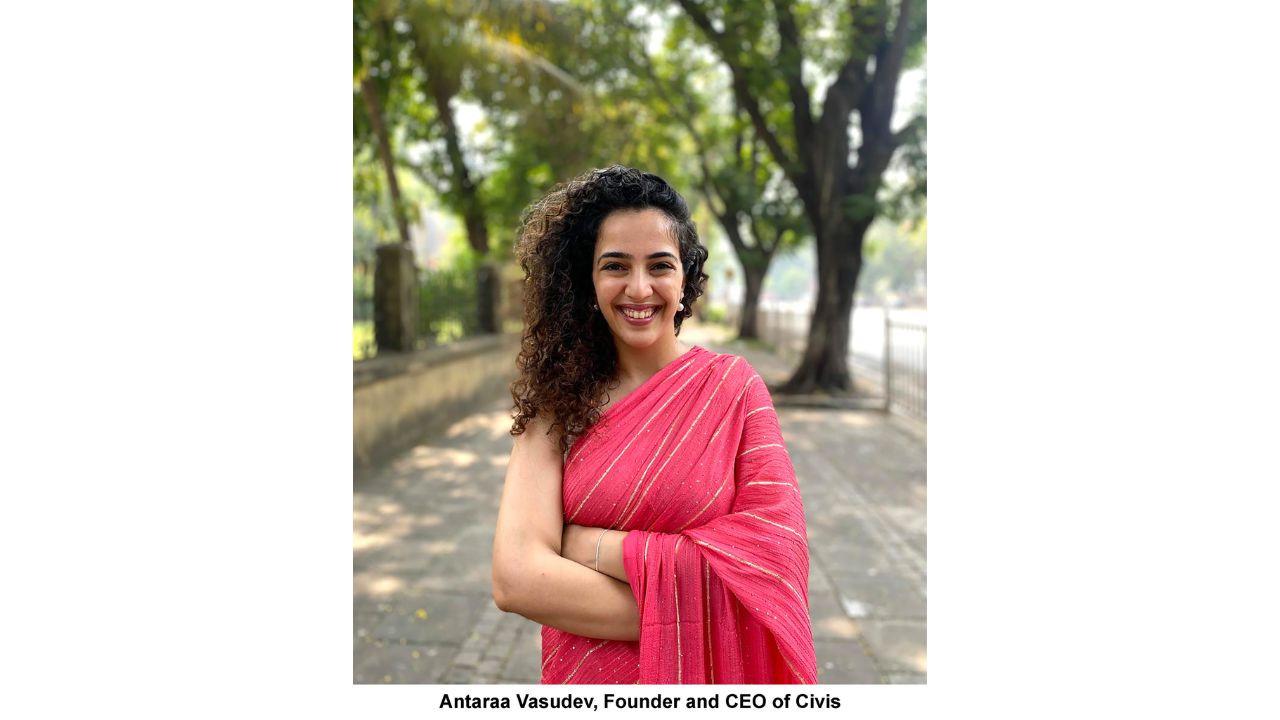
In this conversation, Antaraa Vasudev, Founder and CEO of Civis, reflects on what these consultations reveal about the evolving culture of public participation in India.
1. Public consultations in India are often seen as formalities rather than meaningful democratic exercises. What’s your take on it?
Outside voting, civic participation in India is better described as thin and uneven than absent. More often, there is a gap in awareness of formal opportunities to participate, such as public consultations. For a long time, consultations have functioned as a procedural checkbox: draft policies hidden on inaccessible portals, uploaded as jargon-heavy PDFs, with little visibility on what happens to submitted feedback.
That is beginning to change. Across public institutions, consultations are being designed with greater attention to comprehension, access, and accountability. The landscape remains uneven, but there are clear signs that some institutions are taking consultation design more seriously. Recognising such early movers is important because it helps set new standards for what good consultation can look like.
2. What did this year’s Civis India Public Consultation Awards reveal about those emerging standards?
The first is readability. Overall, 68% of consultations scored high on comprehension. This has taken the form of explanatory notes, structured questionnaires, and visual aids such as charts, tables, and illustrations. Regulatory bodies such as TRAI and IFSCA included annexures with glossaries of key technical terms.
The second trend is inclusion by language. Nearly one-third of consultations were published in English and Hindi formats, including almost half of those issued by ministries. This remains closer to a minimum threshold than a standout practice.
The third trend is the rise of hybrid consultation models. More than half of the consultations had two or more avenues for feedback, including public hearings and email responses. Bodies such as the Madhya Pradesh Electricity Regulatory Commission and the Central Electricity Regulatory Commission regularly conduct public hearings as part of their consultation processes.

3. You mentioned language inclusion. In a multilingual democracy like India, how does that impact accessibility?
Meaningful access depends not just on bilingualism, but on using languages in which affected communities actually engage. The stronger signal this year came from state consultations, where 25.5% were published in regional languages.
4. What does the rise of hybrid consultation models tell us about how institutions are approaching participation?
Some institutions are beginning to respond to the on-ground reality that different stakeholders participate differently. Not everyone will send a written email response. Some people may prefer a hearing, some may respond better to a structured questionnaire, and others may engage more effectively when there are multiple channels available.
This reflects a more responsive understanding of participation itself. These are not cosmetic shifts. They lower the cost of participation and raise the quality of engagement.
5. Were there any institutions that stood out particularly strongly this year?
One strong example is the Ministry of Environment, Forest and Climate Change (MoEFCC). Of its 22 consultations last year, almost all were bilingual, used hybrid feedback channels, and remained open for 30 days or more. MoEFCC has also been one of the awards’ steadiest performers across editions, including nominations for Sustained Excellence and Best Consultation – Ministry. What stands out is not just volume, but consistency in adopting practices that make consultations more accessible and participatory.
6. What distinguishes a good consultation from a great one?
The strongest sign of a maturing consultation culture is not simply that institutions invite feedback, but that they demonstrate how those inputs were assessed, and to provide an explanation where they diverged from them.
Some institutions are creating clearer internal pathways for assessing feedback. For instance, Ladakh’s Housing & Urban Development Department involved a technical committee before and after the draft was released. A few statutory bodies like TRAI, CERC, and IFSCA routinely publish comments, and in some cases counter-comments, on their websites.
7. Why does “closing the loop” remain uneven across institutions?
It depends not only on intent, but also on time and capacity to process feedback in a structured way. Closing the loop makes participation palpable, and that is what allows trust to grow. But for this culture to deepen, institutions also need the capacity, practices, and infrastructure to engage with public input meaningfully. Where those systems are weak or absent, even well-intentioned consultations can fall short of accountability. So while the idea of participatory governance is gaining ground, the administrative architecture needed to support it still needs strengthening.
8. What still needs to improve in India’s consultation ecosystem?
Accessibility can go much further, outreach must better reach non-urban and regional-speaking publics, and closing the loop must become standard rather than exceptional. Even so, the broader trend is an important one.
When public institutions invest in clearer, more inclusive, and more accountable consultations, they signal that due process matters and that policymaking is not merely procedural, but responsive.
In a climate of civic fatigue, global uncertainties, and growing skepticism, such practices help make government more accessible, and therefore more worthy of public trust. The future of democratic governance depends on that shift: away from consultation as compliance, and closer to consultation as co-design.
Subscribe today by clicking the link and stay updated with the latest news!" Click here!