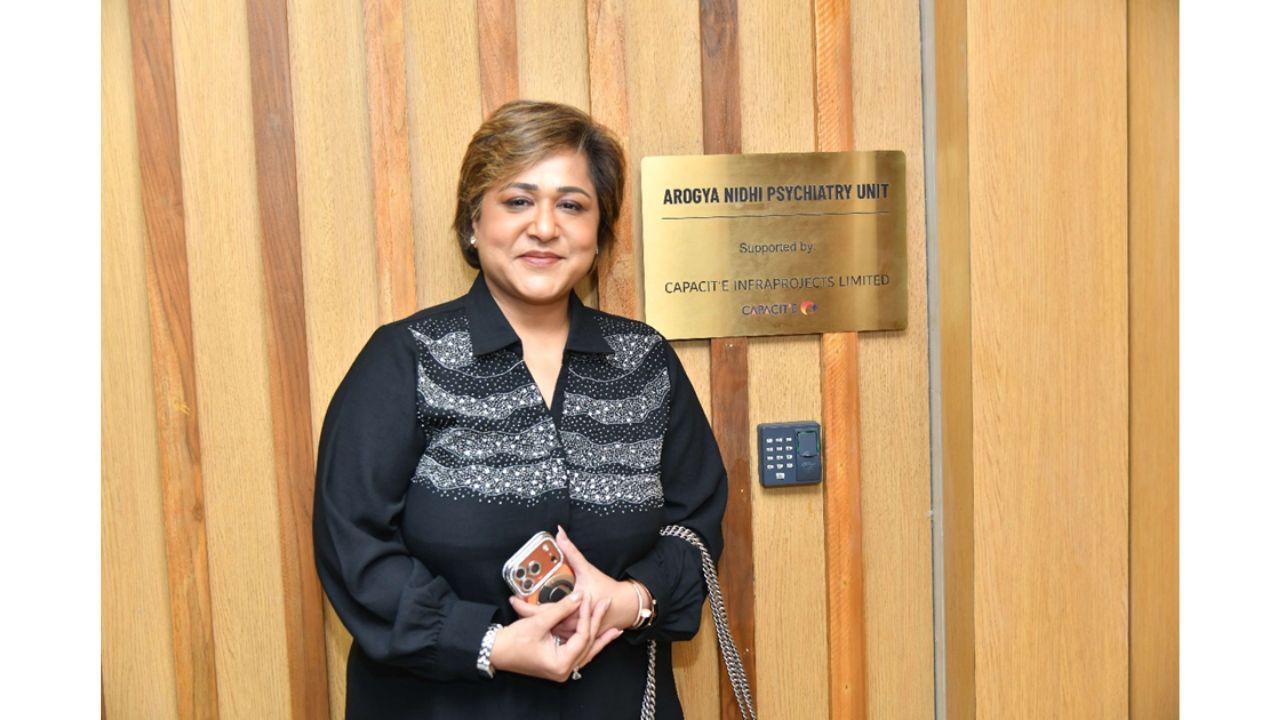
Sakshi Katyal highlights the need for better mental health infrastructure and compassionate psychiatric care in India.

Mental health in India
Sakshi Katyal, Executive Director, Procurement, Capacit'e Infraprojects Ltd sheds light on Mental Health Is Health: Why India Needs More Spaces of Care, Compassion &Dignity. In India, conversations around health are evolving, but there is still much to be done to ensure mental health receives the attention it deserves. There are improvements in the physical health infrastructure, but mental healthcare still lacks the necessary funding, better design, and easy access. Recent surveys have shown that a very large proportion of the population, approximately 96% of the people surveyed in large cities, are aware of at least one mental health condition. However, the public understanding of the symptoms, help-seeking, and support availability is still uneven and stigma exists. For millions of families, this challenge goes beyond stigma; it is a daily struggle to find care that is respectful, dignified, and available when needed.
This reality is especially visible in urban centres like Mumbai, where the scarcity of well-designed psychiatric care facilities is a lived experience for many. Mental health conditions are not rare, and they are not a sign of weakness. They are medical conditions that deserve the same seriousness, compassion, and infrastructure as any physical illness.
Responsible businesses have a role that extends beyond balance sheets. In line with this commitment, support has been extended to the development of a dedicated psychiatric care unit at Bharatiya Arogya Nidhi Hospital in Juhu, Mumbai. This initiative reflects a guiding principle: mental health is not separate from health;it is an essential part of it.
Why Psychiatric Infrastructure Matters
Nonetheless, a large number of people still have little access to timely and systematised mental healthcare even though the awareness is growing. According to the National Mental Health Survey of India (2016), there are more than 197 million individuals living with mental conditions in the country (estimated 13.7% of the population). The latest estimates, which were given in parliament in December 2025, showed that nearly 7.3% of Indian adolescents (13-17 years) had mental health problems in the surveyed states.
Yet, the treatment disparity remains major as only approximately 80% to 85% of people do not receive timely or adequate care mostly because of restricted access, lack of awareness, and infrastructure, as per LiveLoveLaugh Foundation. It is one of the largest gaps in the world not due to low demand but due to lack of resources to match the demand. In many healthcare systems, specialised psychiatric units are not available or scarce, which adds to delays and other difficulties of patients and families.
A well-designed psychiatric unit goes beyond clinical care alone. It encourages an environment where patients and their families experience privacy and dignity, safety and calm are integral to the healing process, and professional care helps reduce fear, shame, and delays in seeking help. Such a unit also ensures that families feel supported, confident that their loved ones are receiving respectful, specialised care.
When such spaces exist, people are more likely to seek help earlier and stay engaged in treatment, improving outcomes and improving quality of life for individuals, caregivers, and communities.
The Role of Corporates: Compassion with Structure
Mental health is not confined to hospital walls; it touches workplaces, homes, and communities. Recognising this, Capacit’e has also taken meaningful steps internally: mental health is formally acknowledged as part of medical care, compassionate medical leave policies have been introduced, and internal sensitisation efforts help build a culture of acceptance and support.
Creating awareness is not about grand statements alone, it is about building systems where individuals feel safe to ask for help, without fear of judgement or career consequences.
India’s Growing Focus on Mental Health
Across the nation, there is also positive news. The National Tele-Mental Health Programme (Tele-MANAS) which is a collaboration between the government and civil society has taken over 1.8 million counselling calls so far, thus widening access to support for those who might not have been able to reach care in the first place.
Under national mental health initiatives, 25 Centres of Excellence and upgraded postgraduate training departments are boosting the workforce and expertise available in this field.
These efforts align with international best practices and emphasise a rights-based approach to mental healthcare that respects dignity and ensures access across communities.
A Collective Responsibility
The completion of this psychiatric care facility at Bharatiya Arogya Nidhi Hospital may be one project, but it represents something larger: a move toward spaces of care, compassion, and dignity for individuals and families affected by mental health conditions. Through this initiative, the hospital aims to encourage other healthcare institutions to integrate structured mental health services, inspire organisations to normalise mental health support, and promote conversations that are rooted in understanding rather than judgment.
Mental health deserves the same priority as physical health because the two are inseparable. Building spaces of care fosters resilience, leading with compassion creates trust, and acknowledging mental health openly drives progress toward a healthier, more humane future.
If this initiative helps even a few individuals or families find timely care, it will have served its purpose, and contributed to a larger movement of positive change.
Subscribe today by clicking the link and stay updated with the latest news!" Click here!