shot-button
Home > Buzzfeed > Vyana Explores the Future of AI in Physiotherapy and Modern Rehabilitation

Vyana Explores the Future of AI in Physiotherapy and Modern Rehabilitation

Updated on: 18 March,2026 12:23 PM IST  |  Mumbai
Buzzfeed | faizan.farooqui@mid-day.com

Vyana Care uses AI to enhance physiotherapy with better tracking, virtual care, and improved patient outcomes.

Vyana Explores the Future of AI in Physiotherapy and Modern Rehabilitation

Vyana Care

The field of physiotherapy has always been a highly human profession. A qualified clinician who observes the way someone moves, identifies the source of dysfunction and creates a recovery strategy for the individual There is no system that can replace the judgement that is at the core of this procedure. However, there are technologies that could make the process significantly better.

Artificial Intelligence isn't going to replace the physiotherapist. It's coming to aid them in their ability to be more visible and track more, connect with more patients and provide better outcomes on the scale that was previously achievable. Understanding the implications of this in terms of practicality is a matter of examining the areas that physiotherapy has a problem with and the issues that technology is equipped to correct.

Vyana Care (vyanacare.com) has been studying this area with care by making use of AI as well as digital technology, not for marketing purposes, but rather as tools for clinical rehabilitation that enhance the quality and effectiveness of rehabilitation for patients in real life.


Where Physiotherapy Currently Falls Short

The most significant limitation of traditional physiotherapy isn't the clinical expertise. It's the continuity and consistency. Patients attend a class where they receive guidance, go home, and continue for three days working on exercises that they only remember in positions they're not sure if they are correct but with no one to inform them if the exercises they're doing are aiding or causing harm.

The time between sessions is where a lot of recovery efforts stall. It is a time when pain can fluctuate. Motivation drops. The exercise is done less attentively, and then less often, and then never at all. In the following session the physiotherapist begins again. It is slow progress. Patients are less confident that they can actually improve.

This isn't a failure that the clinicians have failed. It's a failure in what happens between sessions which is the place where technology has the greatest to offer.

What AI Actually Does in Rehabilitation

Artificial Intelligence in the field of physiotherapy isn't science fiction. It is currently being used to treat patients in a variety of particular and real-world ways.

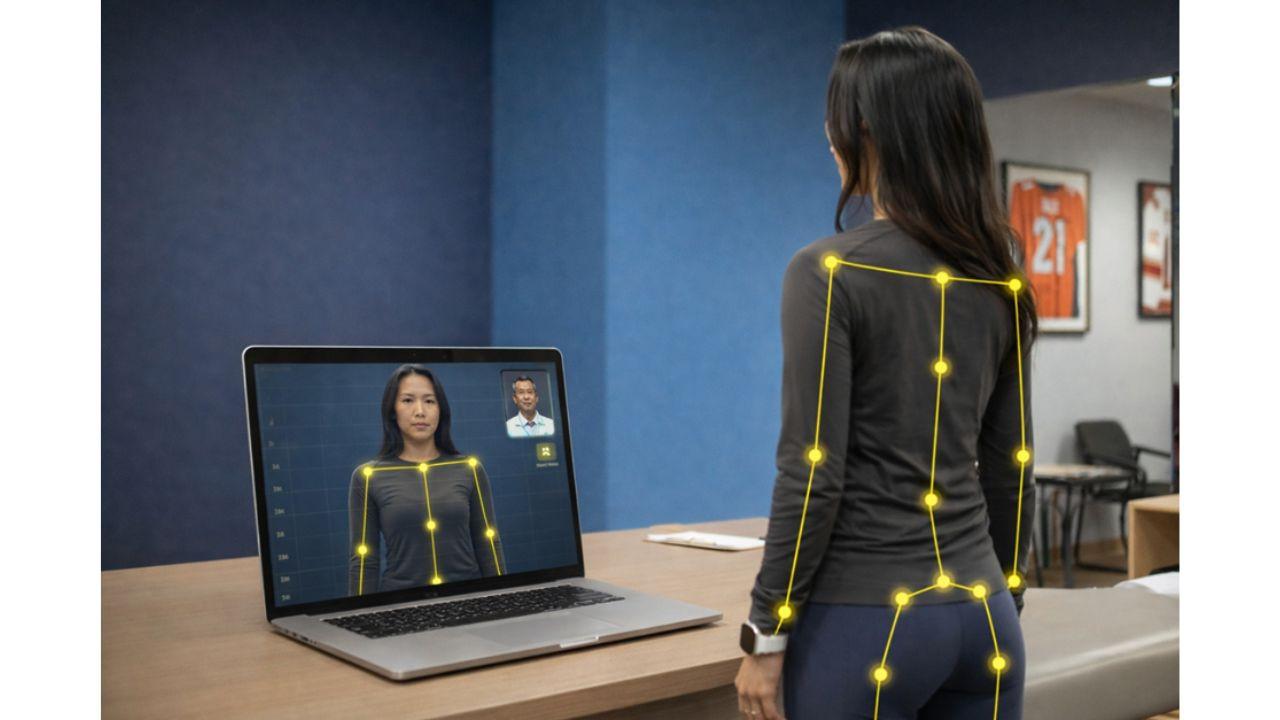
AI-assisted motion analysis utilizes computer vision to evaluate the joint angles, posture and movements patterns using a video feed. A physiotherapist who analyzes this information will be able to identify asymmetries and compensatory movements that may not be apparent by the human eye in the brief session in person. This makes remote assessments more precise and provides therapists with an objective way to monitor changes over time, rather than relying only on reports from patients who are subjective.

Predictive analytics tools analyze patterns in data from patients to determine who is susceptible to slow healing, repeated relapse or not adhering to their plan. Therapists can take action proactively, making adjustments to a program before issues occur rather than reacting after they have occurred.

Personalised exercise delivery systems use AI to adjust the difficulty and pace of a patient's workout program according to how they're performing. If a patient repeatedly complains of pain while doing a certain activity, then the program will flag it. If they're progressing faster than anticipated, the system moves in line with the progress.

All of these devices work without a trained physiotherapist who is directing them. If they are supervised by an experienced professional, they expand the capabilities of physiotherapy in profound ways.

Virtual Physiotherapy: The Gateway to AI-Enhanced Care

The development of virtual physiotherapy provided the infrastructure necessary to make AI integration into rehabilitation feasible. When online consultations are conducted and data is generated during every session, movements records, exercises logs, symptom reports, progress markers can be gathered and analysed to improve how patients are treated.

In a traditional clinic most of this information gets lost in between visits. The physiotherapist is relying on the memory of the patient to record and is usually not complete. With a well-designed digital model, the trail of data is always in motion. The therapist can get a better understanding of what the patient's life is every day, not only how they appear in a thirty-minute session.

Vyana Care's online platform is designed around this exact concept. Patients don't just sit in video consultations but receive support between sessions via organized tracking, home programs with a guided approach and direct contact with their physiotherapist. This results in a degree of consistency and individualisation the traditional model of physiotherapy can't reach.

Physiotherapy Treatments Being Transformed by Technology

The variety of physiotherapy procedures that can benefit from the integration of technology is much greater than the majority of people realize. It's not only for young professionals with a high level of technology who suffer from minor injuries. It is also applicable to the most vulnerable and complex group of patients in rehabilitation.

For patients who have suffered from strokes Rehabilitation programs that incorporate AI have shown tangible improvements in motor recovery when paired with traditional physical therapy. For those suffering from persistent lower back discomfort wearable sensors that monitor motion and posture throughout the day can help determine which activities can cause symptoms to worsen and are not possible to get through a weekly appointment by itself. To help post-surgical knee rehabilitation applications that direct patients through exercises daily and monitor the range of motion are increasing performance and adherence when compared with traditional exercise sheets.

For neurological disorders such as Parkinson's disease and other conditions, movement analysis tools can help physical therapists observe subtle changes in balance and gait as time passes -- identifying an earlier deterioration and then adjusting rehabilitation plans before any significant decline in function occurs.

In each of these instances it enhances the clinical judgement. It is not a substitute for it.

The Short Story Behind the Shift

Ravi was 55 when he suffered a stroke. He was hospitalized for three weeks. hospital, and regained his mobility and was discharged with a set of exercises, as well as an outpatient physiotherapy referral which required a wait of six weeks.

For the six weeks that followed, Ravi tried to follow the exercise sheets by himself. He wasn't certain if he was following the instructions properly. He had no feedback. The family was watching with concern in awe, unsure if the slow improvement was normal or indicative of something awry.

After he finally connected with Vyana Care through a virtual consult, the physiotherapist conducted an in-depth video examination and discovered some of the activities listed on the discharge form were strengthening a compensatory pattern, rather than rectifying it. The program was redesigned. After four weeks of adjustment, the functional improvement was significantly accelerated.

The technology that enabled this wasn't a major breakthrough. It was a carefully crafted video evaluation, a structured monitoring, and a consistent follow-up. What was needed was a platform that could provide that level of medical care remotely. This is exactly the kind of service Vyana Care was designed to offer.

What the Future of AI in Physiotherapy Looks Like

In the next 5 years, we are expected to provide significant advancements in how artificial intelligence aids rehabilitation. Real-time feedback during exercise in which the patient is given instant feedback on their posture via their smartphone or tablet It is being used in the early stages of clinical trials and is expected to become the norm. Wearable technology that records joint load, muscle activation and postural patterns throughout everyday life will allow physiotherapists an ongoing view of how their patients ' bodies move throughout their sessions.

Natural language processing can enable patients to express their problems and issues in their own terms and with AI providing a summary and flagging the pertinent clinical information to the therapist who is treating them. As data grows and predictive models improve, they will be more precise in identifying not only who is most at risk of slow recovery but also which specific combination of treatments will work best for a patient based on their individual persona.

This is all very promising. All of it is based on the same factor -professional physiotherapists with the ability to see their patients as individuals not just simply as numbers. Technology without clinical knowledge is nothing more than noise. Technology used to aid highly skilled clinicians can be truly transformational.

Why Vyana Care's Approach Gets This Balance Right

What is distinctive about Vyana Care's usage in technology is the process it follows. Assessment is the first. Clinical judgment is second. Technology is third as a tool that can help deliver and reinforce what the physician has already decided is best for the patient.

This is in contrast to the way the majority of digital health platforms function in which technology is the primary driver of the product and healthcare is integrated into it. If technology is the driving force behind this model, the patients benefit from effective processes. When expertise from the clinical field drives the model and technology helps support it, patients experience better results.

Vyana Care has built its platform around this second strategy and in a market where the line between genuine rehabilitation and digital wellness content is increasingly difficult for users to recognize and that distinction is crucially important.

The future for physiotherapy isn't one of human treatment and artificial intelligence. It's a clever combination of both. Technology is able to do the job better than humans. The clinicians concentrate on the things that no algorithm can ever replace. Vyana Care is building exactly this.

"Exciting news! Mid-day is now on WhatsApp Channels Subscribe today by clicking the link and stay updated with the latest news!" Click here!

Buzzfeed Technology Digital Health And Wellness

This website uses cookie or similar technologies, to enhance your browsing experience and provide personalised recommendations. By continuing to use our website, you agree to our Privacy Policy and Cookie Policy. OK