A look back at how Bartolomeo Cristofori created the piano
Updated On: 04 May, 2016 08:06 AM IST | | A Correspondent
On Italian instrument maker and father of the piano Bartolomeo Cristofori's birth anniversary we look back at how his most significant contribution to the music world came into existence...





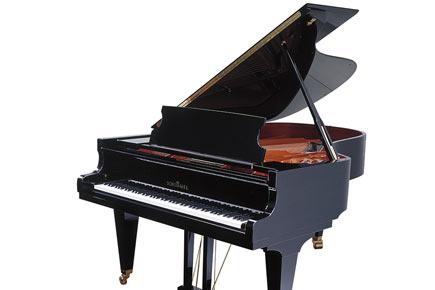
Bartolomeo Cristofori, Bartolomeo Cristofori's death anniversary, piano, modern piano, father of the piano, the piano's invention, Medici family, Ferdinando de' Medici, Grand Prince of Tuscany, musical instruments
The word piano is an abbreviation of the term pianoforte, which in terms derives from the terms gravicembalo col piano e forte and fortepiano borrowed from the Italian musical terms piano and forte meaning soft and strong respectively.
Bartolomeo Cristofori is generally credited as the inventor of the modern piano. He was employed as the Keeper of the Instruments at the court of Ferdinando de' Medici, Grand Prince of Tuscany. An expert harpsichord maker, Bartolomeo Cristofori was well acquainted with the body of knowledge on stringed keyboard instruments.

An undated portrait of Bartolomeo Cristofori
The exact date of the piano's invention by Bartolomeo Cristofori remains disputed to this day. The Medici family's inventor (Cristofori's employers) indicates the existence of a piano by the year 1700; another document of doubtful authenticity indicates a date of 1698. The three Cristofori pianos that survive today date from the 1720s.
Bartolomeo Cristofori initially named his instrument, un cimbalo di cipresso di piano e forte ("a keyboard of cypress with soft and loud"), abbreviated over time as pianoforte, fortepiano, and simply, piano. It was too quiet for large performances despite the clavichord allowing expressive control of volume and sustain. While the harpsichord produced a sufficiently loud sound, but offered little expressive control over each note the piano offered both, combining loudness with dynamic control.
Trending Stories
Latest Photos
Latest Videos
Latest Web Stories
ADVERTISEMENT

Ganeshotsav 2026

ADVERTISEMENT