Booker Prize winner, Richard Flanagan's interview with mid-day
Updated On: 20 October, 2014 08:43 AM IST | | Kanika Sharma
This year's Booker Prize winner, The Narrow Road to the Deep North by Richard Flanagan, focusses on the atrocities committed in the building of the Death Railway during the Second World War. With nearly a quarter of a million forced labour employed by the Japanese, he explains why it matters to him, his father, a survivor of this Railway and India





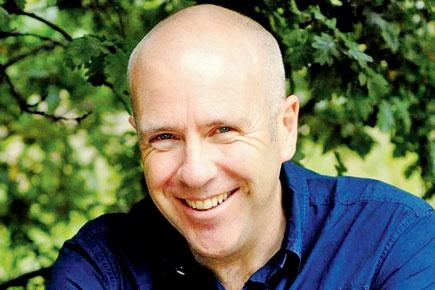
Richard Flanagan
Q. For your research of the novel, you went to Japan and met a guard called the Lizard who had overseen your father’s camp where he was a prisoner of war. What was the experience like?
A. The concept of evil doesn’t start with the Death Railway. It begins with people who promote half-ideas such as the life of some people is less than the life of other people. Hatred becomes acceptable and violence is justifiable. I was very sad to meet people whose lives had been so taken over. I felt the full sadness of a being human being and how we allow these things to happen. In the course of writing this book, it helped knowing a little bit about evil or goodness. But in the end, I am not sure about anything except this one thing that we lost countless lives who could have led good lives did evil things to one another.

pic courtesy/Ulf Andersen
Q. It took you 12 years and five drafts to write the novel. Given that your father had lived through the Burma Railway, when did he first talk about it to you?
A. I never knew a time when he didn’t talk about it and that’s not usual. Most people did not speak at all or a little about it. He talked about stories where good things happened or funny stories or gentle war stories. The humour, which in itself is interesting, is possibly one of the last things the human being has before it is taken from him. Their health and liberty are taken but humour remains till the end. There were many other stories he chose not to tell.
Trending Stories
Latest Photos
Latest Videos
Latest Web Stories
ADVERTISEMENT

Ganeshotsav 2026

ADVERTISEMENT