Makar Sankranti 2022: Mumbaikars bring in the festival with family, food and customs
Updated On: 14 January, 2022 10:47 AM IST | Mumbai | Nascimento Pinto
Notwithstanding the pandemic, Mumbaikars are learning to celebrate the little things with their family — and Makar Sankranti is one of them. Two city-based families share how they are going to keep up their culture and tradition with the sweet refrain: ‘tilgul ghya goad goad bola’



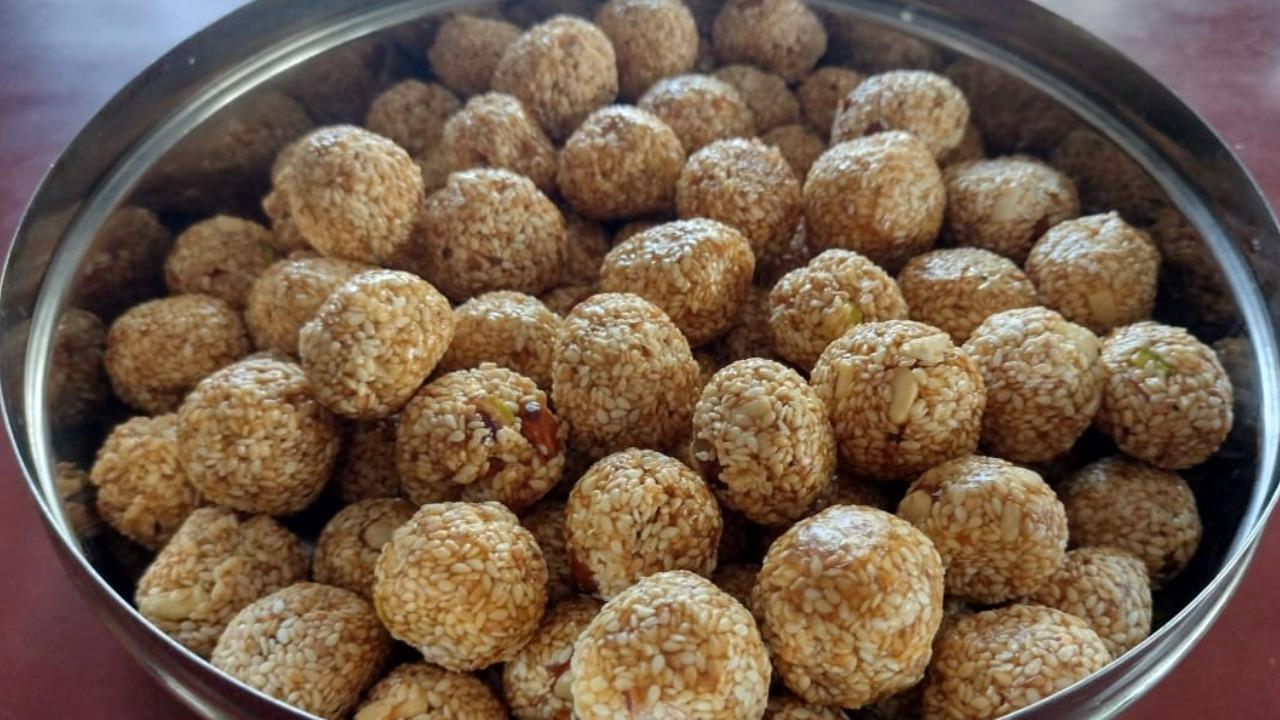
This time around, Borivali-based home chef Kalpana Talpade has made as many as 150 laddoos for Makar Sankranti. Photo: Kalpana Talpade
For Madhavi Somane, this Makar Sankranti will be her third after marriage and she is as excited as she had been when newlywed. While the last two years in her new home were really special, this time around she has planned an elaborate affair, which she says will be a three-day celebration, with her family. “I will have a haldi kumkum ceremony and will also distribute small beautiful mirrors while exchanging gifts. I am decorating my house with small clouds and kites wall hangings,” she shares. Being one to make the most of festivals, the entertainment professional will also be making traditional sweets such as tilgul laddoos (laddoos made from sesame seeds, peanuts and jaggery) and a special menu of Maharashtrian food for dinner.
The last two years affected by waves of Covid-19 have brought about shifts in how people celebrate festivals. Now that the pandemic has become a part of our lives, many are finding joy in the smaller things. Every year, Makar Sankranti is celebrated in mid-January. Known by different names around the country, Mumbaikars are making the most of their family time by following tradition and dressing up in their best, feasting on tilgul laddoos and even flying kites.  Madhavi Somane (right) explains newly-married women dress in black saris and ornaments made of sugar which is called 'tilachi wadi'. Photo: Madhavi Somane
Somane explains the traditional rituals of the three days, says, “The celebration on the first day is known as ‘bhogi’, we worship the Sun god and eat 'bhogichi bhaji' which is a mixture of white sesame seeds, desiccated coconut and mixed vegetables, with bajra rotis.”
Buy now to read the full story.
For any queries please contact us: E-mail: support@mid-day.com


How do you like the new new mid-day.com experience? Share your feedback and help us improve.
Trending Stories
Latest Photos
Latest Videos
Latest Web Stories
ADVERTISEMENT
Mid-Day Fast
ADVERTISEMENT

ADVERTISEMENT