shot-button
E-paper E-paper
Home > Lifestyle News > Culture News > Article > Northeast Indias only floating school on Loktak Lake in Manipur struggles to stay afloat

Northeast India's only floating school on Loktak Lake in Manipur struggles to stay afloat

Updated on: 02 August,2025 10:34 AM IST  |  Imphal
PTI |

With the community finding no other way to keep the school running, they have sought government help


Northeast India's only floating school on Loktak Lake in Manipur struggles to stay afloat

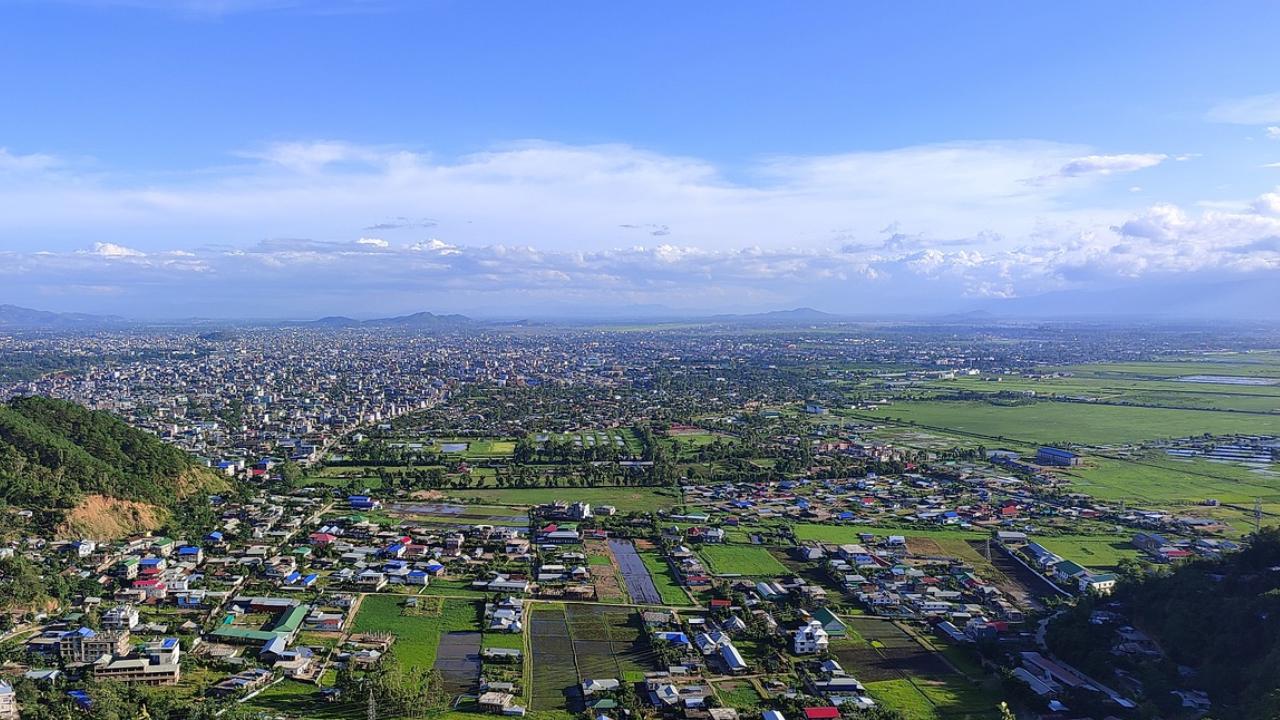
Image for representational purpose only. Photo Courtesy: Pixabay

Listen to this article
Northeast India's only floating school on Loktak Lake in Manipur struggles to stay afloat
x
00:00

Eight years after Northeast India's first floating elementary school was set up for children of the fishing community on Loktak Lake in Manipur, the school is now battling to survive.

With the community finding no other way to keep the school running, they have sought government help.


The Loktak Floating Elementary School was set up in 2017 at Langolsabi Leikai in Champu Khangpok, a floating village of nearly 330 residents.


It was built atop thick floating masses of aquatic vegetation known as phumdis, a hallmark of Loktak Lake. These floating biomass islands, about 4 to 5 feet thick, support both huts and the school itself.

Rajen Oinam, secretary of the All Loktak Lake Areas Fishermen Union Manipur, which runs the school, told PTI, "The one-room school, measuring 24 by 15 feet, lacks even basic infrastructure such as desks and tables. We had a lot of hope when we started, but this year alone, seven students dropped out. Only 23 students are currently enrolled, up to class 2. Classes are held from 8 am to noon, twice a week."

"Children not only from Champu Khangpok but also from distant floating huts come here to learn how to read and write. However, ever since ethnic violence erupted in the state, we've been preoccupied with managing relief camps for internally displaced persons (IDPs), which has taken our focus away from the school," he added.

Sharing a unique feature of the huts built on floating phumdis, Oinam said, "Often, the huts drift away overnight to another location, in some cases more than 3 km away, when there are thunderstorms accompanied by strong winds. To prevent this, huts are stabilised by anchoring bamboo poles into the lakebed. The school itself is tied with ropes to keep it from floating away."

Reaching the school is a challenge.

"It takes about one-and-a-half hours by traditional wooden canoe from Ningthoukhong Project Gate in Bishnupur district," said Oinam.

"While most huts use bamboo for flooring, the school uses wooden boards, covered with carpets. Apart from solar-powered electricity, the village has no modern amenities," he added.

Though villagers have been trying hard, the school still lacks official recognition.

"We have submitted applications to the authorities in Bishnupur district, but there has been no response. With government recognition, we could get support for infrastructure and teacher salaries. For now, the Bishnupur-based People Resources Development Association keeps the school running by supplying books, stationery, and minimal salaries for the teachers," Oinam said.

N. Kumar, a fisherman and resident of the floating village, explained why the school matters.

"There are schools on land in Bishnupur, but they're over an hour away. Parents have to wait for classes to finish to bring their children back. This is time-consuming and expensive. Since both men and women in our community fish to sustain the family, the floating school is more convenient," he added.

Despite being surrounded by water, residents face a scarcity of safe drinking water.

"The lake water is often contaminated due to untreated urban waste and solid plastics. We collect cleaner water from deeper parts of the lake, then boil or filter it before drinking," Kumar added.

Most huts on the phumdis are compact and multifunctional.

"Huts made of reeds are generally about 20 by 15 feet and 10 feet high. Cooking, eating, and sleeping all happen in that one room," he said.

Ramananda Wangkheirakpam, a functionary with Ngamee Lup, a federation of fishermen unions, said, "The floating school is meant for small children who need constant supervision. Older children are sent to boarding schools in Imphal and elsewhere."

This story has been sourced from a third party syndicated feed, agencies. Mid-day accepts no responsibility or liability for its dependability, trustworthiness, reliability and data of the text. Mid-day management/mid-day.com reserves the sole right to alter, delete or remove (without notice) the content in its absolute discretion for any reason whatsoever.

"Exciting news! Mid-day is now on WhatsApp Channels Subscribe today by clicking the link and stay updated with the latest news!" Click here!

Did you find this article helpful?

Yes
No

Help us improve further by providing more detailed feedback and stand a chance to win a 3-month e-paper subscription! Click Here

Note: Winners will be selected via a lucky draw.

Help us improve further by providing more detailed feedback and stand a chance to win a 3-month e-paper subscription! Click Here

Note: Winners will be selected via a lucky draw.

manipur imphal Education Education System Lifestyle news culture news

Mid-Day Web Stories

Mid-Day Web Stories

This website uses cookie or similar technologies, to enhance your browsing experience and provide personalised recommendations. By continuing to use our website, you agree to our Privacy Policy and Cookie Policy. OK