Home / Lifestyle / Health & Fitness / Article /
New book traces the journey of women sarpanchs of Maharashtra
Updated On: 02 July, 2017 11:07 AM IST | Mumbai | Sumedha Raikar Mhatre
<p>Half of Maharashtra's villages have women sarpanchs. A new book traces the journey of 24 of them, in first-person accounts that show they are not proxies for their husbands</p>



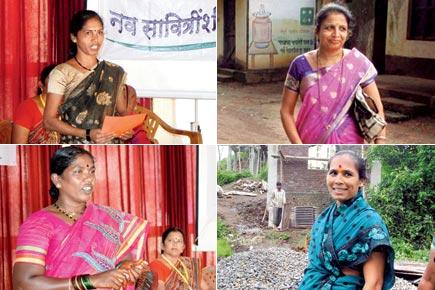
 Suvarna Junghare, Satara district
 Earthy and evocative are the 24 voices of the sarpanchs, showcased in a just-released book, Madame Sarpanch. These are vignettes of women's lives in remote villages with a 1,000-strong population each. This is stuff not featured in 'mofussil' news or the Maharashtra government narrative, but insights shared by gutsy, persevering women who have managed to claim their share of decision-making in the state's rural landscape.
Madame Sarpanch is an ongoing documentation effort by Resource and Support Center for Development (RSCD), a Navi Mumbai-based non-governmental trust, which feels strongly about amplifying the journey of women who have participated in local self-government bodies at the village level, considered the cornerstone of Indian democracy. Considering the 28,813 gram panchayats in Maharashtra, of which 14,000 have women heads, RSCD's documentation exercise has a long way to go. The support center, which runs the Mahila Rajsatta Andolan (MRA) campaign for women's enablement in electoral politics in 20-odd districts of Maharashtra, is working towards integrating untapped voices. While the current Marathi edition (R150) is funded by a donation received from social worker Kamal Vichare, 85, an improved one is aimed at better production value and an English commentary reaching out to policy makers. Bhim Raskar, RSCDâu00c2u0080u00c2u0088director and brain behind Madame Sarpanch, says: "The idea is to celebrate the resilient women who are capable of holding the post. Their energy is a source of strength for urban, city-bred people too." He recalls pan-India examples of similar documentation work including Hunger Project India which is functional in six Indian states and the Gram Shasini mission in Gujarat - which, he feels, demolishes the stereotype of women sarpanchs being a front for their husbands.
Madame Sarpanch is a validation of all those who supported the constitutional amendment which gave access to 33 per cent reserved seats for women in Lok Sabha and state constituent assemblies. States like Maharashtra have increased this quota to 50 per cent in Panchayati Raj institutions. "As assertive women sarpanchs speak to us through this book, the logic behind reservation is vindicated. It is not that women don't have to deal with other village realities. Like men, they too face problems; they encounter bias and discrimination because of reservations. But, their legitimacy, their right to lead a constituency is not debatable anymore," adds Vijay Valanju, who looks after the MRA publications designed to make women representatives aware of what can be accomplished within the government welfare schemes and what more can be demanded at the policy level. One of MRA's periodicals, Rajsattetlya Karbharni published for the last 16 years makes women cognizant of the grander stakes in state politics which women sarpanchs can't be naïve about. Similarly, MRA's BOSS correspondence course - so far taken by 7,000 elected women - focuses on the governance skills required for the newly elected.
How do you like the new new mid-day.com experience? Share your feedback and help us improve.
Trending Stories
Latest Photos
Latest Videos
Latest Web Stories
ADVERTISEMENT
Mid-Day Fast
ADVERTISEMENT

ADVERTISEMENT