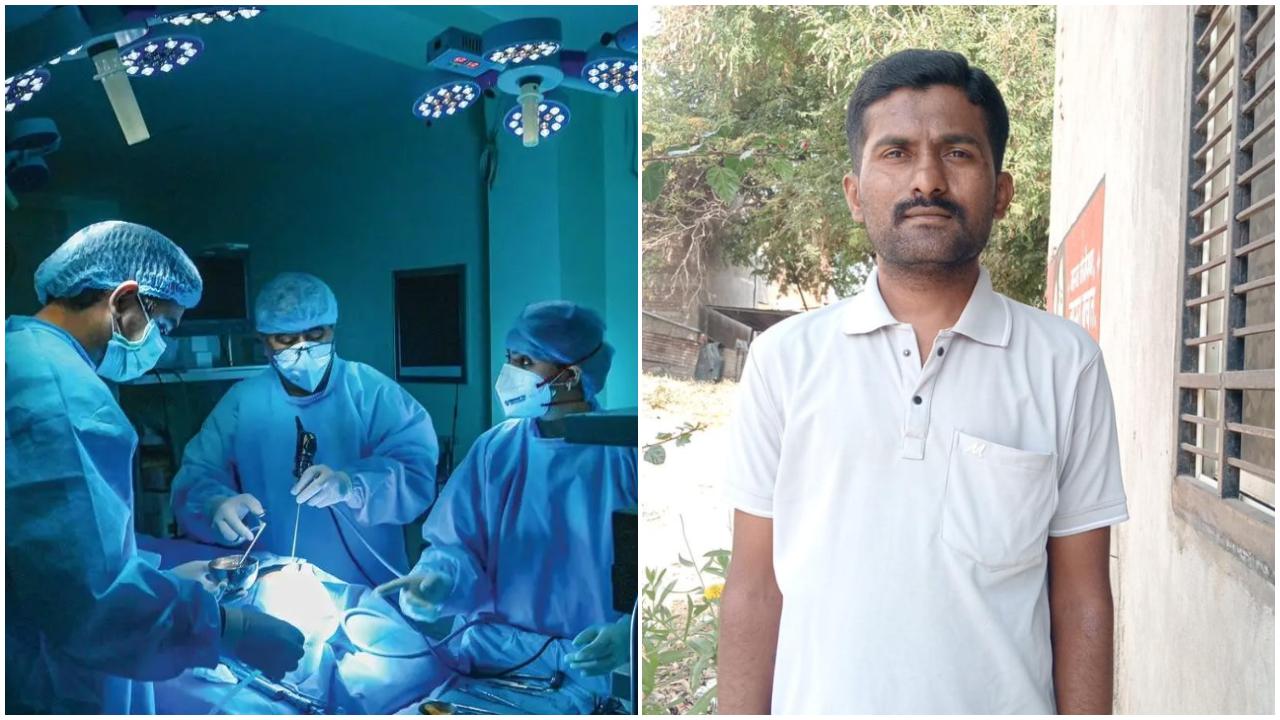
Varwade sustained a life-threatening injury while returning home from work when an object suddenly came in his path, causing him to fall from his motorcycle

Rajiv Varwade was rendered quadriplegic after a devastating neck injury causing severe spinal cord compression, to stand and walk again. Photos Courtesy: File pic/Special Arrangement
Mumbai doctors have successfully given renewed hope to Rajiv Varwade, who was rendered quadriplegic after a devastating neck injury causing severe spinal cord compression, to stand and walk again. In the face of a grave prognosis and a prolonged lack of medical treatment, he underwent a complex, high-risk cervical spine surgery that has been miraculous for him.
Varwade sustained a life-threatening injury while returning home from work when an object suddenly came in his path, causing him to fall from his motorcycle. The impact resulted in a fracture of the cervical spine with severe compression of the spinal cord, leaving him paralysed below the shoulders. Injuries of this magnitude are associated with extremely high mortality and profound, often permanent neurological loss (like Christopher Reeve (Superman) suffered.
Leading hospitals in his region refused him admission, saying that this is a permanent injury and surgery will not be helpful. To add to the misery, the surgery itself would be life-threatening with possible long-term ventilator dependence. Over the next 15 days, he remained at home without definitive treatment, with worsening condition, unable to move his hands or legs, and facing an increasingly uncertain future and possible death with young children at home.
As the family continued to search for options, they connected with Dr. Manish Kothari, Consultant Spine Surgeon, Minimal Invasive Surgery and Spinal Deformity Surgery at Jaslok Hospital and Research Centre, having heard of his experience in handling such complex patients from Beed district. Dr. Kothari initially assessed Varwade over a video consultation. The examination revealed complete paralysis in both upper limbs below the injury and no movement in the lower limbs. However, a faint flicker of movement in the left big toe suggested that the spinal cord injury might not be permanent, offering a small but critical indication that recovery could still be possible.
When Varwade was brought to Jaslok Hospital, the delay had added significant complexity to an already critical condition. The surgical intervention carried considerable risk, including the possibility of non-survival or prolonged ventilator dependence. After detailed discussions regarding the risks and realistic outcomes, the family chose to proceed.
The surgical team including doctors performed the high-risk cervical spine procedure with the goal of relieving pressure on the spinal cord and stabilising the injured segment. Encouraging neurological signs were observed in the early postoperative period. Within two weeks, Varwade was able to walk with support. At three months, he is walking independently and preparing to rebuild his life.
Dr Kothari said, “One of the most difficult aspects of Rajiv’s case was the very real possibility that he could remain ventilator-dependent even if the surgery was technically successful. That risk weighed heavily on every decision in the operating room. Our focus was not just on decompression, but on giving him a chance at breathing and living independently. Seeing him recover without that dependence has been truly remarkable.”
Dr Milind Khadke, Chief Medical Officer, Jaslok Hospital and Research Centre, said, “Rajiv’s case reflects the kind of responsibility tertiary centres must be prepared to shoulder. When others are unable to intervene because of the risk involved, it becomes imperative for institutions with the right expertise, infrastructure, and critical care support to step forward.”
Rajiv Varwade said, “After the accident, I went from being completely active to lying still, unable to move my hands or legs. The days that followed were filled with uncertainty and fear, especially when we were told how serious the injury was. Coming to the hospital felt like our last hope. The journey since then has not been easy, but the first time I stood up with support was an emotional moment for my family and me. Today, being able to walk again feels like a second chance at life.”
Subscribe today by clicking the link and stay updated with the latest news!" Click here!