Home / Lifestyle / Health & Fitness / Article /
Tech feature: How the walkie-talkie was invented
Updated On: 25 February, 2015 08:10 AM IST | | A Correspondent
<p>On the 11th death anniversary of Donald Hings, English-Canadian inventor of the walkie-talkie, we look back at one of the most significants creations in the field of telecommunications</p>



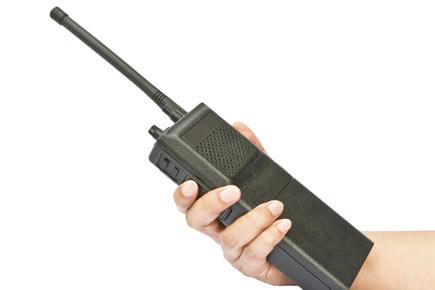
Walkie-Talkie
Before Donald Hings radio engineer and developer Alfred J Gross, who worked on the Joan-Eleanor system between 1934 to 1941 has sometimes been credited as the walkie-talkie's inventor. Apart from Gross, engineering teams at Motorola have also been considered as its early innovators.

Representational picture
Donald Hings' version of the walkie-talkie played a significant role during the Second World War. Hing's model C-58 "Handy-Talkie" was in military service by 1942, the result of a secret R&D effort that began in 1940. He was formally decorated for this purpose in 2001.
Donald Hings originally created the walkie-talkie, which he called a packset as a radio signaling system for his employer CM&S in 1937. His company later sent Hings to Ottawa, Canada for to redevelop his new invention for military use, and he worked there from 1940 to 1945. During these years, he developed a number of models, including the successful C-58 Walkie-Talkie which eventually sold eighteen thousand units produced for infantry use, and for which he received the MBE in 1946 and the Order Of Canada in 2001.
Canadian radio engineer Alfred J. Gross whose interest and knowledge in radio technology had grown considerably in 1936 was determined to investigate the unexplored frequency region above 100 MHz. Gross' Joan-Eleanor system or J-E for short, was a very high frequency (VHF) radio system developed during World War II for use by agents working behind enemy lines to relay information and replaced the earlier S-Phone system used by agents. Gross co-developed the system from late 1942 onwards for the US Office of Strategic Services (OSS) with DeWitt R. Goddard and Lt. Cmdr. Stephen H. Simpson. It comprised a hand-held SSTC-502 transceiver ("Joan") and a much larger aircraft-based SSTR-6 transceiver ("Eleanor").
How do you like the new new mid-day.com experience? Share your feedback and help us improve.
Trending Stories
Latest Photos
Latest Videos
Latest Web Stories
ADVERTISEMENT
Mid-Day Fast
ADVERTISEMENT

ADVERTISEMENT