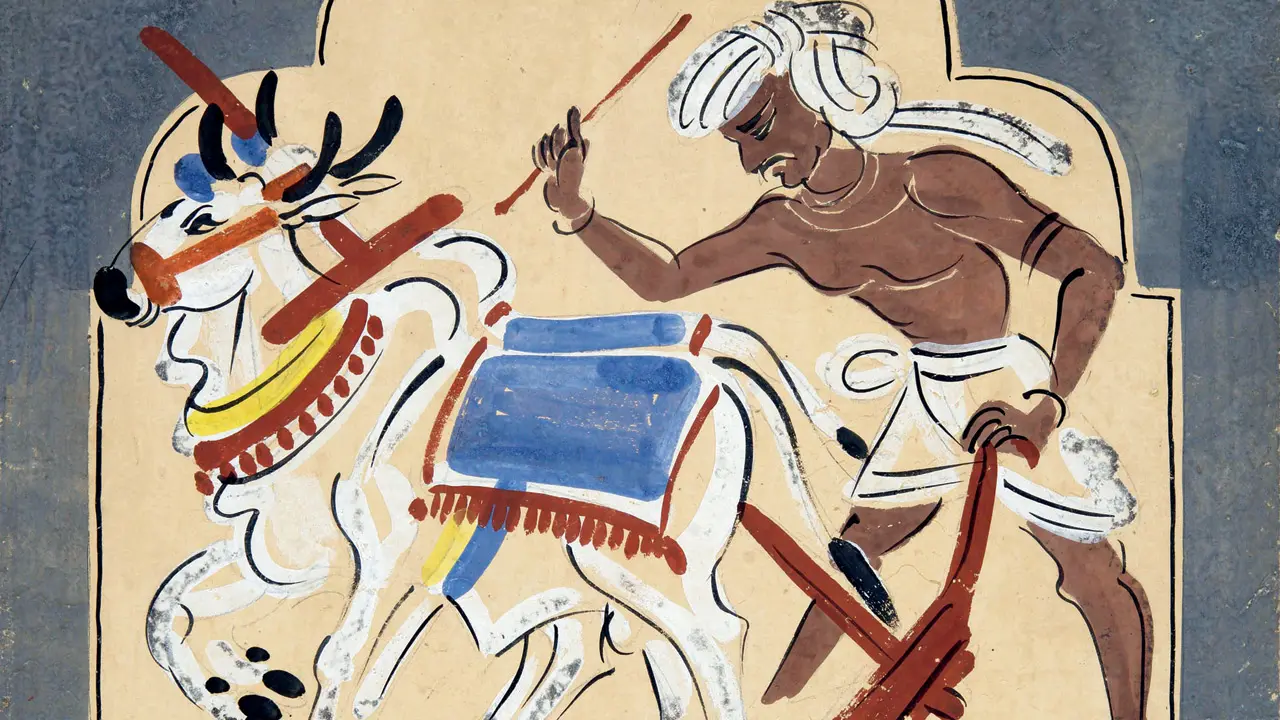
The high aesthetics of Indian tradition, and the ideals of a soon-to-be-independent India emerge through the rare exhibition of Nandalal Bose’s Haripura panels

Tiller of the Soil
It is February 1938. The Indian National Congress calls for a session at Haripura in Gujarat, under the presidency of Netaji Subhash Chandra Bose. The quiet moment of resolve is boiling over, as Bose arrived in a convoy of 51 bullock carts. It was for this iconic moment that artist Nandalal Bose created the Haripura panels, a celebration of India’s past and its freedom on the horizon. The panels, along with a series of rare films and works by the contemporary master arrive in the city for the latest exhibition, Colours of Swades: From Haripura to the Constitution at the National Gallery of Modern Art (NGMA).

Veena Vadini. Pics courtesy/NGMA
“Nandalal Bose is widely regarded as one of the nine masters of Indian modern art. His works are profoundly Indian in their ethos, practice, and themes, reflecting a deep engagement with the cultural and social life of the country,” IAS Nidhi Choudhari, director, NGMA reminds us. The works are remarkable in their simplicity and boldness, and celebrate the rustic ethos of the India Bose portrays — potters, weavers, farmers, musicians among others — in a style that blends styles from Kalighat paintings to Pattachitra art, and the mural works from Ajanta.
A view of the ornate page of the Preamble illustrated by Bose
“Most strikingly, a significant number of these works celebrate women. Nearly one-third of the panels depict women engaged in diverse activities — performing household chores, dancing, singing, practising archery, riding horses, and participating actively in community life,” Choudhari points out.
Deputy curator Shruti Das adds, “Bose was deeply influenced by major intellectual figures of Indian art history, including Abanindranath Tagore, Rabindranath Tagore, Ananda Coomaraswamy, and E B Havell. Their ideas about reviving India’s artistic heritage profoundly shaped his vision, which he later transmitted to his students.” This language finds expression primarily through the iconic panels, set in an installation that replicates the original pavilion. These are accompanied by a physical copy of the Indian Constitution — that Bose illustrated, with his students.

Nandalal Bose
“The exhibition also introduces a contemporary digital layer through AI-generated films and animated interpretations of Bose’s artworks created by filmmaker Ebyug Akhil, making the experience visually engaging and accessible for present-day audiences,” shares Das. “This integration ultimately creates a layered narrative that connects history, art, and technology,” the curator concludes. A timely reminder at a time when soft power is slowly waning.
Till June 9; 11 am to 7 pm (closed on Mondays)
At NGMA Mumbai, Sir Cowasji Jehangir Public Hall, Fort.
Subscribe today by clicking the link and stay updated with the latest news!" Click here!