Home / Mumbai-guide / Things To Do / Article /
Strands of love
Updated On: 22 August, 2020 07:10 AM IST | Mumbai | Nasrin Modak Siddiqi
Kashmiri saffrons newly acquired GI tag might be a blessing for local cultivators and suppliers as the prized spice stakes to reclaim its special status on the worlds culinary map





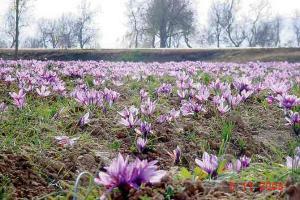
Saffron flowers growing on a farm. To test the authenticity of saffron, Choudhary recommends the water and aroma test. "Soak a small amount of saffron in hot water (not boiling) to see if it emits dark yellow colour and is slightly fragrant."
For entrepreneur Maroofa Khan, a favourite autumn memory is that of going to her aunts' saffron fields in Pampore, Kashmir, to play Lakad Lakad (a children's game played using a wooden stick). "I used to pluck a few flowers and keep them in my book. Years later, when I'd flip through it, the forgotten petals — dried up and tinting the pages — would serve as a reminder of the carefree afternoons spent amidst a blanket of lavender-hued flowers," recalls Khan.
In May, Kashmiri saffron got certified with a Geographical Indication (GI) from the Government of India. A GI tagging acts as a certification that the product possesses certain qualities, is made according to traditional methods, or possesses a good reputation due to its geographical origin. In Jammu and Kashmir, saffron farming is embedded in centuries of traditional practices. The crocus sativus flowers are harvested by hand for their delicate thread-like crimson-hued stigma and styles to yield what is called kesar in Hindi and zaffran in Urdu. This saffron is known for its antioxidant and cancer-fighting properties, and for its calming effects.
Trending Stories
Latest Photos
Latest Videos
Latest Web Stories
ADVERTISEMENT

Ganeshotsav 2026

ADVERTISEMENT