Home / Mumbai / Mumbai News / Article /
Mumbai Rains: Why city is most vulnerable to urban flooding
Updated On: 22 July, 2018 02:43 PM IST | Mumbai | Gitanjali Chandrasekharan
The world is dealing with urban flooding with an eye on the future, even as Mumbai is yet to fully implement a storm water drain project recommended in 1993. Ruthless monsoons are the new normal. And BMC alone can't save us





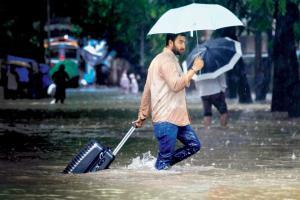
Zoru Bhatena has a complaint that every Mumbaikar will empathise with. The 43-year-old, who has been a resident of Khar for 15 years, says, "Earlier, it would flood in the area when there was heavy rainfall. Now, it drizzles and there's water everywhere." When he realised this, Bhatena did something few Mumbaikars would. One day, he set out of home and followed the path of storm water drains in Khar. These led him on a circuitous route through Bandra West, across the railway tracks to Bandra East, then to Bandra terminus from where they are supposed to drain into the Mithi River. What he found throughout were blockages obstructing the flow of water, which explained why, when the rain gets going, gutter water leaks onto Khar's roads.
So, the flowchart is simple, right? Keep the drains free of debris and sewage, and Mumbai will never see floods again? Not really. Professor Kapil Gupta from the department of civil engineering at IIT Bombay, who was part of the flood advisory committee for the BMC, formed after the July 2005 deluge, points out why: Mumbai's drainage system has not been built for the rainfall currently experienced. "When the British built the drains here, they had no rainfall data. Assuming that Mumbai received four to five times the rain that London did [which was 6 mm per hour], they built drains with a carrying capacity of 25 mm/hour.
Trending Stories
Latest Photos
Latest Videos
Latest Web Stories
ADVERTISEMENT
Mid-Day Fast
ADVERTISEMENT