Home / Mumbai / Mumbai News / Article /
A 7-step blueprint to recreate Mumbai
Updated On: 30 January, 2015 05:05 PM IST | | Shirish Sankhe, Sunali Rohra, Indiaspend.org
<p>To improve the quality of life in Mumbai and fully realise its economic potential, the Maharashtra government needs to make a big push on three fronts—planning, funding, and governance over the next five to ten years</p>



The Mumbai Metropolitan Region (MMR), contributes 5% to India’s GDP, 33% to Maharashtra’s GDP, and accounted for 5% of India’s urban population in 2012. By 2030, MMR alone will be bigger than many countries today in both demographic and economic terms.
With a population of more than 21 million, it will be more populous than Australia and with its GDP at about $230 billion in 2030, its economy will be bigger than that of Thailand or Hong Kong today.
Despite its eye-popping demographics and economic potential, the quality of life in Mumbai has steadily declined and it will continue to do so if current practices of city management persist. For example, only 47% of the sewage generated is treated, and the number of peak vehicles per lane kilometre is 170 compared to an ideal 112.
This is despite the well-celebrated current investments in marquee infrastructure projects, such as Mumbai Metro Line 1, the Worli–Bandra Sea Link, and the Eastern Express Freeway.

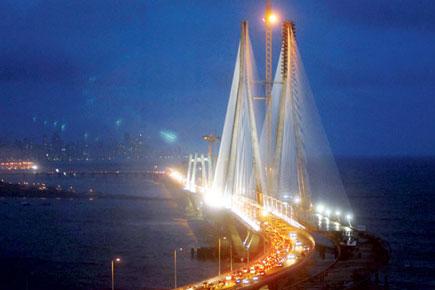
Bandra-Worli Sea Link
To improve the quality of life in MMR and to fully realise its economic potential, the state government needs to make a big push on three fronts—planning, funding, and governance over the next five to ten years. The rest of this article outlines actions across each of these three areas:
Planning
Insufficient focus on planning is one of the primary reasons for the decline of MMR. To trigger change in this area, the Government of Maharashtra should consider making a concerted effort around three actions that include:
1. Accepting the MMR Concept Plan 2030 and notifying it: MMR is one of the few cities in India to have followed the international best-practice of developing a 2030 and 2050 concept plan based on the city’s population and GDP growth estimates in 2011–12. But it has not been formally accepted by the Government of Maharashtra. Only after it is accepted can it be notified such that it becomes binding on all municipalities in the metropolis. A few amendments have been made to the Maharashtra Regional Town and Planning Act but a lot remains to be done.
2. Implementing the Concept Plan by creating 6-8 planned spaces as ‘smart’ mini-cities to boost the domestic economy and kick–start Make in Maharashtra: The Government of Maharashtra has a huge opportunity to develop and redevelop specific areas with land parcels ranging from 1,000 to 10,000 acres to spur job creation and overall development in the MMR region. Today, perhaps, Bandra Kurla Complex (BKC) is the one of the few planned “spaces” for boosting financial services in MMR. Even in BKC though, the transportation network is not planned well, as evident by the lack of metro connectivity and enormous traffic jams at critical junctions. Several of the other “spaces” have haphazard plans.
Going forward, there is a rare opportunity to choose the next few “spaces” for which economic, transport and physical master-plans can be made followed by their construction as smart transit-oriented cities, with a relatively higher share of non–motorised public transport. In these mini-cites, some smart technologies, such as road-sweeping machines and smart-metering can be adopted. For example, Navi Mumbai with its proximity to Pune, Maharashtra’s education capital, could become a high-tech hub for the state.
Similarly, the development of about 750 hectares of the Mumbai Port Trust land can be used to create housing and commercial developments, to generate millions of jobs through the establishment of a variety of tourist activities—marinas, hotels, convention centres, sea-facing restaurants and the promotion of social development through the development of housing for economically-weaker sections and low–income groups, and the creation of public spaces like parks, and walking tracks for all citizens. Likewise, Gorai can be developed as an international tourist hotspot, Alibaug as a coastal city, Ulhasnagar as an electronics city, Kalyan–Dombivali as an automotive hub, and Panvel as an education city.
How do you like the new new mid-day.com experience? Share your feedback and help us improve.
Trending Stories
Latest Photos
Latest Videos
Latest Web Stories
ADVERTISEMENT
Mid-Day Fast
ADVERTISEMENT

ADVERTISEMENT