Home / Mumbai / Mumbai News / Article /
Mumbai civic corporation issues SOP for recovery and transportation of Ganpati idols post-immersion
Updated On: 15 August, 2025 06:07 PM IST | Mumbai | mid-day online correspondent
The SOP ensures compliance with court directives that public Ganeshotsav and other festivals be celebrated in an environmental-friendly manner. The CPCB guidelines emphasise post-immersion recovery of Plaster of Paris idols and their scientific recycling



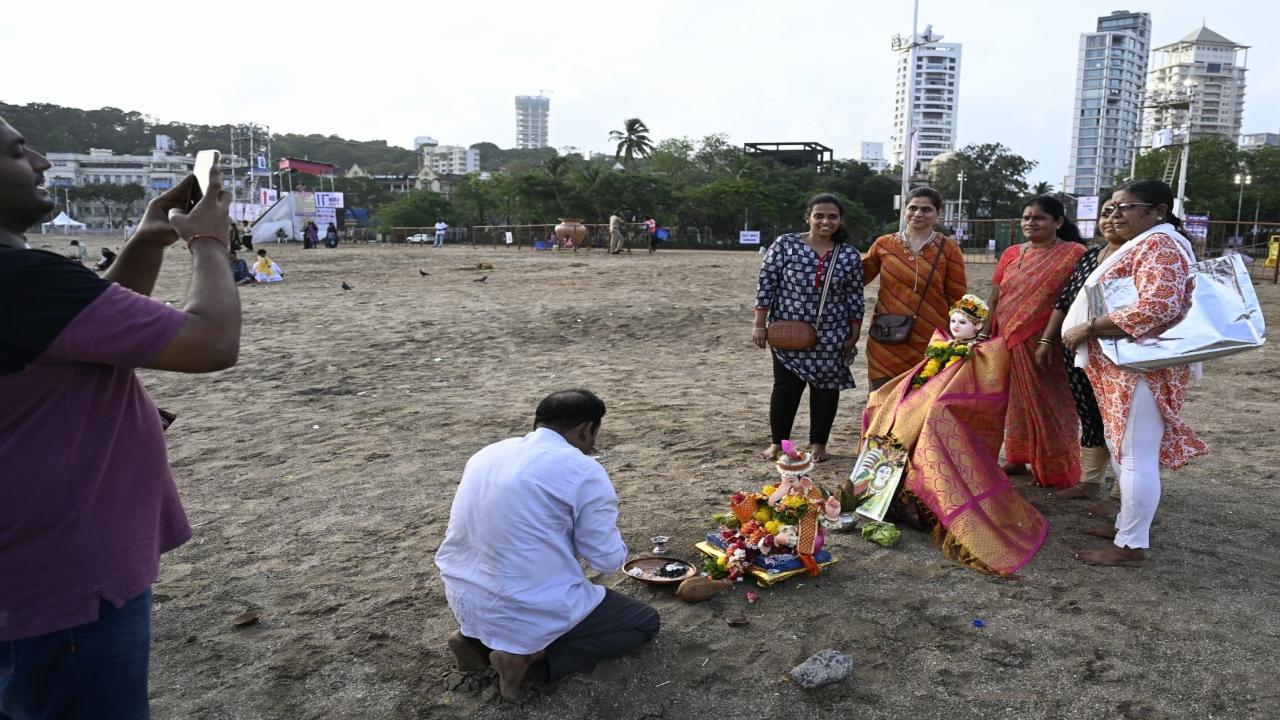
All idols immersed in artificial ponds, temporary tanks or natural water bodies must be retrieved within 24 hours. Representational Pic/File
The Brihanmumbai Municipal Corporation (BMC) has finalised a Standard Operating Procedure (SOP) for the recovery and recycling of Ganpati idols after immersion, in line with directives from the Bombay High Court and the guidelines issued by the Central Pollution Control Board (CPCB).
The SOP ensures compliance with court directives that public Ganesh Chathurti 2025 celebrations and other festivals be celebrated in an environmental-friendly manner. The CPCB guidelines emphasise post-immersion recovery of Plaster of Paris idols and their scientific recycling. The high court has also directed the setting up of an expert committee to recommend approved methods for recovery and recycling — a process that is currently under consideration.
Until these recommendations are received and implemented, the BMC’s SOP will guide idol recovery and transport operations across the city, the civic body said in a press release. Circulars have been issued to all ward offices and relevant municipal departments over this.
How do you like the new new mid-day.com experience? Share your feedback and help us improve.
Trending Stories
Latest Photos
Latest Videos
Latest Web Stories
ADVERTISEMENT
Mid-Day Fast
ADVERTISEMENT

ADVERTISEMENT