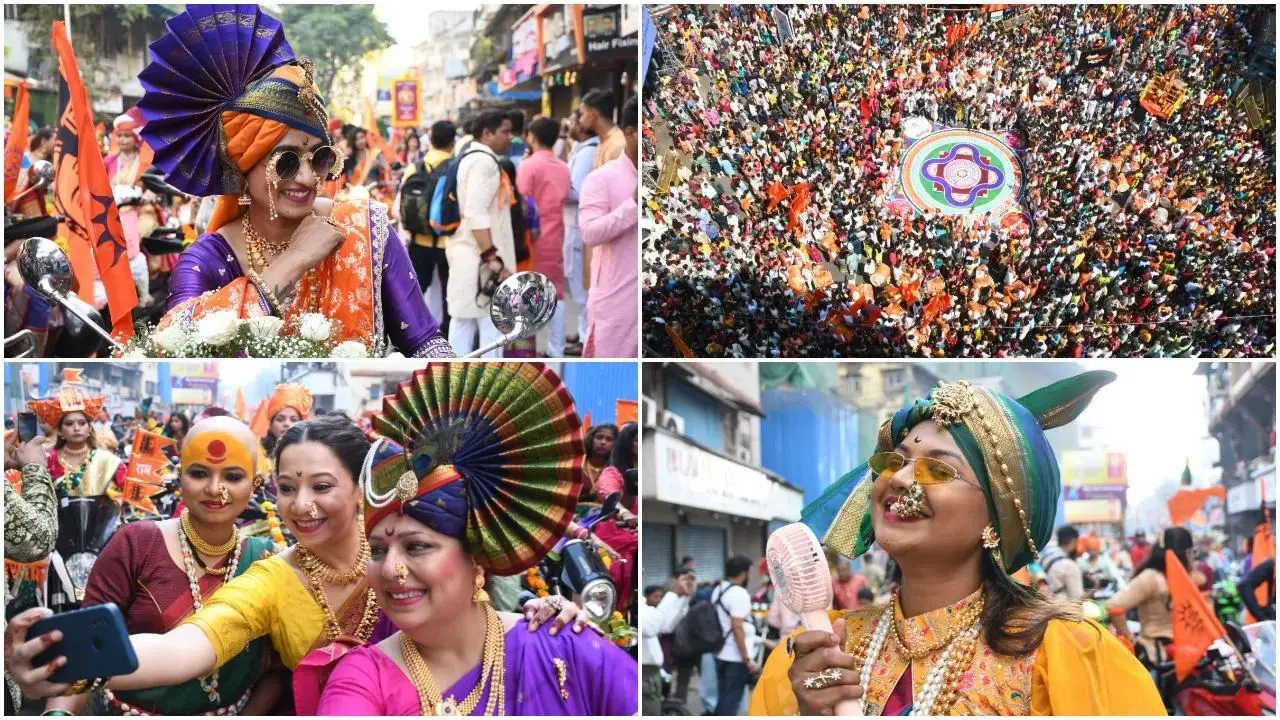
Gudi Padwa on March 19, 2026, will see grand Shobha Yatras from Girgaon to Thane, with early-morning processions, large crowds, and traffic restrictions on key routes. Commuters are advised to use local trains to avoid congestion
File Photo
Gudi Padwa is the vibrant, traditional New Year festival for Marathi and Konkani Hindus, celebrated on the first day of the Chaitra month (March–April) to mark the arrival of spring and the new harvest. It symbolizes victory, prosperity, and new beginnings, and is marked by hoisting a “Gudi” flag, creating rangolis, and enjoying festive sweets like puran poli.
The Gudi itself represents victory often associated with Lord Rama’s return to Ayodhya or the triumph of King Shalivahana. Marathi families wake up early, take an oil bath, and hoist the gudi outside their homes, windows, or doors. Many also consume a mixture of neem leaves and jaggery, symbolizing acceptance of both the bitter and sweet experiences of life.
Streets fill with processions, traditional dances such as lezim, and homes are decorated with lights and colourful rangolis.
According to DrikPanchang, Gudi Padwa will be celebrated on Thursday, March 19, 2026. In Mumbai, the city comes alive with vibrant energy. Streets are adorned with colourful rangolis, homes are decorated with mango-leaf torans, and gudis are proudly hoisted outside houses and windows. Families prepare festive delicacies like puran poli and shrikhand. Across the city, communities organize grand Shobha Yatras, traditional lezim performances, bike rallies (often led by women), and cultural programs. On this day, the spirit of Maharashtra shines at its brightest in Mumbai, drawing huge crowds to public celebrations.
Here are Mumbai’s hotspots to witness the festive spirit of Gudi Padwa 2026
1. Girgaon and Girgaon Chowpatty
Considered the heart of Gudi Padwa festivities in South Mumbai, the famous Girgaon Shobha Yatra begins early in the morning around 7:00 AM from the historic Phadke Wadi Ganpati Mandir. One of the biggest highlights is the iconic bike rally, where hundreds of women ride through the streets dressed in traditional nauvari sarees, phetas, and sunglasses. A striking feature each year is women riding Royal Enfield motorcycles in formation. The procession proceeds toward Girgaon Chowpatty, accompanied by the thunderous beats of the Girgaon Dhwaj Pathak. For photographers and culture enthusiasts, this is one of the best locations to experience the festival.
2. Shivaji Park, Dadar
Dadar transforms into a vibrant celebration hub, especially around the iconic Shivaji Park. The area hosts one of the city’s grandest processions, featuring elaborate floats, cultural performances, rangoli-lined streets, festive lights, and showers of flowers. Groups carrying copper kalash topped with flags add to the traditional charm, while powerful dhol-tasha beats echo through the area. You will see people in traditional attire, lively folk dances, and community gatherings throughout. Spacious and family-friendly, it offers a comfortable viewing experience, and many locals consider Dadar the cultural heart of Mumbai during Gudi Padwa.
3. Thane
Thane also hosts massive Swagat Yatras and processions. Streets are decorated with rangolis and banners, while dhol-tasha performances and traditional dances energize the atmosphere. The Talao Pali area sees lively marches and cultural programs. For those in the suburbs seeking a festive experience without the intense South Mumbai crowds, Thane offers grand celebrations with a strong local flavour.
4. Dombivli
While Girgaon is the heart of South Mumbai celebrations, Dombivli is widely regarded as the birthplace of the grand Shobha Yatra tradition. On Gudi Padwa morning, the entire town seems to pause as people pour onto the streets to celebrate together. The procession here goes far beyond a simple parade it becomes a powerful cultural expression, uniting generations in a vibrant display of heritage and pride.
Beginning near the Ganesh Mandir close to the railway station, the procession draws thousands of participants and features massive floats depicting scenes from Marathi history. Renowned dhol-tasha pathaks among the finest in the region create an electrifying atmosphere that resonates through the streets. If you want to witness the scale of community participation, Dombivli is a must-visit. Easily accessible via the Central Railway line, the celebrations here are intense, spirited, and unforgettable.
Sacred places such as Mumbadevi Temple and Walkeshwar Temple hold special pujas and offer blessings on Gudi Padwa. These are ideal for those seeking a peaceful, spiritual start to the day before joining the lively street festivities.
Planning to head out?
Crowds begin gathering early in the morning, as processions usually start between 8:00 AM and 10:00 AM. Wear comfortable footwear, stay hydrated by carrying water, and choose modest, festive attire. Public transport or app-based cabs are recommended, as traffic congestion is common during the celebrations. Many venues feature food stalls serving festive favourites like puran poli and modaks. It is also wise to check local updates closer to the date, since timings and routes may change slightly.
Traffic Alert for 2026
Road Closures: Key routes in Girgaon especially JSS Road and in Dadar, including NC Kelkar Marg, are typically closed to vehicular traffic between 7:00 AM and 12:00 PM due to processions.
Travel Tip: Avoid private vehicles if possible. The Mumbai Local is the fastest and most reliable way to travel get down at Charni Road railway station for Girgaon or Dadar railway station for the Shivaji Park area to bypass roadblocks and reach the celebrations smoothly.
Subscribe today by clicking the link and stay updated with the latest news!" Click here!