Armed with community sensors and complaint records, residents in Chembur say Mumbai’s pollution data does not always add up, pointing to sudden AQI spikes, mismatched readings with official CPCB data and even construction site monitors showing impossible values like “AQI -1,” prompting calls for a citywide citizens’ platform to monitor air quality

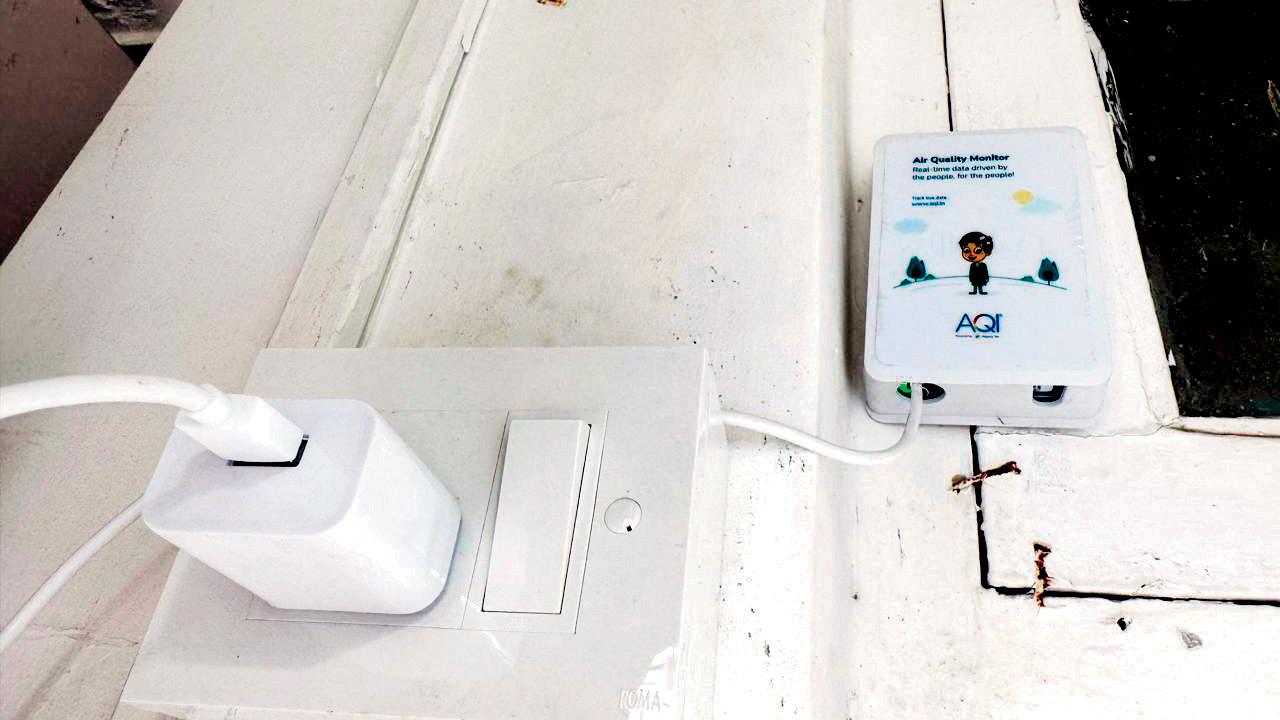
A community air quality sensor installed outside a residence in Chembur’s Sindhi Society Locality to monitor neighbourhood AQI in real time
Frustrated by recurring spikes in air pollution and what they call a lack of reliable data, residents of Chembur are now trying to build a citywide citizens’ coalition to track, question, and fight Mumbai’s air quality crisis. Armed with community sensors, complaint records, and pollution data, residents say the problem is no longer local but pan-Mumbai, with areas like Bandra, Santacruz, Deonar and Ghatkopar repeatedly appearing among the city’s worst pollution hotspots.

A screenshot showing an AQI reading of 890 recorded by a community sensor in Chembur around 3 am, highlighting the sudden pollution spike residents say they have observed
Residents of Sindhi Society Locality, a community of about 400 people, have already begun installing real-time AQI sensors outside homes, feeding neighbourhood data into a community monitoring platform. Their findings show sharp overnight pollution spikes, discrepancies with official readings and unexplained data gaps, raising questions about how pollution is measured and addressed in Mumbai.

Hitesh Rupani; (right) Anil Talreja, residents of Sindhi Society Locality. Pics/By Special Arrangement
“As Mumbaikars, we need a united front to talk about pollution,” said resident Hitesh Rupani. Residents say Chembur has grappled with this for over 40 years. On September 9, 2025, a foul smell from emissions allegedly linked to nearby RCF factories alarmed residents, said Anil Talreja, adding that repeated complaints and media reports later led the Bombay HC to take suo motu cognisance of city’s air quality through a PIL.
Discrepancies found by the residents
1. Mismatch in AQI numbers between community sensors and official CPCB data.
2. Frequent sudden fluctuations in pollution levels.
3. Questionable readings at construction sites, including monitors displaying AQI “-1.”
“How is AQI minus one even possible unless the monitor is faulty?” asked Rupani.
“What is the use of mandatory display boards if the data itself is unreliable?”
Complaints sent to authorities
Senior citizen Anil Talreja says residents have repeatedly raised the issue with multiple agencies.
Over 40 complaints filed with
>> Ministry of Environment
>> Maharashtra environment department
>> Urban Development Department
>> BMC and local ward office
>> Central Pollution Control Board
>> Maharashtra Pollution Control Board
>> RCF
>> Department of Fertilisers and Chemicals
“I have asked simple questions such as,” Talreja said.
1. “Make AQI data publicly available and accessible.”
2. “Give citizens a list of government-approved AQI devices.”
3. “Tell us where hyperlocal pollution data can be accessed.”
“In response, we sometimes get internal notes, but no official answers,” Talreja said. “We have now started filing RTIs.”
Possible pollution sources residents suspect
Residents believe Chembur’s pollution may come from a mix of industrial and urban factors:
>> RCF industrial units
>> Deonar dumping ground
>> Large construction sites
>> Commercial bakeries
Mumbai’s AQI Wednesday
AQI 95 - Satisfactory
Tuesday
AQI 111 - Moderate
>> Mumbai had six straight days of ‘Satisfactory’ air quality from February 25 to March 2, before pollution rose again on March 3, with carbon monoxide identified as the main pollutant.
Chembur AQI
Wednesday
AQI 88 - Satisfactory
Tuesday
AQI 128 - Moderate
Main pollutant: PM2.5
>> Between February 25 and March 4, Chembur recorded seven days in ‘Good’ or ‘Satisfactory’ categories.
Key days
Feb 27: AQI 40 - Good
Feb 28: AQI 49 - Good
Mumbai’s worst pollution hotspots
Top areas with high
AQI readings
Area AQI
Chakala - Andheri East 130
Deonar 127
Ghatkopar 127
BKC 120
Malad West 118
How India calculates AQI
PM10
PM2.5
Carbon monoxide (CO)
Ozone (O3)
Nitrogen dioxide (NO2)
Sulfur dioxide (SO2)
Ammonia (NH3)
Lead (Pb)
For AQI calculation, data for at least three pollutants must be available, including PM10 or PM2.5.
India’s AQI formula considers 8 pollutants
Example spike
Time Reading
Monday, AQI 890 on community sensor
around
3 am
At the same time, the official CPCB Sameer app showed
Pollutant Level Category
PM10 261 Poor
PM2.5 143 Moderate
Residents say such spikes are often followed by early-morning coughing and breathing discomfort.
Subscribe today by clicking the link and stay updated with the latest news!" Click here!