Home / Mumbai / Mumbai News / Article /
Sumedha Raikar-Mhatre: A stir in the pot
Updated On: 10 April, 2016 06:26 AM IST | | Sumedha Raikar Mhatre
<p>How popti parties, once a plain traditional earthenware cooking tradition, have become a popular retreat route for city-dwellers. Have you been invited yet?</p>



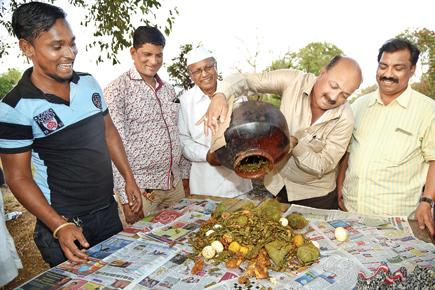
Poet L B Patil (third from left), who is organising a popti party on April 17, has had to ask some of his friends to drop out so that he can accommodate first-time guests
 The Panvel-based organisers of the annual Tarangate Popti Kavi Sammelan (Floating Popti Poets’ Meet) were not very busy people, until recently. Each year they would leisurely ready up for an evening cruise, on which poetry was savoured with the local recipe cooked in a terracotta pot. The cruise was limited to friends and family from Raigad’s coastal towns of Uran, Roha, Pen and Alibaug. A manageable handful would gather at Navi Mumbai’s JNPT port to sail up to Elephanta Island over three hours.
With origins in Raigad district, popti is a small-scale farm-based festivity, usually held during the harvest season of December to March. The village style barbeque thrived in Panvel, Alibaug, Roha, and Pen where the soil (a mix of shoreline salinity with river silt) favoured the growth of tender waal (high-iron, high-fiber field beans). Lining the pot with medicinal bhambrut leaves, which are velvety and release juices of their own in which the food gets cooked, popti ensures steaming of onions, garlic, potatoes, eggplants, groundnuts, chickpeas, eggs and marinated meat in a pressure-packed pot cooked under a smoky fire, in a record 15 minutes. The popti pot serves as a campfire in an open green space. It is also called ‘mongo’ or ‘ukad handi’ in some parts of Konkan.
How do you like the new new mid-day.com experience? Share your feedback and help us improve.
Trending Stories
Latest Photos
Latest Videos
Latest Web Stories
ADVERTISEMENT
Mid-Day Fast
ADVERTISEMENT

ADVERTISEMENT