Home / Mumbai / Mumbai News / Photos /
IN PHOTOS | Mumbai Chhath Puja 2026: Preparations gather pace as workers set up ponds, shelters and platforms
Updated On: 13 November, 2026 07:01 PM IST | Divya Nair
With Chhath Puja approaching, workers are busy setting up temporary ponds, shelters, towers and platforms at St Lawrence Garden in Kandivali East and Juhu Beach in Mumbai. The preparations are underway ahead of the festival. PICS/SATEJ SHINDE





 01
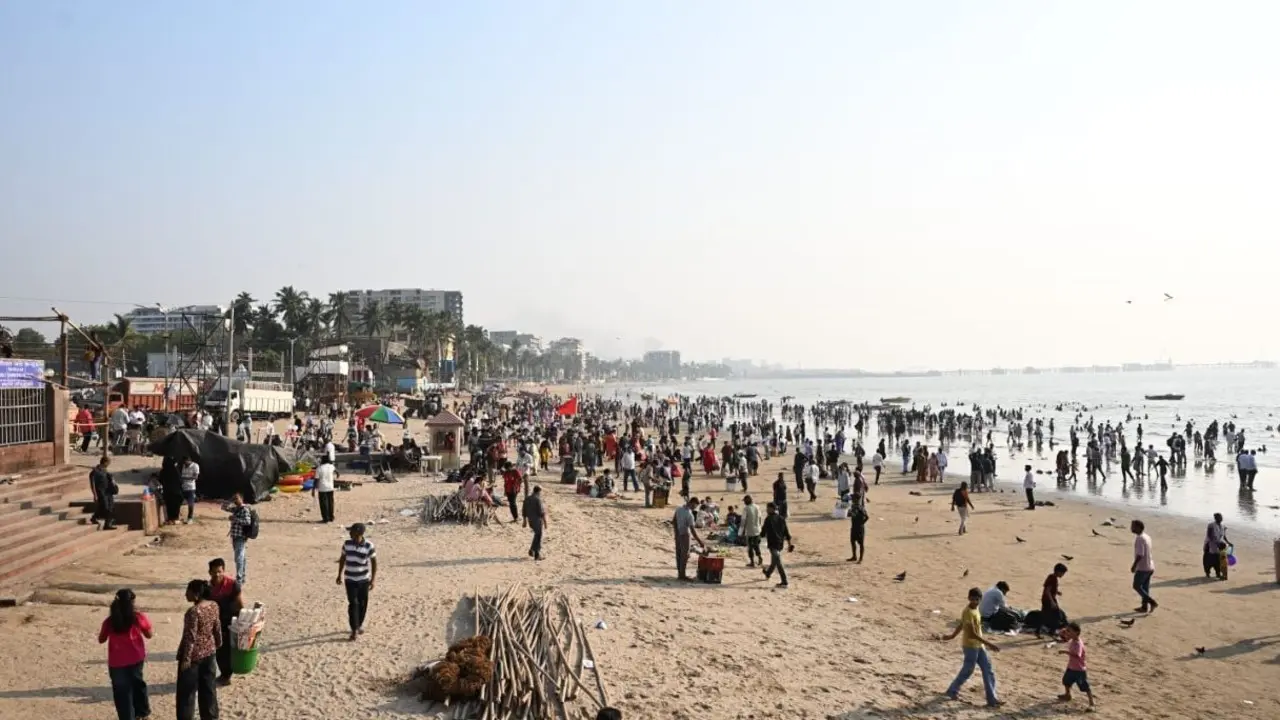
Workers construct temporary towers, shelters and platforms for Chhath Puja at Juhu Beach, Mumbai, on Friday. PIC/SATEJ SHINDE
02
Workers construct temporary ponds for Chhath Puja at St Lawrence Garden in Thakur Complex, Kandivali East
03
Chhath Puja, one of the most significant festivals dedicated to the worship of the Sun God and Chhathi Maiya, began on Friday, November 13, with the traditional ritual of Nahay-Khay. The four-day festival is observed with great devotion in Bihar, Jharkhand, eastern Uttar Pradesh and several other parts of the country
04
The festival holds special significance for devotees who observe rigorous fasts and follow a series of rituals centred on purity, discipline and devotion. It is also marked by collective participation, with families coming together to prepare offerings and make arrangements for the celebrations
05
The first day, Nahay-Khay, marks the beginning of the festival. Devotees take ritual baths, clean their homes and prepare food while following strict rules of cleanliness. Many devotees visit rivers and other water bodies to take a holy dip as part of the purification rituals
06
The traditional Nahay-Khay meal consists of arwa rice, chana dal and kaddu (pumpkin). The food is generally prepared without onion and garlic and is considered sattvic. In several households, traditional earthen stoves are used for cooking. The person observing the fast, known as a 'vrati', consumes the meal first as prasad before it is shared with other family members
07
The second day is observed as Kharna. Devotees observe a day-long fast and perform worship in the evening. They prepare traditional offerings, including jaggery-based kheer and roti, which are offered to the deity before being consumed by the vrati and distributed among family members
08
Kharna is followed by a rigorous fast lasting approximately 36 hours, during which devotees abstain from both food and water. The fast continues through the main rituals dedicated to the setting and rising Sun
09
On the third day, devotees gather near rivers, ponds and other water bodies to offer prayers to the setting Sun. The ritual, known as Sandhya Arghya, is among the central observances of the festival. Devotees offer fruits and other traditional items as part of the worship, often carrying them in bamboo baskets and winnowing trays
10
In Mumbai, the main festivities are set to take place on November 15 and 16
11
The final day begins with devotees gathering before sunrise to offer prayers to the rising Sun. This ritual is known as Usha Arghya. The fast is traditionally concluded after the morning offerings, with devotees seeking the blessings of the Sun God and Chhathi Maiya for the well-being and prosperity of their families.
Recommended Photos
ADVERTISEMENT
ADVERTISEMENT
Photo of Day

All sass and silver
A shimmering ensemble turns heads at Abu Jani Sandeep Khosla’s Disco Inferno fashion show at Art Mumbai 2026 in Mahalaxmi. Pic/Satej Shinde