Union Finance Minister Nirmala Sitharaman said the recent surge in global crude oil prices due to the West Asia conflict is unlikely to significantly impact India’s inflation. Speaking in Parliament during the Budget Session 2026, she noted that inflation remains near the lower bound of the RBI’s tolerance band

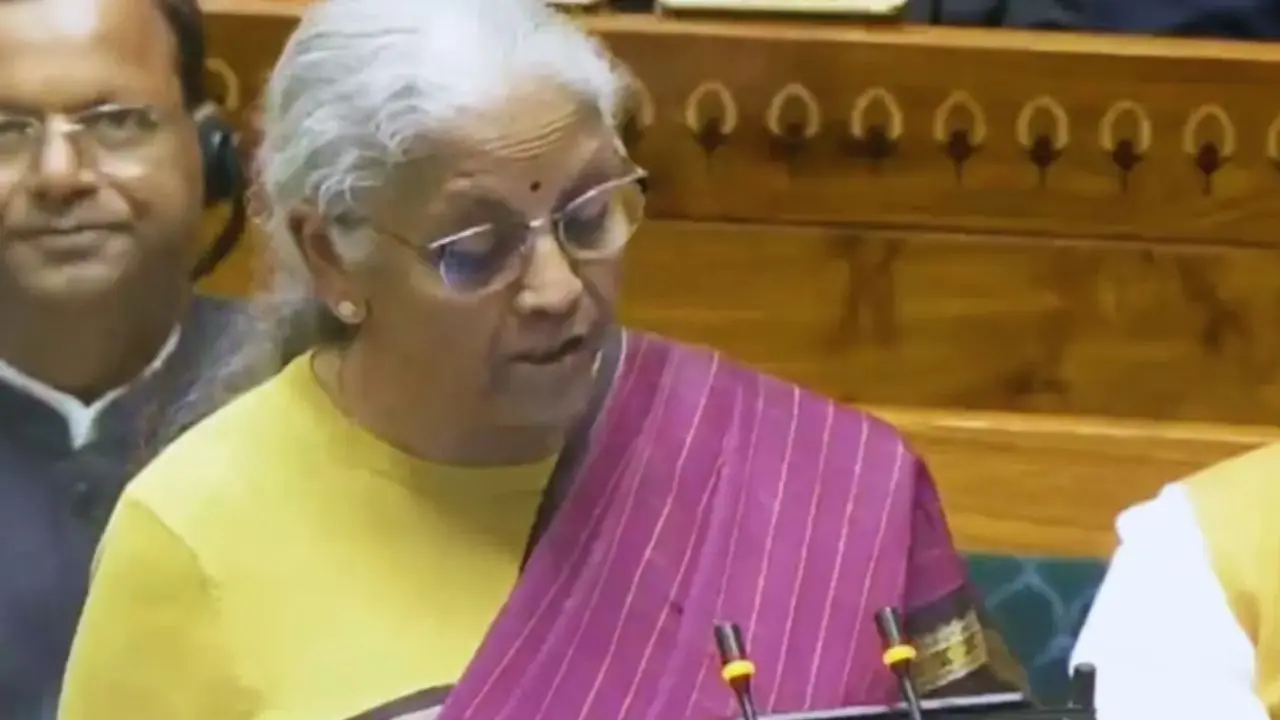
Union Finance Minister Nirmala Sitharaman while speaking in the Parliament during Budget Session 2026. File pic
Amid the West Asia war, the impact of the rise in global crude oil prices on the rate of inflation in India is not estimated to be substantial at this point. Union Finance Minister Nirmala Sitharaman, while speaking in the Parliament during the Budget Session 2026, said that India’s inflation is near the "lower bound".
Sitharaman highlighted that the price of crude oil that India imports has been on a declining trajectory for the past year till the geopolitical clashes commenced in West Asia on February 28, 2026, as reported by IANS.
The Union Finance Minister further added, "Between the end of February and March 2, 2026, the crude oil price (Indian basket) rose from USD 69.01 per barrel to $80.16 a barrel. Given that India's inflation is near the lower bound, the impact on inflation is not estimated to be substantial at this point," reported IANS.
Global crude oil prices rise amid the West Asia War
Global crude prices have been rising since February 28, when the US and Israel launched military strikes on Iran. The war has now spread to the Middle East region as Iran hit back with retaliatory drone and missile strikes on US bases in the region.
Replying to the question in the Parliament, Sitharaman said, “RBI's Monetary Policy Report in October 2025 had estimated that if crude oil prices are higher by 10 per cent than the baseline assumptions, and assuming full pass-through to domestic prices, inflation could turn out to be higher by 30 basis points.”
Sitharaman highlights four factors impacting crude oil prices
Sitharaman further stated that the medium-term impact of the global crude oil price rise on inflation depends on several factors, including exchange rate movements; global demand and supply situations; monetary policy transmission; the state of general inflation; and the extent of the indirect pass-through.
The average retail inflation measured by the Consumer Price Index declined from 5.4 per cent in 2023-24 to 4.6 per cent in 2024-25 and further to 1.8 per cent in 2025-26 (April-January), reported IANS.
The headline inflation for January 2026 stood at 2.75 per cent and is near the lower bound of the RBI's inflation tolerance band of 2 per cent to 4 per cent.
She further added, “As part of inflation management, the Monetary Policy Committee (MPC) has reduced the policy rate by 125 basis points cumulatively since February 2024."
The government has also undertaken a series of measures to control inflation and mitigate its impact on the common citizen. These include augmentation of buffer stocks for essential food items, strategic sales of procured grains in the open market and facilitation of imports and export curbs during periods of short supply, she said.
Besides, the government has taken fiscal steps such as exempting annual incomes up to Rs 12 lakh (and Rs 12.75 lakh for salaried individuals) from income tax so that the middle class has more money in its hands. Besides, the GST rates have been cut across the board to make goods and services cheaper for consumers, she added.
(With inputs from IANS)
Subscribe today by clicking the link and stay updated with the latest news!" Click here!