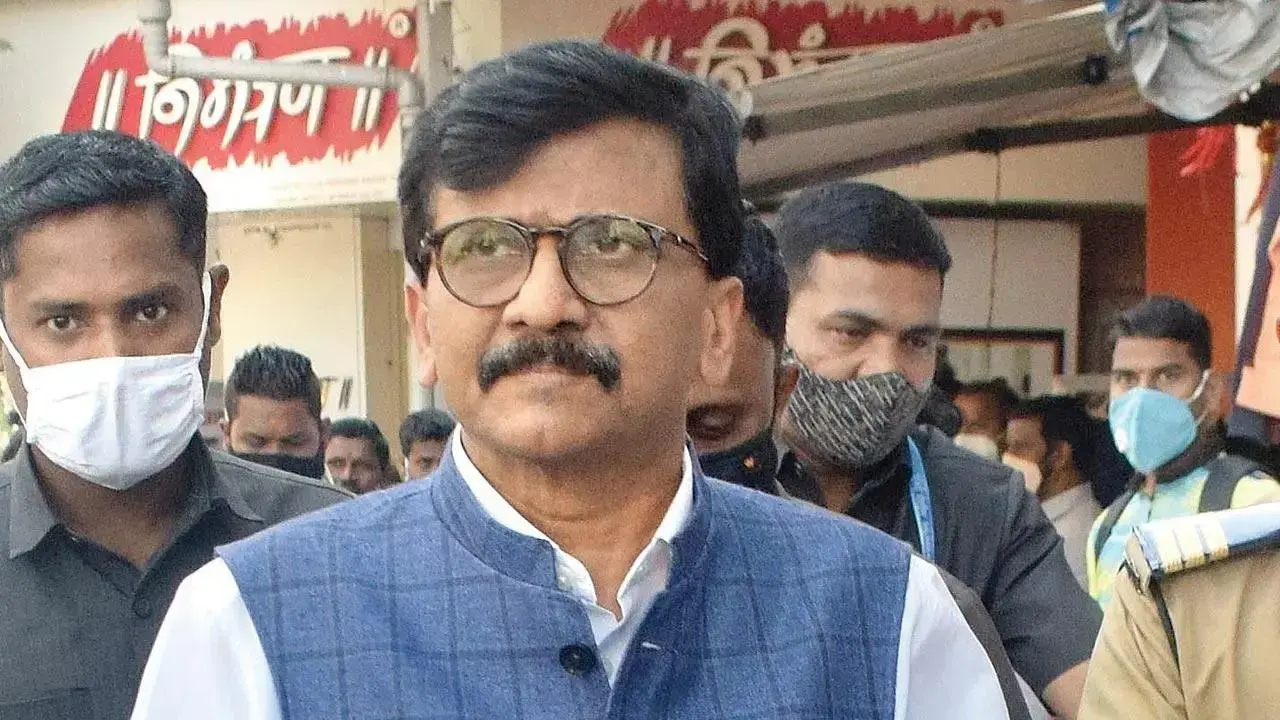
Raut said the opposition had demanded a discussion in both Houses on the geopolitical developments in the region, but the government had not allowed a debate

Sanjay Raut. File Pic
Shiv Sena (UBT) MP Sanjay Raut on Tuesday criticised the Centre, alleging that the government is avoiding a detailed discussion in Parliament on the implications of the escalating conflict in West Asia and its potential impact on India, reported news agency ANI.
Speaking to reporters during the ongoing Parliament Budget Session, Raut said the opposition had demanded a discussion in both Houses on the geopolitical developments in the region, but the government had not allowed a debate, reported ANI.
Opposition demands discussion on regional conflict
Raut said the issue was raised in both the Lok Sabha and the Rajya Sabha, as opposition leaders sought a discussion on how the conflict in West Asia could affect India’s security, economy and energy supplies.
“The issue of the no-confidence motion against the Speaker will keep going. Yesterday, there was a demand in both Houses to discuss the implications of the ongoing conflict in the nearby region on India,” Raut said, reported ANI.
He argued that examining the consequences of the conflict is in the national interest and should be debated in Parliament.
“To discuss the implications of the conflict is in the interest of the nation, but the government does not want to talk about it,” he added, reported ANI.
Raut questions Centre’s stance in Parliament
The Shiv Sena (UBT) leader also criticised the statement made by External Affairs Minister S. Jaishankar in Parliament on Monday regarding the situation in West Asia.
Raut said the minister spoke about peace and diplomacy while tensions were escalating in regions close to India.
“The External Affairs Minister spoke about ‘peace’ when there is unrest in areas around our country,” Raut said, while also questioning the government’s broader approach to the situation, reported ANI.
He further asked what Prime Minister Narendra Modi had been doing in Israel before the conflict began, raising concerns over India’s diplomatic engagement in the region.
Jaishankar stresses peace, safety of Indians
During his statement in Parliament on Monday, Jaishankar said that the conflict in West Asia is a matter of serious concern for India, given the country’s strong economic and strategic ties with the region.
He noted that India has significant stakes in maintaining peace and stability in West Asia.
“We are a neighbouring region and understandably have obvious stakes in West Asia remaining stable and peaceful,” Jaishankar said, reported ANI.
The minister also pointed out that nearly one crore Indians live and work in Gulf countries, while a few thousand Indian citizens are currently in Iran for study or employment.
According to the government, ensuring the safety and well-being of these citizens remains a top priority.
Government calls for dialogue and de-escalation
Jaishankar reiterated that India supports diplomatic efforts to reduce tensions and resolve the conflict through peaceful means.
“India is in favour of peace and urges a return to dialogue and diplomacy. We advocate de-escalation, restraint and ensuring the safety of civilians,” he said, reported ANI.
The minister also emphasised that India’s energy security is closely linked to stability in the region, which supplies a large share of the country’s oil and gas imports.
West Asia tensions escalate after military strikes
Tensions in West Asia have sharply escalated following the killing of Iran’s Supreme Leader Ali Khamenei in joint military strikes carried out by the United States and Israel on February 28.
The strikes also killed several senior leaders of Iran’s ruling establishment, triggering a strong retaliatory response from Tehran.
Iran subsequently launched counter-strikes targeting American military bases in several Arab countries and Israeli assets across the region. Israel, along with the United States, continued military operations in Tehran and expanded attacks to Lebanon, targeting Hezbollah and other Iran-backed militant groups.
The intensifying conflict has raised global concerns about regional stability, energy security and the safety of expatriate communities, including millions of Indians living and working across West Asia.
(With inputs from ANI)
Subscribe today by clicking the link and stay updated with the latest news!" Click here!