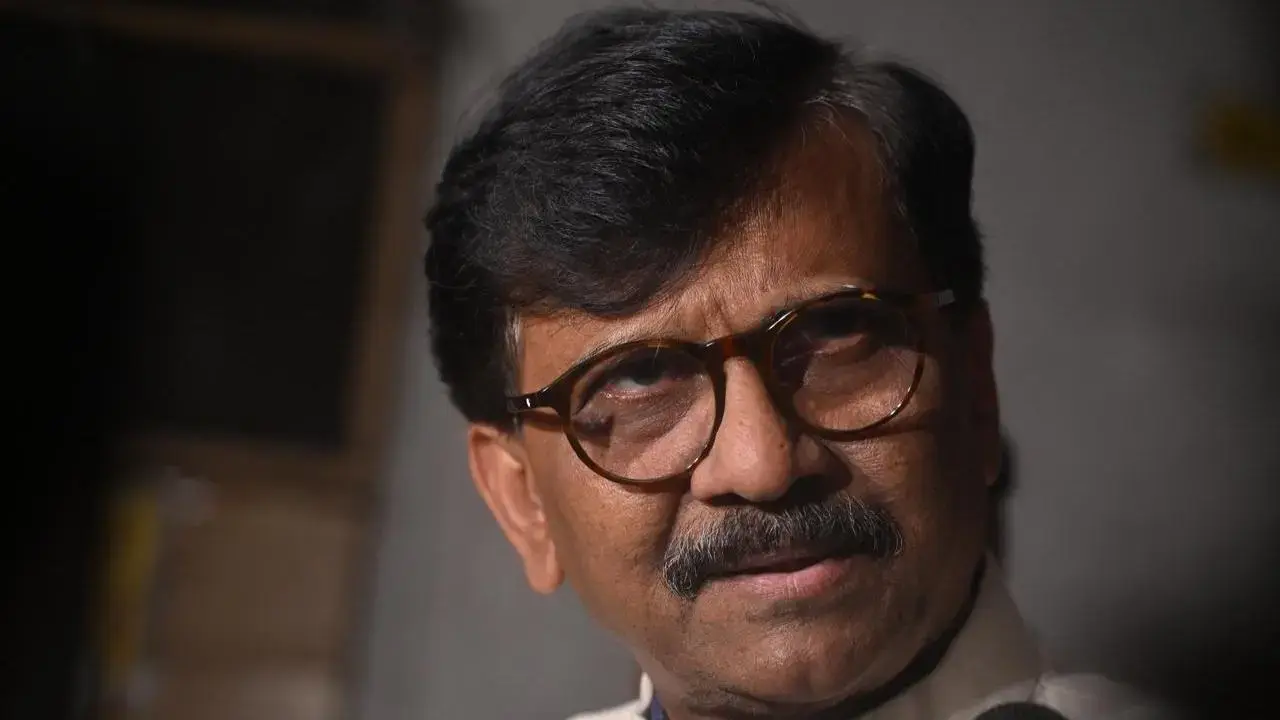
Addressing a press conference, Sanjay Raut said the government has not clearly articulated India’s role despite the conflict’s growing global implications

Sanjay Raut. File Pic
Shiv Sena (UBT) MP Sanjay Raut on Monday questioned the Centre’s stance on the escalating US-Israel-Iran conflict, calling it a “very dangerous turning point” and urging the government to clarify India’s position, reported news agency ANI.
Raut questions Centre’s silence
Addressing a press conference, Raut said the government has not clearly articulated India’s role despite the conflict’s growing global implications.
“No one can say what India’s role is. This war has reached a very dangerous turning point,” he said, adding that the country’s leadership should communicate its strategy and response, reported ANI.
Raut also questioned why Prime Minister Narendra Modi has not publicly expressed a detailed position on the crisis so far.
Concerns over impact on India
Shiv Sena (UBT) MP Priyanka Chaturvedi highlighted the domestic impact of the conflict, particularly on essential supplies, reported ANI.
She said shortages of LPG and disruptions in supply chains have already begun affecting daily life, with restaurants and eateries struggling to operate fully due to limited cooking gas availability.
“The impact on the public is serious. This is not just a geopolitical issue — it is affecting everyday life,” she said, reported ANI.
Govt reviews economic and supply situation
Meanwhile, the Centre has held high-level discussions to assess the impact of the conflict on India’s economy and essential sectors.
Officials reviewed potential short-term, medium-term and long-term effects across key areas such as agriculture, fertilisers, energy, food security, power, MSMEs, trade and supply chains, reported ANI.
Measures to safeguard essential supplies
The government said adequate stock of coal at power plants will ensure uninterrupted electricity supply.
It also reviewed fertiliser availability for the upcoming Kharif season and explored alternative sourcing options to maintain food security.
Efforts are also underway to diversify import sources for critical sectors such as chemicals, pharmaceuticals and petrochemicals.
Focus on preventing disruption
Prime Minister Narendra Modi has directed all ministries to coordinate closely and ensure minimal disruption to citizens.
He also emphasised the need to work with state governments to prevent black-marketing and hoarding of essential commodities, reported ANI.
Global conflict, domestic implications
The ongoing tensions in West Asia are expected to have wide-ranging effects on global markets and supply chains, with India closely monitoring developments.
While opposition leaders continue to demand greater transparency, the government maintains that it is taking necessary steps to mitigate the impact and safeguard national interests.
(With inputs from ANI)
Subscribe today by clicking the link and stay updated with the latest news!" Click here!