shot-button
T20 World Cup 2026 Article Details T20 World Cup 2026 Article Details
Home > News > India News > Article > Total Lunar Eclipse to grace skies on March 3 visible across most of India

Total Lunar Eclipse to grace skies on March 3; visible across most of India

Updated on: 02 March,2026 05:02 PM IST  | 
Written by: Anushree Gaikwad | mailbag@mid-day.com

In India, most areas will witness the end of the eclipse at moonrise, while parts of North-East India and the Andaman and Nicobar Islands will see the end of totality as well

Total Lunar Eclipse to grace skies on March 3; visible across most of India

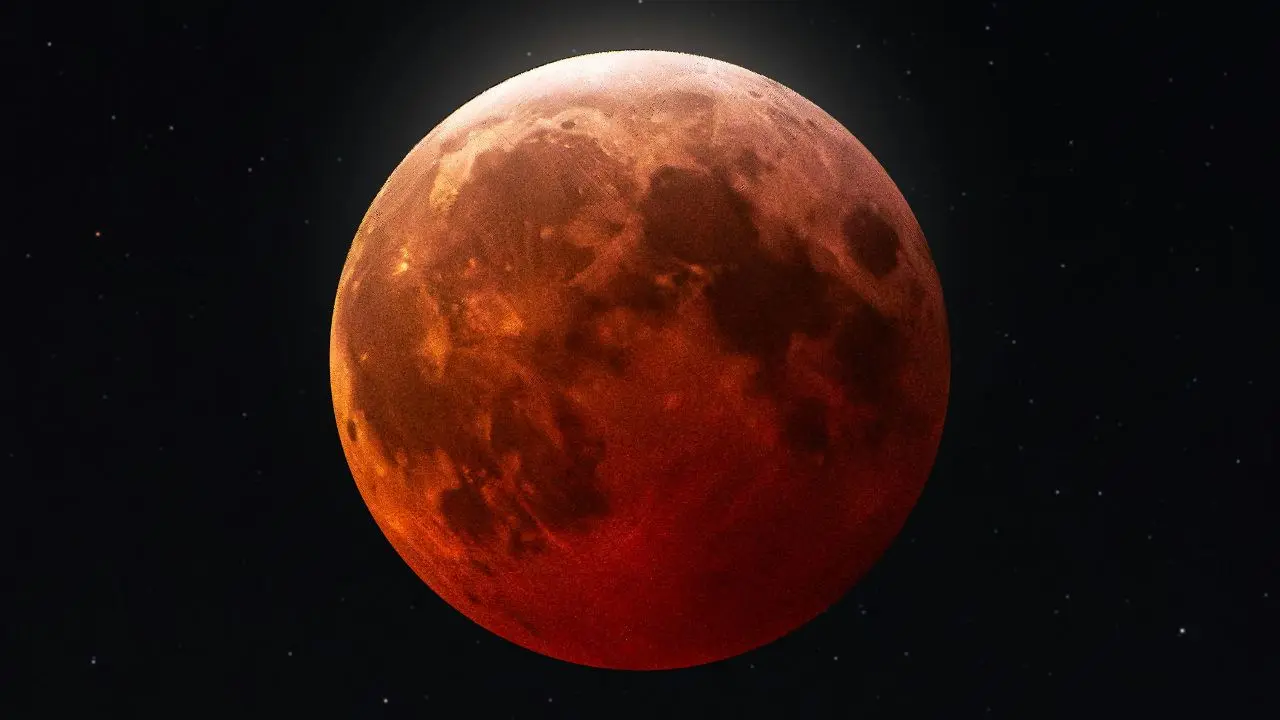
The eclipse will be observable across eastern Asia, Australia, the Pacific Ocean, and the Americas, as per reports. Representational Pic

Listen to this article
Total Lunar Eclipse to grace skies on March 3; visible across most of India
x
00:00

The total lunar eclipse on Tuesday, March 3,  (12 Phalguna, 1947 Saka Era) will be visible from most parts of India, except some extreme western regions. 

The eclipse will be observable across eastern Asia, Australia, the Pacific Ocean, and the Americas, as per reports. 


In India, most areas will witness the end of the eclipse at moonrise, while parts of North-East India and the Andaman and Nicobar Islands will see the end of totality as well.


Eclipse begins: 15:20 IST

Totality begins: 16:34 IST

Totality ends: 17:33 IST

Eclipse ends: 18:48 IST

Magnitude: 1.155

A lunar eclipse occurs when the Earth comes between the Sun and the Moon, casting a shadow on the Moon. A total lunar eclipse happens when the entire Moon passes through the Earth’s umbra, while a partial eclipse occurs when only a portion of the Moon is shaded.

The previous total lunar eclipse visible in India was on 7-8 September 2025, and the next lunar eclipse visible in India will be a partial one on 6 July 2028.

Onset of the Eclipse

A lunar eclipse occurs when the Earth comes between the Sun and the Moon, casting its shadow on the Moon and reducing its brightness. During this time, the Moon often appears blood-red. As the Earth’s shadow begins to cover the Moon, its glow gradually dims. This initial phase is known as the onset of the eclipse. When the Earth’s shadow fully covers the Moon, the event is called a total lunar eclipse.

"Exciting news! Mid-day is now on WhatsApp Channels Subscribe today by clicking the link and stay updated with the latest news!" Click here!

Did you find this article helpful?

Yes
No

Help us improve further by providing more detailed feedback and stand a chance to win a 3-month e-paper subscription! Click Here

Note: Winners will be selected via a lucky draw.

Help us improve further by providing more detailed feedback and stand a chance to win a 3-month e-paper subscription! Click Here

Note: Winners will be selected via a lucky draw.

news national news India news holi Science

Mid-Day Web Stories

Mid-Day Web Stories

This website uses cookie or similar technologies, to enhance your browsing experience and provide personalised recommendations. By continuing to use our website, you agree to our Privacy Policy and Cookie Policy. OK