Home / News / India News / Article /
When audience was customer
Updated On: 30 August, 2015 08:33 AM IST | | Devdutt Pattanaik
<p>A few months ago, I attended a fabulous Marathi show called Sangeet Bari that spoke about a little-known, yet widely prevalent, subculture of traditional singers and dancers in Maharashtra who perform only at private gatherings.</p>



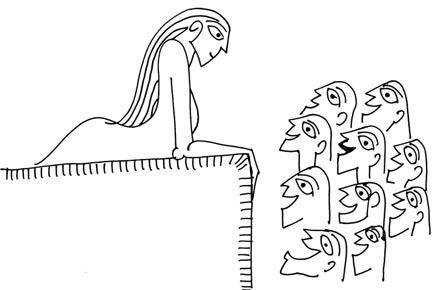
 A few months ago, I attended a fabulous Marathi show called Sangeet Bari that spoke about a little-known, yet widely prevalent, subculture of traditional singers and dancers in Maharashtra who perform only at private gatherings. It gave me a glimpse into the dancing halls of dancing girls, popularly known as 'nautch girls', would have been, before they were termed dirty, condemned by British colonisers and many puritan Hindus in the 19th and 20th century. It was in these private performing spaces that the arts flourished in India: Where song and dance was cultivated, way before the modern classification of folk, popular and classical. This was the world of the 'nat', the performer, a special kind: not one who was attached to a temple, not one who sought audiences like a migrant performer, but one who got audiences to seek him/her out. During the performance, the Sangit Bari performer said, “But we don't have audiences. We have customers!” And with that one sentence, I realised she was revealing one of the deepest secrets of Natya-Shastra, the Indian theory of performing arts that makes Indian performance art rather unique. She revealed the two-way relationship between the performer and audience, which is not just sensory, emotional or intellectual, but also commercial.

Illustration/Devdutt Pattanaik
How do you like the new new mid-day.com experience? Share your feedback and help us improve.
Trending Stories
Latest Photos
Latest Videos
Latest Web Stories
ADVERTISEMENT
Mid-Day Fast
ADVERTISEMENT

ADVERTISEMENT