shot-button
E-paper E-paper
Home > News > World News > Article > Earthquake of magnitude 39 strikes Nepal

Earthquake of magnitude 3.9 strikes Nepal

Updated on: 30 June,2025 01:52 PM IST  |  Kathmandu
ANI |

As per the NCS, the earthquake occurred at a shallow depth of 14km, making it susceptible to aftershocks. Shallow earthquakes are more dangerous than deeper ones due to their greater energy release closer to the Earth's surface, causing stronger ground shaking and increased damage to structures and casualties, compared to deeper earthquakes

Earthquake of magnitude 3.9 strikes Nepal

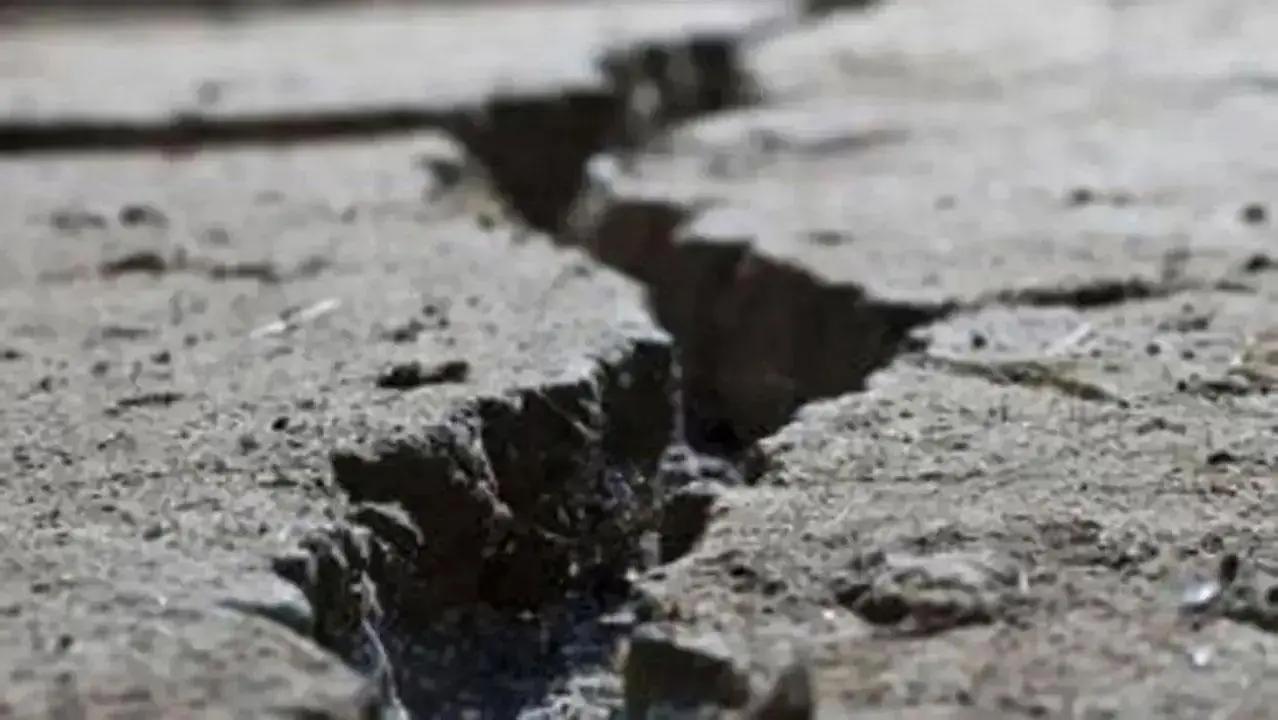
Nepal has a long history of earthquakes, including devastating events like the 2015 earthquake. Representational pic

Listen to this article
Earthquake of magnitude 3.9 strikes Nepal
x
00:00

An earthquake of 3.9 magnitude jolted Nepal on Sunday, a statement by the National Center for Seismology (NCS) said.

As per the NCS, the earthquake occurred at a shallow depth of 14km, making it susceptible to aftershocks.

In a post on X, NCS said, "EQ of M: 3.9, On: 30/06/2025 08:24:21 IST, Lat: 29.24 N, Long: 81.77 E, Depth: 14 Km, Location: Nepal."


Earlier on Sunday, another earthquake of magnitude 4.2 struck the region at a depth of 10km.

In a post on X, the NCS said, "EQ of M: 4.2, On: 29/06/2025 14:19:05 IST, Lat: 29.35 N, Long: 81.94 E, Depth: 10 Km, Location: Nepal."


Shallow earthquakes are more dangerous than deeper ones due to their greater energy release closer to the Earth's surface, causing stronger ground shaking and increased damage to structures and casualties, compared to deeper earthquakes, which lose energy as they travel to the surface.

Nepal is highly earthquake-prone due to its location on a convergent boundary where the Indian and Eurasian tectonic plates collide. This collision generates immense pressure and stress, which is released as earthquakes. Nepal is also situated in a subduction zone where the Indian Plate is sliding beneath the Eurasian Plate, further increasing stress and strain.

Nepal lies in the Himalayan region, a zone of intense seismic activity caused by the ongoing collision of the Indian and Eurasian tectonic plates. This collision results in the Indian plate pushing beneath the Eurasian plate in a process called subduction, creating immense pressure and strain on the Earth's crust.

The subduction zone further amplifies the stress, making Nepal highly vulnerable to earthquakes. The collision also contributes to the uplift of the Himalayan mountains, adding to the overall seismic activity in the region.

Nepal has a long history of earthquakes, including devastating events like the 2015 earthquake.

Earlier on April 26, Nepali Prime Minister KP Sharma Oli stood below the replica of Dharahara Tower that fell down on April 25 2015 and observed a minute's silence for 8,969 victims who lost their lives in the devastating earthquake of 7.8 Richter scale. 

This story has been sourced from a third party syndicated feed, agencies. Mid-day accepts no responsibility or liability for its dependability, trustworthiness, reliability and data of the text. Mid-day management/mid-day.com reserves the sole right to alter, delete or remove (without notice) the content in its absolute discretion for any reason whatsoever.

"Exciting news! Mid-day is now on WhatsApp Channels Subscribe today by clicking the link and stay updated with the latest news!" Click here!

Did you find this article helpful?

Yes
No

Help us improve further by providing more detailed feedback and stand a chance to win a 3-month e-paper subscription! Click Here

Note: Winners will be selected via a lucky draw.

Help us improve further by providing more detailed feedback and stand a chance to win a 3-month e-paper subscription! Click Here

Note: Winners will be selected via a lucky draw.

earthquake nepal nepal earthquake world news International news

Mid-Day Web Stories

Mid-Day Web Stories

This website uses cookie or similar technologies, to enhance your browsing experience and provide personalised recommendations. By continuing to use our website, you agree to our Privacy Policy and Cookie Policy. OK