Home / News / World News / Article /
Scientists discover 210-million-year-old crocodile relative in New Mexico fossils
Updated On: 03 June, 2026 08:23 AM IST | Santa Fe | Agencies
Researchers have identified a new prehistoric crocodile relative, Eosphorosuchus lacrimosa, from 210-million-year-old fossils discovered in New Mexico. The ancient reptile featured a shorter snout, a sturdier skull and powerful jaws adapted for hunting larger prey during the Late Triassic period





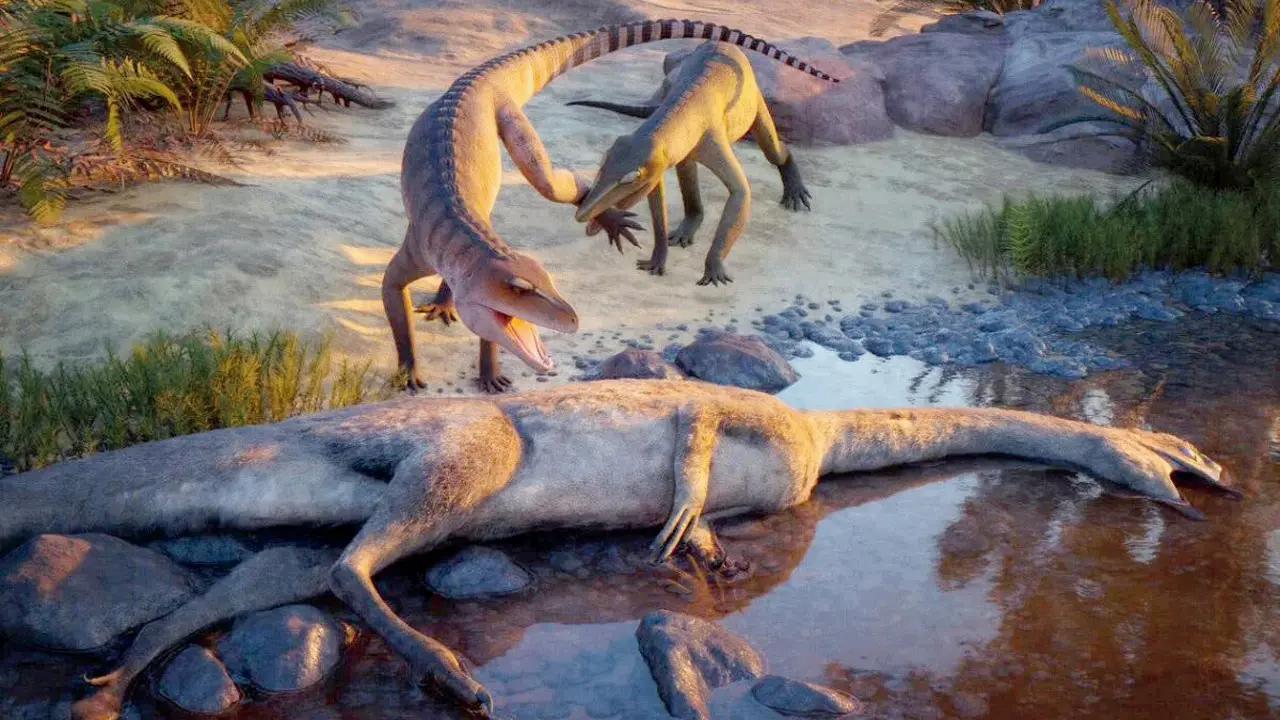
Eosphorosuchus lacrimosa (left) and Hesperosuchus agilis (right). PIC COURTESY/Julio Lacerda
A newly identified prehistoric crocodile relative, Eosphorosuchus lacrimosa, was discovered alongside another croc species in New Mexico fossils dating back 210 million years.
The crocodile relative — Eosphorosuchus lacrimosa, which was newly discovered — was built differently. It had a shorter snout, a sturdier skull, and larger jaw muscles suited for biting larger prey.
Trending Stories
Latest Photos
Latest Videos
Latest Web Stories
ADVERTISEMENT
Mid-Day Fast
ADVERTISEMENT