shot-button
E-paper E-paper
Home > News > World News > Article > Some US deportees to Ghana say they are still held there contradicting Ghanaian authorities

Some US deportees to Ghana say they are still held there, contradicting Ghanaian authorities

Updated on: 18 September,2025 09:43 AM IST  |  Dakar
AP |

Three of the deportees spoke to AP of the "terrible" conditions under which they are being held at a military camp, the Bundase camp, on the outskirts of Ghana's capital, Accra


Some US deportees to Ghana say they are still held there, contradicting Ghanaian authorities

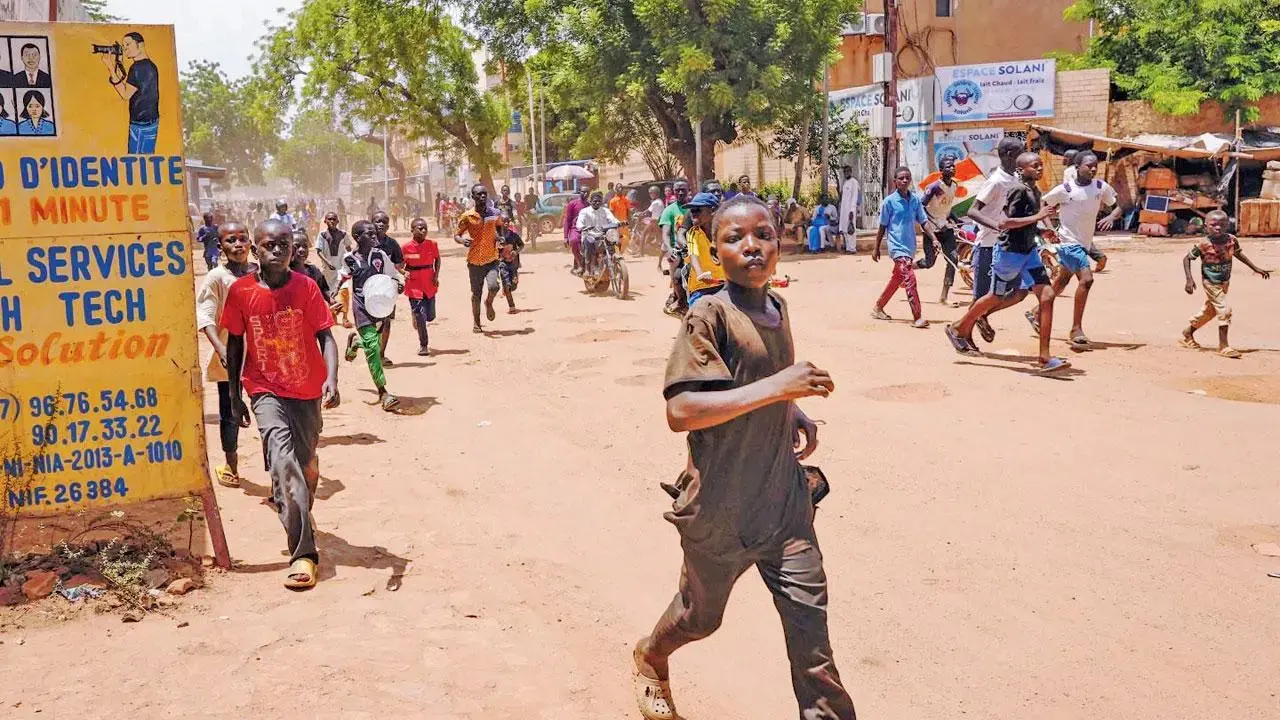
Children running amok in the streets of Niamey. Pic/AP

Listen to this article
Some US deportees to Ghana say they are still held there, contradicting Ghanaian authorities
x
00:00

At least 11 of the 14 immigrants deported by the US to Ghana are still being held in the West African nation, the deportees and their lawyers told The Associated Press on Wednesday, contradicting claims from Ghanaian authorities that the deportees have been sent to their home countries.

Three of the deportees spoke to AP of the "terrible" conditions under which they are being held at a military camp, the Bundase camp, on the outskirts of Ghana's capital, Accra. They said the 11 deportees still in Ghana include four Nigerians, three Togolese, two Malians and one each from Gambia and Liberia.


A group of 14 immigrants was first deported by the US to Ghana on September 6, the deportees said, speaking to AP on the phone on the condition of anonymity for fear of their safety. The AP could not independently verify their current location.


At least one of the 14 has returned to Gambia, his home country, according to his lawyer and US court filings. Two others are believed to have been sent to their home country of Nigeria, the Gambian said in a declaration filed in court. He said the three of them were separated from the rest upon their arrival at the airport in Accra.

The claims of the deportees that they are still being held in Ghana contradict that of Ghana's presidential spokesperson Felix Kwakye Ofosu, who on Tuesday told AP that all 14 deportees had been sent to their home countries. The Ghanaian government previously said the 14 deportees were all Nigerian besides one Gambian.

Ofosu did not immediately respond to AP's inquiry on Wednesday. The confusion surrounding the deportations reflects the dizzying pace at which the Trump administration has moved ahead with its immigration priorities, which lawyers say has come at the cost of immigrants' legal rights and sometimes puts their safety at risk.

In interviews with AP, the deportees said they were not told by US authorities why they were being deported. They said some of them had already spent between 7 months to a year in US detention and that some had won their immigration cases. The AP could not independently verify their court records.

They also narrated a brutal deportation process during which some of them were handcuffed and put in a straitjacket on their flight to Ghana. 'Some of us are getting sick and have malaria due to bad water and bad food,' one of the deportees said of their condition at the military camp where they said they are being held, identifying himself as a Nigerian who had lived in the US for 12 years.

'They said nothing. Nobody said anything about why they are deporting me or where they were sending me," said the Togolese among them, 28. US lawyers argued in court that the deportations to Ghana were an attempt by the Trump administration to evade US immigration laws that prevent some of the men with legal protections from being returned to their home countries where their well-being could be at risk. A US judge said despite the legal protections, her 'hands are tied' once the migrants are in Ghana.

Meredyth Yoon, lawyer who represents four of the deportees who remain in Ghana and litigation director at the Asian Americans Advancing Justice, told AP that her clients' safety is at risk. 'They are afraid that the reason the Ghanaian government is insisting that they are not in the country is because they are afraid something will happen to them,' said Yoon.

The Trump administration's deportation programme has faced widespread criticism from human rights experts who cite international protections for asylum-seekers and question whether immigrants will be appropriately screened before being deported. Immigration and Customs Enforcement and its parent agency Department of Homeland Security did not immediately respond Wednesday to a request for comment.

Sending the deportees to their countries despite the legal orders prohibiting such over fear of their safety is "part of a pattern by the US government of extreme indifference...to the government's obligations and to the human consequences of its mass deportation campaign,' according to Maureen A. Sweeney, immigration lawyer and professor of law at the University of Maryland Carey School of Law.

This story has been sourced from a third party syndicated feed, agencies. Mid-day accepts no responsibility or liability for its dependability, trustworthiness, reliability and data of the text. Mid-day management/mid-day.com reserves the sole right to alter, delete or remove (without notice) the content in its absolute discretion for any reason whatsoever

"Exciting news! Mid-day is now on WhatsApp Channels Subscribe today by clicking the link and stay updated with the latest news!" Click here!

Did you find this article helpful?

Yes
No

Help us improve further by providing more detailed feedback and stand a chance to win a 3-month e-paper subscription! Click Here

Note: Winners will be selected via a lucky draw.

Help us improve further by providing more detailed feedback and stand a chance to win a 3-month e-paper subscription! Click Here

Note: Winners will be selected via a lucky draw.

ghana west africa world news International news donald trump news

Mid-Day Web Stories

Mid-Day Web Stories

This website uses cookie or similar technologies, to enhance your browsing experience and provide personalised recommendations. By continuing to use our website, you agree to our Privacy Policy and Cookie Policy. OK