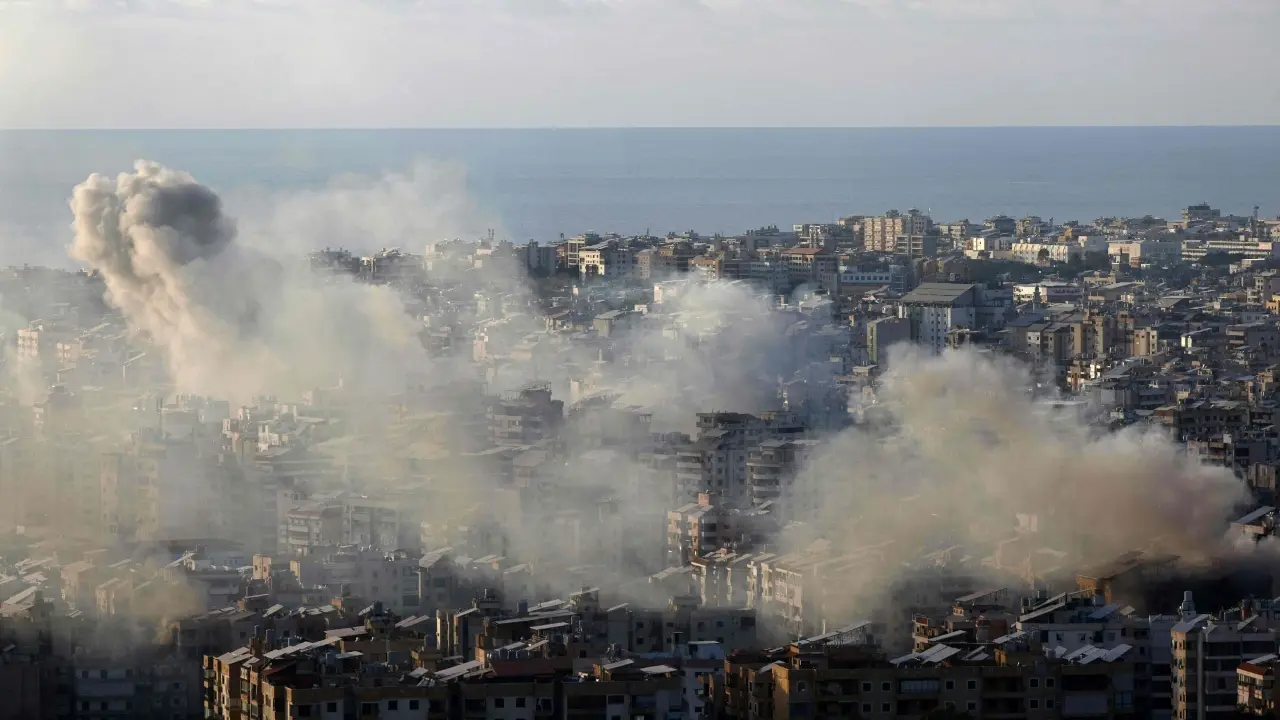
Estimates suggest that between 2,114 and 2,662 people have been killed in Iran since the start of the conflict, with thousands more believed to be injured as airstrikes and missile attacks continue across the country

Pic/AFP
The conflict involving Iran, Israel and the United States entered its seventh day on Friday, with escalating military operations and mounting casualties across West Asia. The war began after a large-scale coordinated offensive launched by the United States and Israel on February 28, 2026, targeting multiple locations inside Iran.
Estimates suggest that between 2,114 and 2,662 people have been killed in Iran since the start of the conflict, with thousands more believed to be injured as airstrikes and missile attacks continue across the country.
US–Israel strikes hit multiple Iranian cities
Reports indicate that at least 16 Iranian cities and towns have been hit by US-Israeli strikes since the start of the offensive.
Among the affected locations are Tehran, Parand, Karaj, Minab, Bandar Abbas, Ahvaz, Isfahan, Qom, Shiraz, Kermanshah, Khorramabad, Tabriz and Mashhad.
The strikes are believed to have targeted military bases, strategic infrastructure and government-linked facilities, though damage has reportedly extended into residential neighbourhoods in several cities.
Iran’s capital Tehran has been among the most heavily affected areas, with repeated strikes targeting what Israeli officials described as “regime infrastructure”.
Iran launches missiles and drones across region
Iran has responded with a large-scale counteroffensive, launching missiles and drones at multiple targets across the region.
The retaliatory attacks have targeted Israel and several Gulf countries hosting US military bases, including the United Arab Emirates, Bahrain, Qatar, Kuwait, Oman and Saudi Arabia.
Iran has also attempted attacks on US naval assets operating in the Arabian Sea, signalling a potential widening of the conflict beyond direct hostilities between Iran and Israel.
The escalating military exchanges have pushed West Asia into one of the largest regional conflicts in recent years, with multiple countries either directly involved or affected by the fighting.
Israel targets “regime infrastructure” in Tehran
According to international reports, Israel carried out a new wave of airstrikes early Friday aimed at what it called “regime infrastructure” in Tehran.
Israeli officials said the campaign is designed to cripple Iran’s military capabilities and weaken the country’s ruling establishment.
Meanwhile, NATO has strengthened its ballistic missile defence posture as Iranian missile launches across the region intensify.
The alliance’s 32 member states agreed to maintain missile defence systems at a heightened level after an Iranian missile fired toward Turkey, a NATO member, was intercepted.
War expands from Lebanon to the Gulf
The conflict has also spread beyond Iran and Israel, drawing in multiple countries across West Asia.
Lebanon became directly involved earlier this week after Hezbollah launched attacks on Israel following the killing of Iranian Supreme Leader Ayatollah Ali Khamenei.
Lebanon’s health ministry reported that at least 123 people have been killed and more than 680 injured since the country entered the conflict earlier in the week.
Israel has since carried out airstrikes on Beirut’s southern suburbs, which it claims are aimed at Hezbollah infrastructure.
The Israeli military issued a rare evacuation warning for the entire area, urging residents to immediately leave their homes, triggering widespread panic and heavy traffic as civilians attempted to flee.
Tensions rise beyond West Asia
The conflict has also begun affecting regions beyond the Middle East.
A US submarine reportedly torpedoed an Iranian warship off the coast of Sri Lanka, signalling the expansion of the confrontation into the Indian Ocean region.
At the same time, tensions increased in Azerbaijan after a drone strike hit an airport, leading to threats of retaliation.
Iranian Foreign Minister Abbas Araghchi adopted a defiant stance, telling NBC News that Tehran has not sought a ceasefire and currently sees no reason to negotiate with the United States.
Meanwhile, Israel’s military chief Lieutenant General Eyal Zamir said the military campaign against Iran was entering its “next phase”, warning that Israel still had “additional surprises ahead.”
As the conflict intensifies, concerns are growing globally that the fighting could escalate further into a broader regional war involving multiple powers.
(With inputs from Agencies)
Subscribe today by clicking the link and stay updated with the latest news!" Click here!