Home / Sunday-mid-day / Article /
Brace yourself for life's biggest behavioural change after lockdown
Updated On: 12 April, 2020 07:45 AM IST | Mumbai | Jane Borges, P Vatsalya
Even as the lockdown has been extended until May, Mumbai's unsatisfactory infection record, say stakeholders, means that when restrictions are lifted, it will be gradual and make unprecedented behavioural demands on us





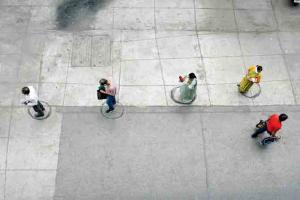
People queue up for groceries, while practising social distancing, in Borivli. Pic/ Nimesh Dave
In her just-released monograph of Shivaji Park, veteran writer-translator Shanta Gokhale references a crisis from the early 19th century that strangely, seems similar to what the city and its people are enduring now. In Shivaji Park, Dadar 28: History, Places, People, Gokhale discusses the plague of 1896 that "threw up a complex narrative of class, caste, community, traditions, ignorance and prejudice". She writes, "The steps that the British government took to control the epidemic, such as forcible examination, isolation and quarantine, caused intense anger among the citizens."
Many left for their villages, mostly to escape the disease—said to have originated in the Chinese mainland and reached the port city of Bombay through naval routes. With no cure, superstition was rampant even within the medical fraternity, and there seemed to be little acceptance about a bacilli causing the illness. It took months for the resistance to fade. Ukrainian bacteriologist Dr Sir Waldemar Mordechai Wolff Haffikine's vaccine was the miracle Bombay desperately needed.
Trending Stories
Latest Photos
Latest Videos
Latest Web Stories
ADVERTISEMENT

Ganeshotsav 2026

ADVERTISEMENT