shot-button
T20 World Cup 2026 Article Details T20 World Cup 2026 Article Details
Home > Sunday Mid Day News > International Womens Day 2026 Meet 12 women in Mumbai who are changing things in the city

International Women's Day 2026: Meet 12 women in Mumbai who are changing things in the city

Updated on: 08 March,2026 07:31 AM IST  |  Mumbai
Team SMD |

Sovereignty, safety, or sexual agency — here are 12 women who are not waiting for anyone else to make the change. They are doing it by themselves, for you, me, and all of Mumbai


International Women's Day 2026: Meet 12 women in Mumbai who are changing things in the city

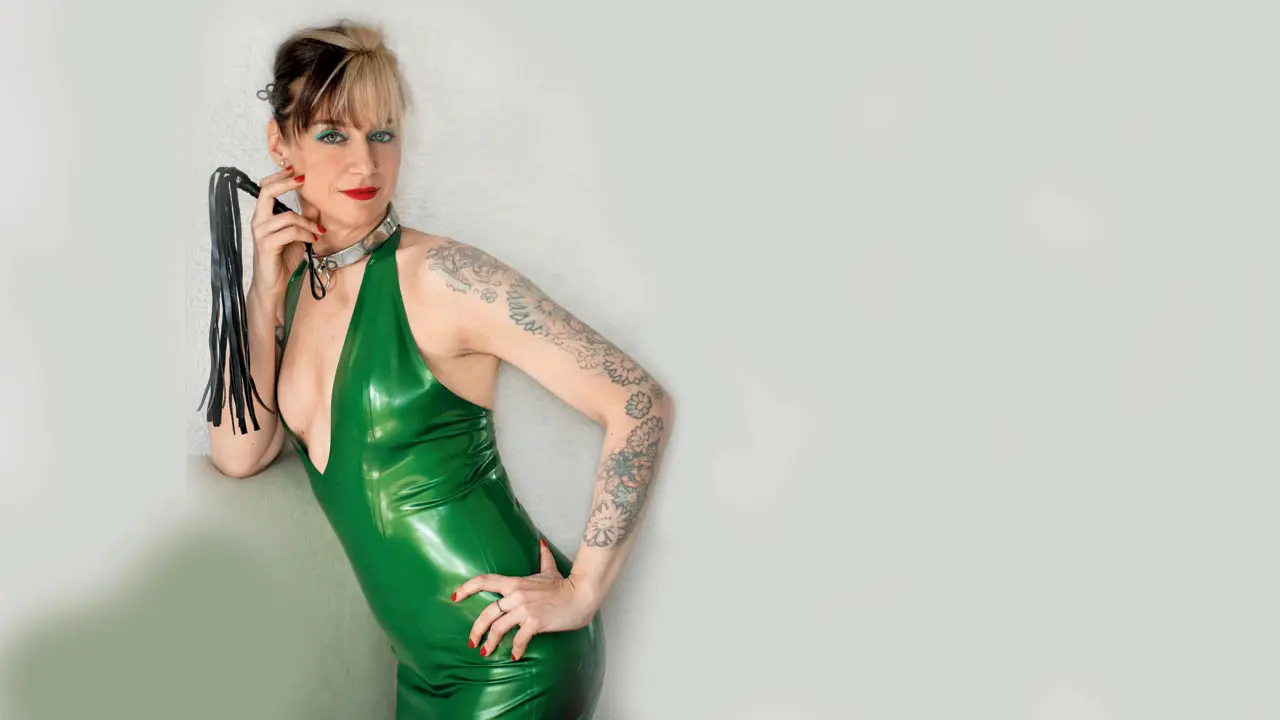
Aili Seghetti

Listen to this article
International Women's Day 2026: Meet 12 women in Mumbai who are changing things in the city
x
00:00

‘Women de-centering men from pleasure’
Aili Seghetti, /// 50, Founder, Intimacy Curator
Responsible for helping women find their language of intimacy

Arpika Bhosale


The city’s sex-positive movement found an ally smack in the middle of COVID pandemic in the form of Aili Seghetti. Seghetti, who had been working on marketing and advertising campaigns, realised that the conversation about having a successful romantic relationship or an intimate relationship had a limited vocabulary.


Out of this awareness was borne the Intimacy Curator, a sexual wellness collective that has been helping the city unlearn outdated notions of intimacy. It has, though, been tough, admits Seghetti, since learning about intimacy comes with shame. “Most people think we are into organising intimacy-based events, but there is no nudity or sex at these,” she says. The truth is Seghetti deals with destigmatising desire… respectfully. 

“Usually, we also see couples and even individuals who want coaching on how to be intimate. Sometimes we do have skin-to-skin contact to demonstrate, but no genital stimulation,” she says. “Even for our events, people have to answer questions about consent [or non-monogamous events], safety and what they think kink is [for kink events], and we usually find most women understand this very well and often do not require the 90-minute workshop,” she adds. 

Women in the city have certainly been more open to experiences, and the sex-positive curation collective has been right there with them. “More and more women in the city are learning to de-centre men from their pleasure. Which means that pleasure is being seen from a woman’s perspective rather than only the man’s, and I think that is definitely a big win for movement towards us reclaiming our pleasure,” she adds.

While initially Intimacy Curator struggled with the misconception that they facilitate hookup events, Seghetti has worked hard to debunk these notions. “Consent is non-negotiable during any kind of intimacy. But I think more people have begun to understand that events like these are not to go and have sex, it’s about finding a space where you can engage in ‘adult-play’,” she adds. This particular format though, has been mimicked and copied by others into much smaller, more intimate gatherings, and Seghetti doesn’t mind. “I am just glad people are rediscovering this by themselves,” she signs off.

Marie Curie: The OG science girlie who made immeasurable contributions to the field of radiology. She was the first woman to ever win the Nobel Prize. She died after decades of radiation exposure during her pioneering research. 

‘Complaining is easy, getting people together, is harder’
Anca Florescu Abraham /// 44, Architect and urban planner, partner at Bombay Greenway
Responsible for initiating activities at neglected public spaces across the city

Junisha Dama

For Anca Florescu Abraham, the idea of changing Mumbai began with a whistle. It wasn’t a whistle of celebration; instead, this one was blown by a watchman when her child stepped onto the grass at a local park.

“I had small kids and used to take them to parks,” she recalls. “And we would constantly get into arguments with the watchmen because of these strange rules. Some parks didn’t allow food, and some didn’t allow walking on the grass. But kids and grass go well together.”

What started as a few frustrated parents pushing back against arbitrary rules has since grown into Love Your Parks (LYP, Mumbai). Since then, it has been a citizen-led initiative encouraging people to reclaim the city’s open spaces.

Abraham remembers those early days vividly. “The watchmen would start whistling and sometimes even call the police,” she says with a laugh. “Apparently, letting babies walk on grass was a criminal act.” The pushback only strengthened the movement.

Founded in 2018, LYP Mumbai now organises community-led activities in parks across Bandra, Juhu, Versova, Andheri, and Santa Cruz. Think storytelling sessions, yoga classes, sari-wearing gatherings, choir rehearsals and art workshops. Each activity is designed to bring people of different ages into the same green spaces.

The philosophy is simple: a park that is used survives. “If we don’t use our parks, they become unsafe and eventually disappear,” Abraham says. “They get encroached upon, privatised or restricted.”

Her activism also extends into policy. In 2019, LYP Mumbai was invited by the MCGM to give inputs on the Open Spaces, a directive proposing that parks remain open from 6 am to 10 pm. This move was meant to make green spaces more accessible.

The pandemic stalled the effort, but Abraham hasn’t given up. “We’re still working on it,” she says. “Kids come home from school, and the park is shut. That makes no sense.”

Abraham, who has lived in Mumbai for two decades, works closely with her husband Alan, who is an architect and urban planner, through another initiative called Bombay Greenway, which proposes pedestrian-friendly and community-oriented urban solutions.

For her, the work is about something larger than parks. “I worry about the future of this city,” she says. “Complaining is easy. But bringing people together and trying to change things, is harder.” Still, Abraham remains hopeful. If Mumbai’s residents rediscover their parks, she believes the city itself might change with them.

Anca’s Impact

>>  Founded Love Your Parks Mumbai in 2018
>>  Organises community events across multiple Mumbai parks
>>  Helped push a BMC directive to extend park timings
>>  Works with urban planning initiative Bombay Greenway
>>  Advocates for pedestrian-friendly and community-first urban spaces

Why LYP matters

Mumbai has among the lowest open-space ratios per capita in the world. Citizen-led initiatives like LYP Mumbai encourage communities to reclaim parks as shared public spaces and help improve safety, accessibility and civic engagement.

‘We want people to rediscover joy’
Aparna Acharekar /// 47, Media executive, co-founder of Coto
Responsible for building an online 24/7 emotional space

Junisha Dama

If you ask Aparna Acharekar where the idea for Coto began, she won’t point to a boardroom or a business plan. She’ll point to conversations. “On our early platform, the most active communities were around mental health and relationships,” she says. “People were talking about abandonment, misunderstandings, and workplace stress. When we looked deeper, we realised most problems trace back to relationships.”

That insight shaped Coto’s evolution from a women-only digital community into a 24/7 emotional wellness platform where users can access therapists, life coaches and healing experts. At its core, the platform tries to address a simple but urgent reality: people often need emotional support in the moment, instead of waiting for an appointment to open up.

Acharekar knows a thing or two about understanding people. She began her career as a journalist before moving into media leadership. Those roles, she says, were training grounds for what she does today. “Whether you’re a journalist or creating fiction content, everything is rooted in people and emotions,” she explains. “You meet so many different individuals and stories. That understanding becomes invaluable.”

But building a safe online emotional space comes with its own challenges. Unlike most social platforms, Coto relies heavily on moderation systems designed to protect both users and experts. “We take safety very seriously,” Acharekar says. “If an expert reports a user for crossing a line, the system immediately suspends that account. If the complaint is validated, we block the IP altogether.” The aim is to ensure that the people offering help, many of whom are women, feel protected while doing deeply sensitive work.

For Acharekar, however, the real measure of success isn’t downloads or revenue. “The happiest moment is when someone leaves the platform emotionally stronger,” she says. “We don’t want to become an emotional crutch. We want people to rediscover the joy in their lives.” Her philosophy about growth, both personal and professional, remains refreshingly grounded. “Opportunities are always there,” she says. “But you have to become the best version of yourself to find them.”

Aparna’s impact

>>   Co-founded Coto, a 24/7 emotional wellness platform
>>  Built a moderated online ecosystem for safe mental health conversations
>>  Focuses on relationship wellness, therapy access and emotional safety online

Why Coto matters?

India continues to face a massive shortage of accessible mental health services. Digital platforms like Coto are expanding access to psychological and emotional support by making help available instantly and anonymously online.

Sneha Chakraborty: Also known as Doodle Mapuls, she’s a leading name in India’s street art scene and the country’s first prominent female graffiti artist. Her vibrant murals across cities challenge the male-dominated nature of street art.

‘Young women should build something of their own’ 
Aaliya Ahuja /// 27, Co-founder, Saltt Karjat, Oleander Farms, Common House,  Uppu, The Pure Kitchen, and Oleander Estates
Responsible for helping people enjoy food and outdoors together in a busy city

Nasrin Modak Siddiqi

At 27, Aaliya Ahuja might seem very different from most people her age. Warm, candid, and often insisting she is ‘just going with the flow’, Ahuja has built Oleander Farms, Saltt, Uppu, Common House and The Pure Kitchen in under five years. 

“Mumbai has become a little more open to new voices and younger energy in hospitality. I didn’t grow up in kitchens or in a legacy restaurant family. I entered this space very young, learning as I went, and bringing my own lens to it. What I hope to add to the city’s dining scene is a reminder that restaurants today are not just about food; they’re about community, storytelling, and experience, but primarily about good-quality food. From the ingredients to the authenticity, everything is built around the quality of food at all our restaurants,” she adds.

Straight after the pandemic, Ahuja recognised a growing appetite for restaurants that offered more than just a meal. With people craving space, nature and slower experiences, she tapped into the emerging idea of destination dining, creating a place where food, landscape and time spent outdoors became part of the experience. “Mumbai has always had incredible restaurants, but most of them exist 
within the rhythm of the bustling city. With Oleander Farms and Saltt in Karjat, we wanted to create a space where people could slow down, spend the day, and reconnect with food, nature, and each other. It wasn’t just about opening another restaurant; it was about creating an experience people travel for.

Families celebrate birthdays there, friends spend entire afternoons, couples escape the city for a few hours. Food becomes the centre, but the experience becomes the memory. If anything, I think we’ve contributed to the idea that restaurants can be destinations,” she adds.

Ahuja feels that “many of the city’s most respected restaurants are built on decades of experience and legacy, which is amazing. However, we came in from very different places: curiosity, experimentation, and a willingness to learn publicly. I don’t know what space I’ve carved out for myself, and I believe it’s too soon to say, I have a lot more to go.”

What she tries to preserve is the spirit of openness and generosity in food. “Whether it’s global dishes, Indian flavours, or farm-driven produce, the idea is that food should feel inclusive and joyful, much like the city itself,” she smiles.

Ahuja believes that hospitality is still a very intense, operational industry, and sometimes people assume young women are only involved in the creative side. The pushback for her has mostly been about being taken seriously as someone building and running a business, not just curating a space. “We’re cooking for people who love gathering. Mumbai moves fast, and everyone is always rushing somewhere. 

Our space is really for people who want to pause for a moment to celebrate, reconnect, and share food with the people they love. And the stories we bring to the table are really those of our team, our farm, and our family. It is the journey of building something from scratch. If my presence does anything, I hope it makes the industry feel more accessible for young women who want to build something of their own,” she signs off.

‘Healing through hair is a metamorphosis’
Avani Yashwin /// 38, Curly hair stylist, founder of Happy In The Head
Responsible for creating awareness around curly hair

Akshita Maheshwari

Hair is everything. We wish it wasn’t, so we could actually think about something else occasionally, but it is. It is the difference between a good day and a bad day,” said Phoebe Waller-Bridge in a now infamous monologue from Fleabag (2016–19). Avani Yashwin had the same realisation when she did her mother’s hair for the first time. 

“My mother had always had a ‘boy cut’ because she didn’t know how to manage her hair. When I worked on her hair, I saw this woman who had never looked in the mirror and loved what she saw. For the first time in her life, she realised her hair is not frizzy, unkempt, untidy, shabby, bushy,” says Yashwin.

Avani Yashwin is the founder of the salon Happy In The Head.  PIC/SHADAB KHAN
Avani Yashwin is the founder of the salon Happy In The Head. PIC/SHADAB KHAN

If you have curly hair and live in India, you know that your options are few in number. Although we may get a barrage of curly hair products, stylists are few and far to be found. One of the OG curly hair stylists in the city is Avani Yashwin, founder of Happy In The Head, who’s been in the business for close to two decades now.  

“I have always found curly hair stunning, mesmerising, rebellious, and unabashedly beautiful,” she says, “But when you’re constantly told bad things about your hair, it sows seeds of self-deprecation. You’re always looking to turn yourself into somebody else to fit somebody else’s idea of beauty. That really pushed me toward discovering the potential of curly hair. In 19 years of doing this, I haven’t straightened anybody’s hair.”

Today, those who have hair of this rebellious nature, much like this writer herself, can step out in the city and get a haircut without some parlour aunty asking us, “Why is your hair like jhaadu [broom]?” And Yashwin was having such a conversation way before it became a talking point on Instagram.

People often leave with an emotional reaction when they come to her studio. “A lot of times, my clients are in disbelief. When they look in the mirror and say, ‘Oh my god, is this really me?’ — witnessing that self-love and appreciation is incredible.”

How does Yashwin add to the city? She answers, “I think just by letting it breathe a little free. Hair is self-expression to me. It’s often dismissed as vanity. But it’s not. It’s healing. It’s metamorphosis. Healing through hair is how I want to continue to shape and contribute to Mumbai.”

‘It’s wonderful  to be part of the change’
Leeza Mangaldas /// 35, Sexual educator and founder of Leezu’s
Responsible for helping normalise open and honest conversations around sex in the city

Akshita Maheshwari

Mumbai is often described as one of the most progressive cities in the country. That progress is not accidental. It is built brick by brick, conversation by conversation, by the women of this city. And one of the hardest conversations to change is the one around sex. Today, it is possible for women to speak openly about their bodies, their pleasure, and their choices without shame. Few have pushed that shift as visibly as Leeza Mangaldas.

Mangaldas moved to Mumbai at 21 and began her career in television journalism. But, as she puts it, “There were so many uncles making the decisions on what a young woman gets to talk about.” So she took to YouTube in its early days, when “people were making videos there just for fun” and it “wasn’t yet a monetised platform.”

Leeza Mangaldas creates content around sex and is the founder of sexual wellness brand Leezu’s

But much has changed since those days. Mangaldas, now 35, has amassed over three million followers across platforms, making a career out of sex awareness. The city too has benefited two of the most pivotal events in the sex positivity movement, “MeToo and [Article] 377 being struck down,” says Mangaldas, “It was clear that so many young people were hungry for change. It’s been wonderful to be part of that.” Mumbai has sat firmly at the centre of both these movements, and Mangaldas, at the centre of the conversations around them.

Somewhere in this journey, she found sex toys, a product that is perhaps at the pinnacle of sexual wellness. “I’d been sexually active since college, but my own pleasure felt mysterious. I often faked orgasms. I’d never masturbated. Sex felt performative, focused on pleasing partners,” she says, “When I used a toy for the first time, I realised my pleasure was easy and consistent, quicker than making Maggi noodles. I could have an orgasm whenever I wanted.” With this revelation, she started Leezu’s, a sexual toys and wellness company. 

Conversations around sex are still complicated though. “Thanks to the Internet, conversations today are more diverse and open. But progress isn’t linear. There are setbacks globally. In the US, abortion rights were rolled back decades after being established,” she says. She has much hope still, “Women and queer people have led most social change. I think the most interesting conversations about sexuality today are led by women, queer and non-binary folks. Cis-het men need to catch up. They’re invited. Some are willing. Some aren’t. But progress is better for everyone.”

‘This city has so many opportunities to create’
Mae Mariyam Thomas /// 40, Presenter, podcaster, founder of Maed in India
Responsible for creating an archive of the city’s evolving musicscape

Tanisha Banerjee

In a city that runs on ambition and applause, Mae Mariyam Thomas chose to listen. Founder of Maed in India, the presenter and podcaster has spent over a decade building an audio archive of Mumbai’s independent music scene long before podcasting became fashionable. With a background in community radio in Wales, and, later, stints in Chennai and Mumbai radio, she understood early on how to tap into the city’s musicscape.

By 2015, she had grown “quite jaded” with radio and stepped away. What followed wasn’t a grand strategy but a leap. “I’d rather go out and make something,” she says. “Whether it does well, medium well, or super well, it’s more important to just go out there and actually do the thing.” That instinct — to create first, measure later — feels inseparable from Mumbai itself.

Maed in India became India’s first indie music podcast. Over 350 episodes later, it has become a cultural time capsule. “It’s become my biggest focus, and what I’m actually trying to pursue now,” she says of archiving. Nearly 80 per cent of the songs featured on her show are unreleased and unavailable elsewhere. “They’re not even available on any other platform except Maed in India.” Even more striking, “Fifteen or 20 per cent of the artiste that featured on the show — those bands don’t exist anymore.” Thomas has preserved their origin stories in a city where scenes dissolve as quickly as they erupt. 

Trust is central to that legacy. Artiste performed live, raw, unfiltered, often before they had recorded studio versions. “It’s not an easy thing to do,” she says. “I do feel lucky that artists also really trusted me.” As podcasting shifted toward video, she adapted easily. Unlike conventional talk formats, her musicians performing live “always look dynamic and inviting.” The city’s indie energy translated visually without losing authenticity.

“People think, ‘OK, I’ll do eight episodes and then I’ll be the most successful show ever’. That’s not how it works.” Her show survived because she invested years. “I’m really proud of what I’ve done and I’m really glad that I did what I did the way that I did this.” What does she hope Mumbai takes from her journey? “That you always have the opportunity to create in Mumbai. And it’s so vibrant and an encouraging place to be in!” In amplifying unheard artists and preserving disappearing sounds, Thomas hasn’t just documented the city. She’s helped it hear itself.

Janvi Jindal: At 18, she has carved a niche in freestyle skating, holding 11 Guinness World Records and over 21 national and Asian records. Largely self-taught through YouTube tutorials, she pioneered Bhangra on Skates and Yoga on Skates, blending Indian culture with competitive skating on the global stage.

15-20%
Bands featured don’t exist anymore

‘Women are more open to feedback’
Shaan Khanna /// 38, Founder, Networking Now
Responsible for changing the way we make connections

Arpika Bhosale

In the past five to seven years the buzz word for professional lives has been “networking”. But networking sometimes has been too intimidating, especially for women entrepreneurs who have been trying to find new clients, and investors and just need a little nudge in the right direction.

Shaan Khanna at one of the networking events she curated at Bandra’s Copper Chimney. PIC/ATUL KAMBLE

This is where Shaan Khanna comes in. Khanna, who had been into event management since graduating college, learned the ropes from her mother and city’s OG event planner Sharmilla Khanna. “I was very young, and I kind of assisted her and started going behind the scenes, watching her do the shows from scratch, watching her deal with the brands, faxing invoices to people. When I finished college, I decided to join her. And that’s when I realised there’s a huge gap in way that small businesses promote themselves,” she says. Although Khanna’s events are meant for both men and women, she sees more women at the events. “I think women are never put on a panel to speak about themselves, and today we have so many more opportunities as women, and we have become so much more confident,” she says.

Khanna has also realised that women look at networking events as a way work on themselves as well. “Women are always open to feedback,” she adds. She organises the events via a WhatsApp group and members can pick and choose the event they have time for. “Our membership is fairly cheap. It’s R5000 for the year, which is very accessible, and then you have to pay per event, which ranges from R1500 to 5000, depending on what you can afford. This is because I want it to be accessible to even college students who might want to network for their future,” she adds. Khanna’s unique blend of fun, safe and different kinds of members has changed the way women are networking in the city — with confidence to take back the reins of their destinies.

Geethanjali Radhakrishnan: A biotechnologist, she founded Adiuvo Diagnostics to tackle antibiotic misuse. Her invention, Skin-Scope, is a handheld AI-powered device that can detect skin infections in two minutes

‘I am glad queer folk feel safe with me’
Winnie Chopra /// 45, Founder of Gay Gaze
Responsible for creating safe spaces for the queer community in the city

Akshita Maheshwari

No one works harder than lesbians to make Mumbai, BomGAY. One such lesbian is Winnie Chopra, founder of the queer collective, Gay Gaze. “When I was growing up, it was very, very different,” says Chopra, “Mumbai has always been this vibrant city where everyone is welcome. But it was very different for the LGBTQIA+ community. Not many people were out and proud.”

Winnie Chopra is the founder of one of Mumbai’s biggest queer collectives, Gay Gaze

“I was very openly gay from the age of 13,” says Chopra, who is now 45. “I used to get a lot of threats, hatred, bullying, and a lot of homophobia while growing up. At that time, I used to think I was the only lesbian in the entire world,” she laughs. Chopra knew things had to change. She decided to be the change she wants to see in the world. “The pandemic was going on. I had just lost my job and didn’t have much to do at home. I had always wanted to be famous on YouTube,” she jokes. 

“We wanted to break myths and stereotypes about the queer community. So my then-partner and I started answering questions people would have about the community. We started making really funny, witty videos, and everyone really loved them. Then we started doing live sessions with people from similar backgrounds. Corporate gays, artiste gays — what are their struggles?” she says. That translated into digital events like Digital Desi Pride. She adds, “We were doing online concerts and online workshops. We collaborated with 60-plus artistes from across the globe — Canada, the US, Pakistan, India.”

Doing offline events then became an obvious next step. Chopra says, “When we took our events offline, my entire wish was to create hope and safe spaces within the community. Because every time there’s representation, queer people are always shown as victims, not as someone who is thriving and enjoying life. It’s never happy and gay; it’s always sad and gay. So I wanted to change that narrative.”

And change she did! “I think my contribution has been that a lot of younger queer people have openly come to our events and felt safe. Many have reached out to me personally before coming and asked, ‘If I’m coming alone, will it be okay?’,” she says, “I’ve always told them to come find me, and I will introduce them to the right people.”

“I’ve always tried to be that person because I didn’t have anyone when I was growing up. I would have loved to have someone like me back then,” she says. So the next time Mumbai feels a little more open, a little more free, remember the lesbians who helped make it so.

‘We fail at implementation of law’
Persis Sidhva/// 38, Child’s rights and women’s rights lawyer, founder of RATI Foundation
Responsible for providing free and easy legal aid to women and children who couldn’t afford it

Tanisha Banerjee

In a city that prides itself on being “progressive”, Persis Sidhva spends her days confronting the gap between law and lived reality. Director of RATI Foundation, Sidhva has built a model of legal aid that alters the power balance inside Mumbai homes. Her journey began early. “Ever since I was in school, I knew that I wanted to be a lawyer,” she says. But the conventional path of law firms, senior advocates “looked very boring to me.”

What shifted her trajectory was reading Advocate Flavia Agnes during the bar dancer litigation years. That was when she began thinking about “women who are the most marginalised and how their rights also matter.” 

At RATI Foundation, that principle has become cornerstone. “We are building a team of lawyers who can provide quality legal representation to the most marginalised women and children who would otherwise not have access.” In Mumbai, where legal services are often unaffordable and free legal aid is “plagued with issues of corruption, non-appearance by lawyers, lack of quality support,” this intervention is perhaps the only hope some women have.

“Quality legal representation does change and tilt the scales,” she says. Without it, women face a courtroom imbalance. A well-funded husband with experienced counsel versus a woman navigating a slow, indifferent system. Access to a lawyer who understands domestic violence law can determine whether a woman feels able to leave an abusive marriage at all.

Sidhva also insists on widening the lens. Domestic violence, she says, must not be “limited to marital violence.” Natal family violence — backlash over education, sexuality, or marriage choices — remains under-discussed in the city’s legal discourse. Her assessment of Mumbai’s response is clear-eyed. “There is a mixed response.” Police often treat domestic violence as “a personal matter.” Courts are slow. “The laws may seem adequate, but the implementation of the law is where we seriously are falling behind.” Patriarchal attitudes persist within institutions meant to enforce protection.

What distinguishes her work is its outreach model. Through community-based legal aid clinics, RATI brings lawyers into neighbourhood spaces. “Free legal aid clinic at a woman’s doorstep in her community is something that really changes her perception of who a lawyer is.” And that perception shift may be her most lasting imprint on Mumbai. “A lawyer does not have to be a male who comes in a blazer, sits in an AC office.” That is an image of a lawyer that Sidhva has broken to some extent, and would like to break. A lawyer, she says, “can be a woman who sits in a community centre on the floor with her client, practising a  survivor-centric feminist approach.”

‘Mumbai is all about encouragement and collaboration’
Niketa Sharma /// 36, Founder, Keish Hospitality
Responsible for redefining the way Mumbai dines

Nasrin Modak Siddiqi

Born and raised in Mumbai, Sharma’s body of work is shaped by the city’s fast-paced energy, resilience, and inclusivity, and her restaurants reflect that spirit by creating spaces where people can pause, reconnect, and share moments of warmth. For her, Mumbai is a city that embraces new ideas but also deeply values comfort and familiarity. With restaurants like Blah!, Suma, Magna, and South Stories, she has intended to bring comfort food across different cuisines while creating spaces that feel warm, welcoming, and visually engaging. “Each restaurant reflects a different personality, but the common thread is thoughtful hospitality. As a woman founder, I naturally bring a certain emotional intelligence to hospitality, paying attention to how spaces feel, how guests are welcomed, and how the smallest details shape the overall dining experience. It’s incredibly special that the city has allowed a first-time businesswoman to grow into a successful restaurateur.”

Niketa Sharma’s goal was to build restaurants that are contemporary, energetic, design-forward, and experience-led. PIC/SATEJ SHINDE

Five years ago, when she opened Blah! Post-COVID, the idea was to rethink casual dining with a vibrant, design-led, multi-cuisine restaurant where people came not just to eat but to spend time. “In a concrete district like BKC, the tropical aesthetic, chef-driven menus and well-plated comfort food created a space that felt social, experiential and visually engaging, reflecting how diners now approach eating out as a moment to celebrate life a little more intentionally,” she says, adding, “The goal was never to compete with legacy names, but to build restaurants that reflect a contemporary, energetic, design-forward, and experience-led. Mumbai celebrates comfort food and social dining. People love to gather around a table and share food. What I contribute to that culture is the idea that comfort food can be elevated without losing its soul. The sweet spot for me is when comfort food looks beautiful on the plate and tastes even better.”

Interestingly, Sharma hasn’t faced major pushback as a woman in this space. “What I’ve experienced instead is encouragement and collaboration. Mumbai is a city that supports people with ideas and passion regardless of gender. Leadership in hospitality is also evolving. Empathy, collaboration, and attention to detail are becoming as important as operational strength, and those qualities naturally shape how teams and spaces grow.”

Sharma’s restaurants cook to the rhythm of Mumbai itself. “Our guests range from entrepreneurs and corporate professionals to families, millennials, and friends catching up after work. Our restaurants often become places for conversations, meetings, celebrations, pre-drinks, or date nights. Mumbai’s dining culture is incredibly social, and people often choose restaurants not just for the food but for the atmosphere they want to experience that evening. Every table carries a different story, the everyday hustle and energy of the city unfolding over food and drinks,” she signs off.

Bhakti Sharma: An open-water swimmer, she’s the first Asian woman to swim across all five oceans. Growing up in Rajasthan with limited training infrastructure, she went on to set multiple endurance records.

‘Mumbai has more wildlife than  you know’
Dr Rina Dev,  ///45, Avian, exotic animal, wildlife specialist
Responsible for looking after exotic animals

Arpika Bhosale

If you are a Mumbaikar and an animal lover but don’t know who Dr Rina Dev is… well then you are living under a rock. Dev also is an ace at treating the fauna that lives under these rocks. Before attending veterinary school, Dev earned her BSc from Mithibai College. Then she pursued her postgraduate degree in Mumbai, and continued her learning journey, by training at Massey University in New Zealand, and later at the University of Georgia.

Growing up around Seven Bungalows in the ‘90s, young Dev would bring home injured kittens or a bird that had fallen from their nest, and nurse them back to health. It was then she figured there was gap in the veterinary system. “When I took these animals, especially to the vet, I realised that our veterinary system does not educate us about birds.

Learning about birds means poultry production and how to maximise profits versus saving lives,” she says. She found that the care would extend to multivitamin prescriptions. “I started rescuing snakes that were in and around the mangroves in my area. Also culturally, Nagpanchmi was very big at the time and rescuing snakes from snake charmers was a big activity for me,” she adds.

Dev’s extensive training in wildlife and exotic animal treatment, though invaluable, has unfortunately become indispensable as the city has seen a surge in illegal trade of exotic animals and an increase in man-animal conflict. The 43-year-old vet witnesses many youths purchase exotic animals that have instant buyer’s remorse. “When they see how much care the animal requires, and how expensive it is when they just say ‘I can’t do it any longer’,” she adds.

Dev has also witnessed innumerable and dangerous instances of exotic pets being released in Mumbai’s ecosystem, “And that’s why I saw the need for setting up a rescue centre. Mumbai has so much wildlife people don’t realise it. For example, the sea turtles we rescue, operate and take care of. We also have being doing the manja campaign for the last 13 years, to avoid serious injury, maiming and death of many birds, especially the Flamingoes. People just want to take their pictures, but no one comes to help them when they are lying injured, dying,” she says.

Judit Polgar: The Hungarian chess grandmaster is regarded as the strongest female chess player of all time. She is the only woman to have ever cracked the Top 10 in chess’s world rankings. She famously defeated Garry Kasparov in 2002 in Moscow, becoming the first woman to beat a world #1 male player in classical chess.

"Exciting news! Mid-day is now on WhatsApp Channels Subscribe today by clicking the link and stay updated with the latest news!" Click here!

Did you find this article helpful?

Yes
No

Help us improve further by providing more detailed feedback and stand a chance to win a 3-month e-paper subscription! Click Here

Note: Winners will be selected via a lucky draw.

Help us improve further by providing more detailed feedback and stand a chance to win a 3-month e-paper subscription! Click Here

Note: Winners will be selected via a lucky draw.

life and style Sunday Mid-Day international womens day womens day mumbai

Mid-Day Web Stories

Mid-Day Web Stories

This website uses cookie or similar technologies, to enhance your browsing experience and provide personalised recommendations. By continuing to use our website, you agree to our Privacy Policy and Cookie Policy. OK