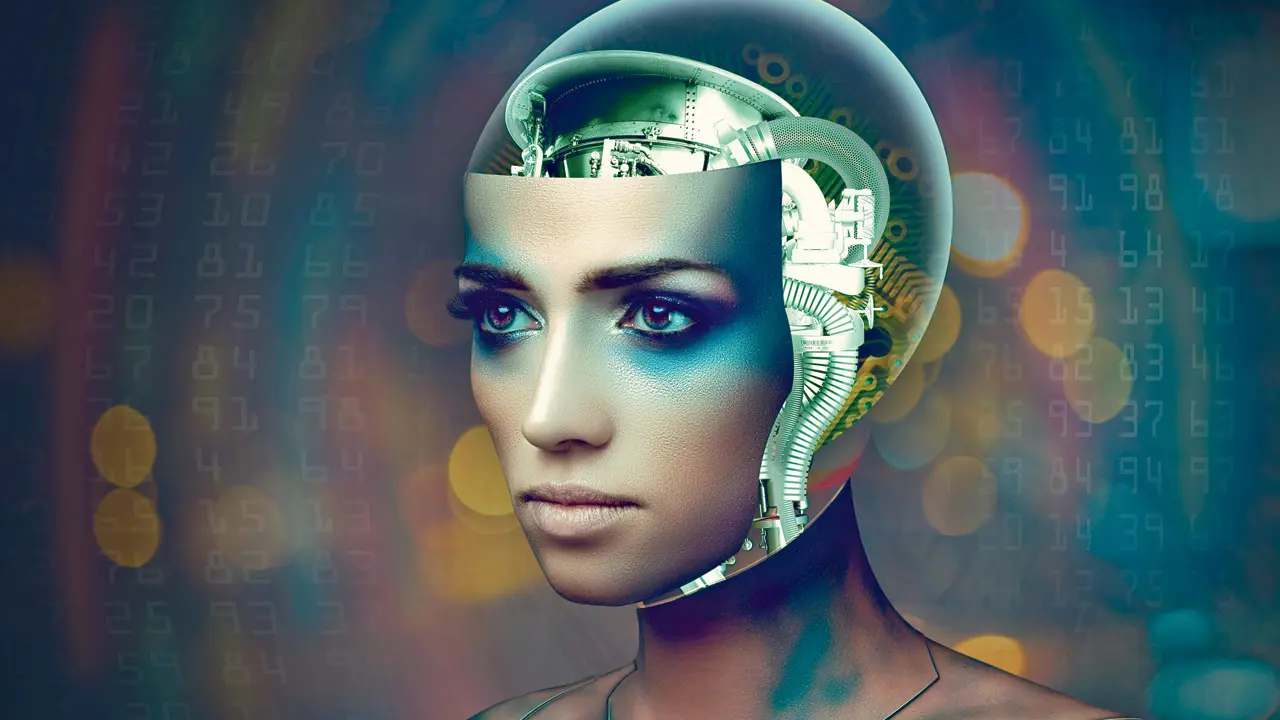
AI can now build the perfect woman. The question is: Who decided what perfect looks like?

PICS/ISTOCK
She has radiant skin, but no pores. She has a seductive figure, but no biology. She has millions of followers, but no heartbeat.
And she may soon take someone’s job.
Over the past two years, brands across the world have begun experimenting with AI-generated female models. Not cartoon avatars. Not animated fantasy characters. Photorealistic women designed to look aspirational, relatable and desirable — and endlessly adjustable.
They do not age. They do not negotiate contracts. They don’t take off because of periods. They do not have scheduling conflicts or reputational risks. If engagement drops, they can be recalibrated. If a campaign underperforms, their features can be modified and retested. They are not someone’s muse, they are data.
This is not a story about filters. Filters enhance reality. Generative AI replaces it. And that replacement shows a substitute: the industrialisation of femininity.
For years, ideas of beauty came from films, glossy magazines, and later from social media. These standards were often strict and unfair, but they were still tied to real people. Models grew older. Influencers had bad days. Bodies changed. Time left its mark. There were natural limits no one could escape.

Artificial Intelligence removes limits. Today, software can create thousands of highly realistic female faces in seconds. These images are not just art. They are products that can be tested, measured, and sold.
Digital marketing already runs on hard numbers — click rates, watch time, conversion percentages. Every image is judged by performance.
According to estimates by McKinsey & Company, generative tools could add between $2.6 trillion and $4.4 trillion each year to the global economy. Marketing and sales are expected to be among the first areas to feel this impact.
In that system, even a small rise in engagement makes a difference. When attractiveness can be measured, it can be improved. And once it can be improved, it can be repeated at scale.
Virtual influencers such as Lil Miquela have already worked with major fashion brands and built millions of followers. According to Statista, the global influencer marketing industry has crossed $20 billion in recent years and is still growing fast. India’s creator economy is also expanding quickly, with millions of young women earning through digital visibility. Now imagine competing with something that never gets tired. That is where the change stops being small and starts affecting the entire system.
For most of history, women compared themselves to other women. The comparison could be harsh, even cruel, but it was human. A real body carries fatigue, hormonal cycles, childbirth, ageing, illness. It exists within time. An algorithm does not. If a more symmetrical face brings even a small rise in engagement, it gets adjusted that way. If a certain body type leads to higher cosmetic sales, it gets repeated again and again. If one look works better in a particular region, it is adapted there immediately.
The “ideal” no longer changes slowly through culture. It changes through constant feedback. What gets more clicks gets repeated. What gets repeated becomes normal.
Research in media psychology has long shown that repeated exposure to idealised images can affect body satisfaction and self-image. Social media intensified this by making comparison endless and immediate. Now even that last bit of resistance is fading. The ideal face may not belong to any real person. It may come from patterns pulled from past preferences and refined for performance.
Technology does not create bias out of thin air, but it can magnify what already exists. These systems learn from huge volumes of Internet data — data shaped by decades of unequal representation around skin tone, body type, age and desirability. When those patterns are absorbed and reproduced at scale, they risk becoming the default.
Beauty turns into a system. And systems do not argue. They simply run — through feeds, recommendations and advertisements — quietly deciding what is seen and what is not.
On Women’s Day, we often focus on visible barriers — equal pay, leadership roles, access to funding, participation in science and technology. But this new phase of technology adds something: it begins to influence the very rules of attraction.
If desirability can be programmed, then those who write the code help define what becomes normal.
A small number of technology platforms control the most advanced image-generation tools and the channels through which content spreads. Their decisions — what data is used, what kinds of faces are favoured, what limits are set — can change beauty standards across countries.
For many young women, an online presence is not about vanity. It is about brand deals, business opportunities and financial independence.
If digital personas get more engagement, ad money will follow. Markets reward results, not people. At the same time, these tools lower costs and widen access. A designer or student can create professional work without a studio. Opportunity grows — and so does competition. But so does pressure.
When perfection can be produced endlessly, expectations rise. Ageing, asymmetry, and ordinary variation can start to look like flaws instead of natural traits. The comparison is no longer with a celebrity supported by lighting and makeup teams. It is with a digital model constantly adjusted for higher performance.
There is an irony here. As digital perfection becomes common, authenticity may become rare. A face marked by lived experience, a body formed by time, an expression formed by memory — these may stand out because they cannot be programmed.
The question is not whether new technology supports or harms women. It is whether women are helping design the systems that influence global standards of femininity — or simply adapting to results created elsewhere.
Once attraction is programmed, it stops being only cultural. It becomes technical. And technical systems, if left unquestioned, can reset norms faster than society can respond.
The most followed woman online may not even exist. What matters more is who is building her — and what that means for the very real women watching.
Nishant Sahdev is a theoretical physicist at the University of North Carolina at Chapel Hill, US, AI Advisor and the author of the forthcoming book The Last Equation Before Silence.
Subscribe today by clicking the link and stay updated with the latest news!" Click here!