Home / Sunday-mid-day / Article /
Namaste London
Updated On: 05 September, 2021 08:49 AM IST | Mumbai | Jane Borges
A new book chronicles 500 years of Indian immigration to Britain, introducing us to a wide cast of characters, including servants, educators and intelligentsia, who once made the imperial city their home





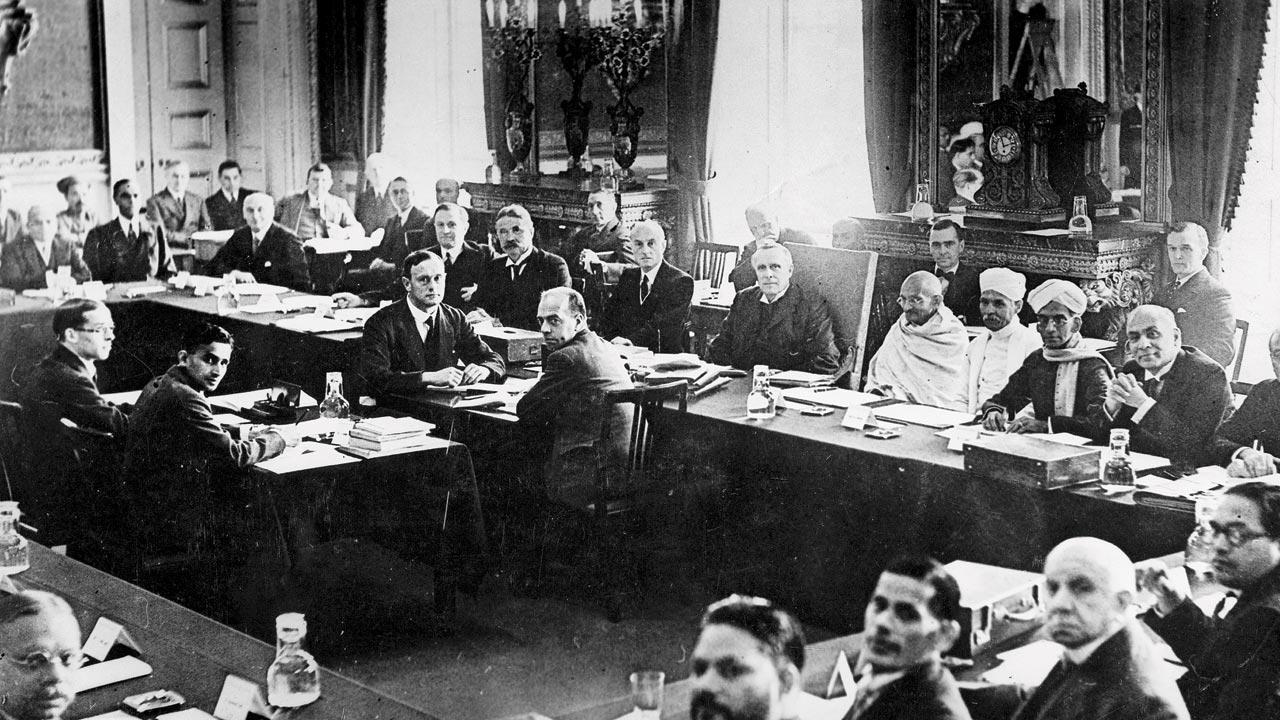
Mahatma Gandhi seen at the Second Round Table Conference in London in 1931, to discuss constitutional reform in India. Pic/Getty Images
Arup K Chatterjee’s “training in imagining London”, he admits, began quite early in his life. “I was maybe seven or eight years old,” remembers the associate professor at OP Jindal Global University, of the time he was acquainted with the works of Charles Dickens, Sir Arthur Conan Doyle and later William Shakespeare and Jane Austen in school. These stories, set in the imperial city, helped him realise a place otherwise, unfamiliar to him. Later, as an undergraduate, he came across Amitav Ghosh’s Shadow Lines. “The novel featured London and its protagonist [in London] quite centrally. It was very interesting [for me] to see how a post-colonial protagonist in independent India was helping us imagine not an Indian city, but a foreign city that was central to India’s [colonial] past, but not [part of] its geography,” he says in a telephonic interview.
It was not until 2014 that Chatterjee, who received a Charles Wallace fellowship to the United Kingdom, got to visit the city that had captivated him all through his growing up years. His interests in the history of British imperialism, politics and philosophy, and cultural and historical encounters with India led him to chronicle 500 years of Indian immigration to Britain, specifically the city of London, the beating heart of the empire. The result is a new tome, Indians in London (Bloomsbury India), which has been over three-and-a-half years in the making.
Trending Stories
Latest Photos
Latest Videos
Latest Web Stories
ADVERTISEMENT

Ganeshotsav 2026

ADVERTISEMENT