Home / Sunday-mid-day / Article /
'Not Muhammad Mir Khan; it's Shah Jahan'
Updated On: 25 October, 2020 07:30 AM IST | Mumbai | Jane Borges
Veteran British art curator Jeremiah P Losty studies a previously unpublished collection of miniature paintings from an Indian textile collector couple and finds rare works that help debunk historical errors.





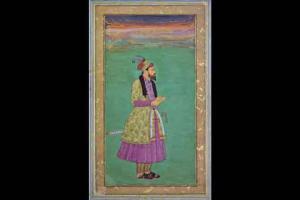
Shah Jahan at the age of about 40; Mughal, 1690u00c3u00a2u00c2u0088u00c2u00921700. PICS COURTESY/Court & Courtship: Indian Miniatures in the TAPI Collection, Niyogi books
As a horse instinctively and blindly runs to his stable, our eyes invariably travel to the textile and pattern seen in a work of art—be it the Indus Valley priest dressed in the trefoil pattern garment, or a Chola bronze with a floral meander on the lower garment, or in Mughal, Deccani, Rajasthani or Pahadi miniatures," says veteran collector Shilpa Shah about the love for textiles she shares with husband Praful Shah. "We immediately ask ourselves, 'Could this pattern depict an embroidery? Or is it kalamkari or block print? Does the emperor's striped pyjama in a Mughal painting, represent a mashru?'"
This curiosity for textiles led the Mumbai-based couple to discover miniature paintings, which, Shilpa says, reflect the plethora of textiles used in costumes, and as tents, canopies and floorspreads in pre-colonial and colonial India. This made the paintings perhaps the only literary and visual record that existed prior to the British documenting the textile crafts of India. "It is an invaluable resource for visual evidence of textiles," she adds.
Trending Stories
Latest Photos
Latest Videos
Latest Web Stories
ADVERTISEMENT

Ganeshotsav 2026

ADVERTISEMENT