Home / Sunday-mid-day / Article /
What makes colonial-era pyaavs in Mumbai unique
Updated On: 28 October, 2018 08:33 AM IST | Mumbai | Jane Borges
With restoration of Mumbai's colonial-era pyaavs underway, we find out what makes these waterholes unique





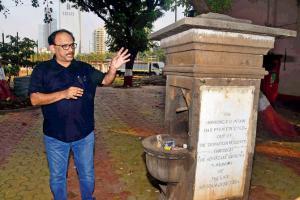
Rahul Chemburkar at the Ramji Sethiba Pyaav. Pics/Atul Kamble
Picture this: We are at Horniman Circle in Bombay of the late 1800s. It's a scorching, hot afternoon ub May, and unlike the overpopulated megalopolis that the city is today, this township is sparse with human traffic at its bare minimum. At one end of the circle, a crowd of long-distance travellers, baniyas, and brokers has gathered around a pyaav, a drinking water fountain, which is hidden under the shade of a banyan tree. The men appear to be engaged in an animated discussion, with the drinking space serving as the platform.
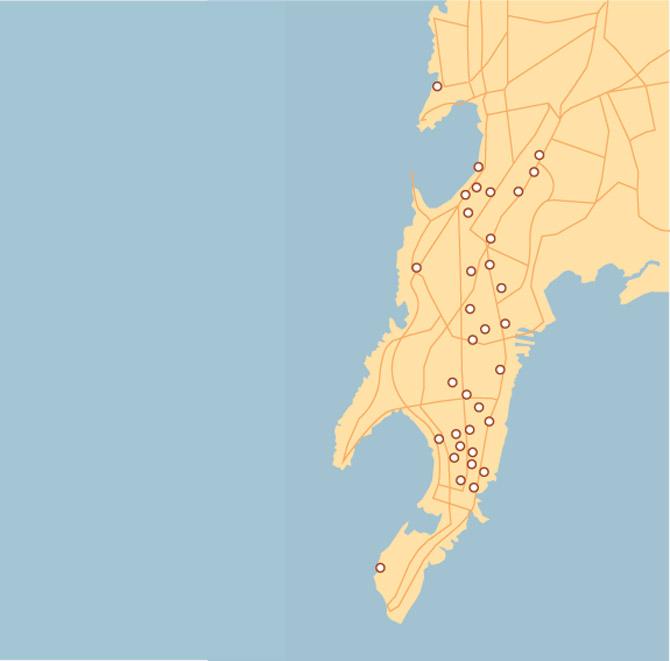
The Pyaav Map of Mumbai COURTESY/Vaastu Vidhaan Projects Graphic/Uday Mohite
Trending Stories
Latest Photos
Latest Videos
Latest Web Stories
ADVERTISEMENT

Ganeshotsav 2026

ADVERTISEMENT