Home / Sunday-mid-day / Article /
What makes idyllic Saraswati Baug, home to NKGSBs in Jogeshwari special
Updated On: 08 September, 2019 07:56 AM IST | Mumbai | Jane Borges
In its 100th year, the North Kanara Goud Saraswat Brahmins of Mumbai reveal their best kept secret, which even made Marathi writer PL Deshpande nostalgic





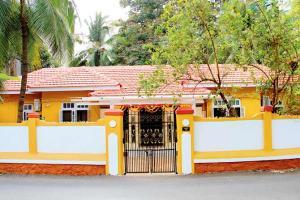
Built in 1936 by the famed Patki and Dadarkar architectural firm, Bhagvati Bhuvan, owned by the Wadekars, is one of the oldest bungalows at Saraswati Baug, Jogeshwari East. Pics/ Satej Shinde
Ninad Wadekar, 48, leads us into a circuitous pathway that opens into Saraswati Baug. Hugged by two-storey stone houses roofed over with Mangalore tiles, this idyllic township is located in Jogeshwari East and easy to miss. This is where the veteran Marathi writer and humourist PL Deshpande (or Pu La to his fans) spent his early years and one of the stories Balpanicha Kaal Sukhacha (Happy Childhood Days), in his memoir, Purchundi, is said to have been inspired by this society. Had he been alive, Deshpande would've been as old as the residential society that turned 100 on July 15 this year. The centenary makes Saraswati Baug, home to the North Kanara Goud Saraswat Brahmins (NKGSB), among the oldest cooperative housing societies in the city, after the Saraswat cooperative housing societies of Gamdevi and Santa Cruz.
Who are the NKGSBs?
The Goud Saraswats get their name from the mythical Saraswati river, that is said to have flowed parallel to the Indus, says Bharat Gothoskar, heritage enthusiast and founder of Khaki Tours. Over the centuries, the community has seen multiple waves of migration. The drying up of the river bed, led many to move to Kashmir, eastwards to Bengal and Bihar, and later, down south along the Arabian sea coast. Those who settled in the Konkan regions of Goa and Karwar (in north Karnataka), came to be identified as NKGSBs. Several members of this community moved again to parts of present day Maharashtra, including Bombay, as early as 1680, following the Portuguese Inquisition, residing in the old island city, says Gothoskar. Because of their natural flair for accountancy, they took up jobs of that nature. As the city expanded, a large part of the community shifted once again, this time to suburbs like Jogeshwari. This was early 1900s and Jogeshwari was still an undeveloped neighbourhood. The community purchased a plot of land from the Bombay Municipal Corporation and by 1919 it had built a society for its members.
Trending Stories
Latest Photos
Latest Videos
Latest Web Stories
ADVERTISEMENT

Ganeshotsav 2026

ADVERTISEMENT