Home / Sunday-mid-day / Article /
'Padmavati made her voice heard, defying the conqueror'
Updated On: 03 December, 2017 05:43 PM IST | Mumbai | Jane Borges
Like Sanjay Leela Bhansali, writer Anuja Chandramouli has chosen to interpret a 16th century poem on Rani Padmavati, and says her research proves it's downright laughable that Khalji's decision to capture Chittor was driven by anything than lust for





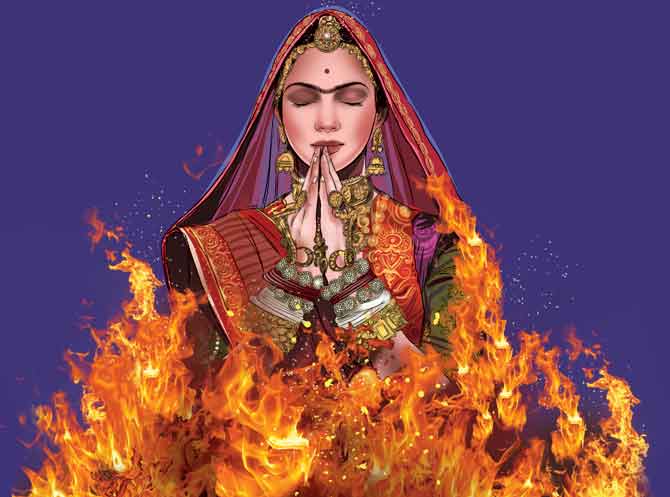
Until a year ago, the story of the 13th century Rajput queen Padmini, also known as Padmavati, belonged only to history. And, maybe, if Sufi poet Malik Muhammad Jayasi hadn't extolled her unparalleled beauty or the tragedy that befell her in his epic ballad Padmavat (1540 CE) three centuries after her death, this tale wouldn't have inspired Sanjay Leela Bhansali, who now finds himself at the centre of controversy for his depiction of the queen of Chittor. The voices of dissent, however, have done little to keep Chennai-based mythology fiction writer Anuja Chandramouli from pursuing the story. Her new book, Rani Padmavati (Juggernaut Books), seeks to give the queen her due as one who took on formidable odds and pushed the limits of courage. "What is happening to the movie is a crying shame," says Chandramouli of the Deepika Padukone-starrer. But, the good to have emerged from the embarrassment is the interest in unearthing her true story, she says. "Because, in my opinion, it is only when we take the trouble to remember the heroes and heroines of our past that their memories stay alive and the lessons they imparted, serve to light the way as we head into a troubled future."
Trending Stories
Latest Photos
Latest Videos
Latest Web Stories
ADVERTISEMENT

Ganeshotsav 2026

ADVERTISEMENT