Bombay used to party, Mumbai's catching up: How the city's partying habits have changed

21 June,2026 07:55 AM IST |  Mumbai  |  Akshita Maheshwari

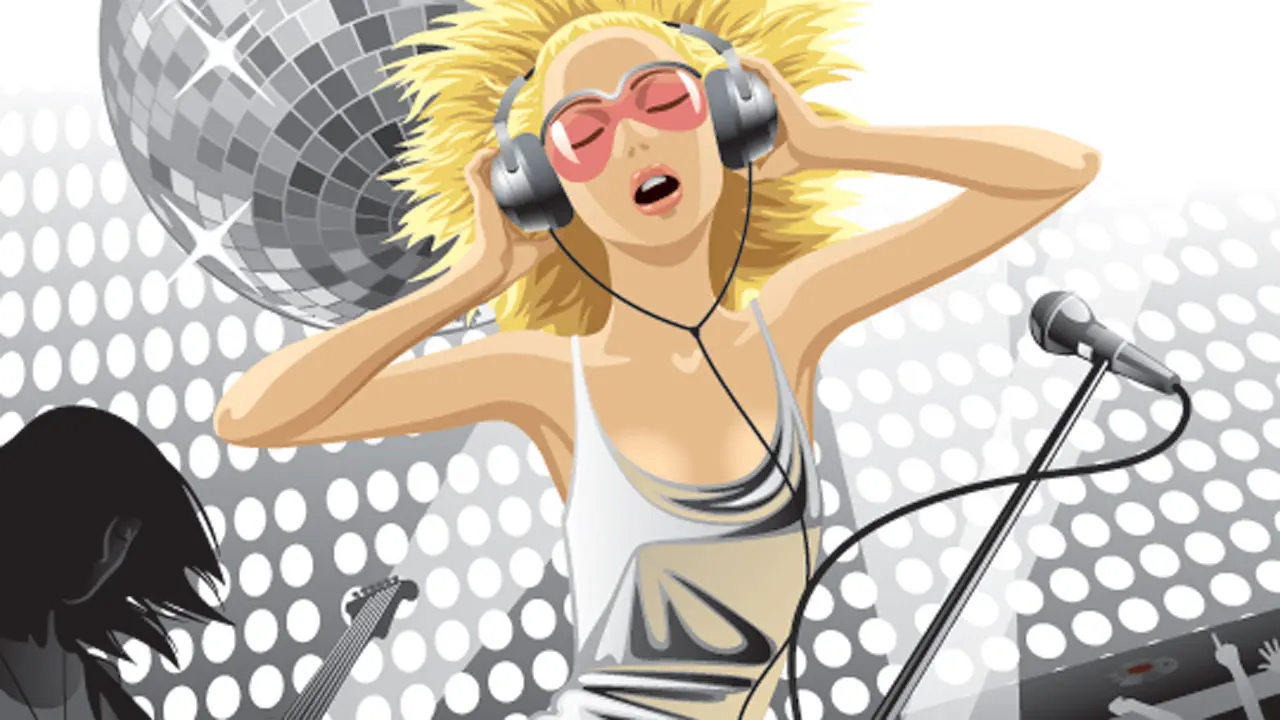
In the 1990s and 2000s, it was Lobby Bar, Hawaiian Shack, Zenzi, and Suzie Wong where locals and outsiders found their tribe, as they danced till 5 am. Today, a few partygoers of yore are trying to bring back that retro aesthetic (musical and stylistic), in a flashier, shinier new setting

Pic/iStock


Your browser doesn’t support HTML5 audio

The year was 1996 and Tejas Mangeshkar was 20 at the time. His grandmother "Baiji" Pramila Mangeshkar offered him a space in the balcony of her Mahim house for his new creative studio, Fiction Zone, which he later renamed GrandMother India, after her. "Our neighbouring building was called [St] Alvares House," Mangeshkar tells us, "It overlooked the Arabian Sea."

As they camped on the ground floor at fellow artiste Anand Tharaney's studio, above them was photographer Suresh Natarajan, Feroze Khan's theatre production company, and an advertising agency, "who were all like characters from Mad Men," he says.

Zenzi was the scene for many a cool people in Bandra. Founder Anil Kably shares footage of one of Zenzi's parties

"As India went through the liberalisation of the 1990s, we were exposed to international TV channels for the first time," says Mangeshkar, "Music videos entered Indian homes and inspired an entire generation. People changed the way they dressed, styled their hair, and expressed themselves. It sparked the rise of designers, hairstylists, filmmakers, artists, and other creative professions. A whole creative ecosystem began to emerge - and that ecosystem needed places to gather, connect, and party."

And party they did, at Alvares House. Mangeshkar's friends Mukul Deora and Ashim Ahluwalia, who were also his co-founders of the music collective Bhavishyavani Future Soundz, would bring back CDs and cassettes from London and New York. "They were importing fresh drum and bass, jungle, electronic music, and ambient music into the city. The rest of us were introducing it to the people of Mumbai."

Back then, there were no cell phones or Internet. Mangeshkar and friends would make screen-printed flyers and leave them at places like Leopold, Mondegar's, Toto's Garage, Go Bananas, and Rock Around The Clock (RATC). Slowly, Alvares House became a hub for partying with the cool crowd. "Eventually the parties became overcrowded. We had more than 40 people turning up. At that point we realised the police would start noticing us," Mangeshkar says.

And so, it was time to move the revelry. "We deliberately chose places that weren't doing well because we didn't care about the venue's reputation," he says, "We cared about finding the right location - a place where the police wouldn't interfere, one that looked interesting."

DJ Russel is the chief of music at High Note

Mangeshkar says, "That was really the beginning of electronic party culture in Mumbai." The initial parties were at venues like Madness, Khar (now called Voltage), Scream in Vile Parle, Suzie Wong in Colaba, and Razzberry Rhinoceros in Juhu.

These parties became something of a legend for '90s Bombay. One Mangeshkar remembers vividly was called "Hitchhike to the party". "People had to reach a secret location using clues hidden around the city," he tells us, "Back then hitchhiking still happened. You could stand on Cadell Road or Marine Drive, stick out your thumb and somebody would offer you a ride. Taxi rides were expensive, so hitchhiking was part of youth culture. The whole party was built around that idea."

Girish ‘Bobby' Talwar and ACP Vasant Dhoble

Close by on Waterfield Road, another party was brewing at Zenzi. "Bandra has always just been cool. The catholic community informed how the place looked and felt architecturally and culturally. It had a distinct identity. Back then, there were many more cottages and standalone houses, and far fewer buildings," Anil Kably tells us, who opened the doors to Zenzi in 2004.

"During the early 2000s, a lot of younger creative people moved in to Bandra because they felt a kinship with the place. The rents were cheaper. It was tucked away from the linear structure of Bombay and had its own little culture," Kably says, "Zenzi happened to be there at the right time, with the right programming, the right vibe, and the right people."

Tejas Mangeshkar (left) at one of the first venues where he hosted parties (previously called Madness) with Mukul Deora (right). Pic/Satej Shinde

Zenzi became the place that welcomed everyone with a tie or just in shirts and flip-flops. "Eventually, it grew into the kind of place where you could just get off your couch at home and think, ‘I just want to go hang out.' People would come in for a beer and they would run into friends and other like-minded people. It became a kind of community by itself. It fed on itself in a way."

We ask him about his favourite memories. "To tell you the truth, the eight years of Zenzi were just one big blur. That's how good a party it was."

The partying scene was a small circuit in Mumbai in the 1990s. Everybody knew each other

Musician and founder of management company Rebellion, Girish "Bobby" Talwar, who created NH7 Weekender, was also partying it up in those days. After a long night of revelry at Razzberry Rhinoceros in Juhu, you could find him eating chinese food at Juhu Bus Stop.

"Back then, after partying you would hit up food joints that only opened in the night. I specifically remember a place called Rajput near Shivaji Park, and their most popular dish called ‘salty rice'," he tells us over a phone call from Portugal, "You'd often run into people you'd been partying with at a disco, at Churchgate Station eating pav bhaji or at Rajput eating salty rice."

He names a plethora of venues he frequented - Lobby Bar at Hotel Sea Rock, Bandra; J49, Juhu; The Cellar, Nariman Point; Avalon which was in the basement of Bawa International Hotel, Juhu.

In 2026, though, this writer can count these kinds of venues on her fingers. Sure, parties still exist. But where is the community? When do you get to bump into the same people, club after club? Where is the circuit of creatives who all live it up together? When did this city stop dancing?

Content creator Apoorva Mukhija (or @the.rebel.kid to her 44 lakh followers) laments this very loss in one her latest Reels, "Partying in India, especially in Mumbai, sucks. Clubbing culture is dead, nobody moves on the dance floor, everybody's constantly on their phones, and for some reason everybody wants to be behind the DJ booth. Clubbing is just not as fun as it used to be."

"It was definitely a more tolerant city back in the day," Kably says, "Today, you have phones. People can call you, track your location. You're constantly on social media. Back in the day, there was much more anonymity. You could let your hair down without worrying about being photographed."

As the clubs shut at 1.30 am, there is a growing anxiety to get home quicker. "There wasn't as much anxiety about meeting complete strangers back then," Talwar says, "People weren't constantly wondering about motives, incentives, or hidden agendas. It felt simpler."

As the city expanded, so did concerns around noise complaints. "This is also a city where residential and party areas are rarely separated," Talwar says, "I remember Hawaiian Shack in Bandra being located in the middle of a residential neighbourhood. People would come out at 1.30 or 2 am after a party and make noise on the streets. Naturally, local residents weren't happy about it."

DJ Russel, who is the chief of music at High Note now, says that back in the day, officially parties would end by 5 or 6 am, but unofficially they would go on till 10 am. "I've even reached home at noon," he jokes.

Russel's biggest problem: "I don't like the fact that we aren't present in the moment. Do you really need to capture this? You're missing out on a fun experience you could be having right now by putting that phone away," he says, "I'm going to see if I can start a no-phones-on-the-dance-floor policy at High Note."

Kably adds, "Things have become much harder to deal with. Kids today probably have more complicated things to navigate. You have access to how things work in every part of the world." Today's kids know what can go wrong before they even step into a club - your drink could get spiked, your friend could experience alcohol poisoning, or a stranger could touch you without consent.

The party never stops for the young, though. "It depends on how you define it," Talwar says, "For younger people today, alcohol is becoming less attractive because they're more conscious about health. Coffee culture is much stronger today than it was before. Coffee raves, festival culture, gig culture are at a peak. So young people are going out, but there are just many more definitions of a party now."

Mangeshkar chimes in, "Today, people talk about Bonobo, AntiSocial, and Khar Social. Back then we also had our equivalent spaces. That's why I often say that not much has actually changed. There are still people who want something different from the commercial birthday-party vibe."

"BDSM [Bhaijaan Dance Sound Machine], National Permit, our DJ collectives, still exist, alongside newer initiatives like Amhi Kon and Right to Dance," Mangeshkar says, "Some nights feel like the old days - DIY decor, homemade visuals, and a community-driven energy. The spirit of experimentation is still alive."

"At the end of the day, nightlife shouldn't simply exist as an escape from work stress. It should be a way of exploring culture, creativity, and human connection. That's what made those early years special," Mangeshkar signs off.

The cop who crashed the party

ACP Vasant Dhoble

For many, the death of the city's carefree nightlife arrived with ACP Vasant Dhoble. In 2012, his late-night raids on pubs and clubs, often conducted with a hockey stick in hand, turned him into Mumbai's most feared "moral cop" and a symbol of the crackdown on after-dark revelry.

A year of freedom, and dancing all night

Sunday mid-day editor Aastha Atray Banan remembers the year 2005 - when she was 22, out all night, all 365 nights of the year

I had come to Mumbai from Delhi and was working at a newspaper in Lower Parel's Todi Mills. But the party wasn't there - it was back in Bandra West. Every night, my soul sister for the year, S, and I used to first head to Hawaiian Shack on 16th Road around 10 pm. Entry was free for the ladies, and our choice of drink was a Coca-cola, unless someone bought us a drink.

My salary was a measly R10,000 then, half of which went in paying rent for my PG near Mehboob Studios.

But, we were young and tipsy on freedom that only Delhi girls value. The Shack played retro music till 1 am, after which we scooted on to Lobby Bar at Hotel Sea Rock. I usually went to sleep every night at 6 am, only to wake up at 1 pm to head to work. We made friends, we danced a lot, and we truly felt young, free, and safe that year.

A retro comeback

A few bars around the city are trying to bring back the good old days

Jeet Rana and Naville Timbadia

Every Thursday at Bonobo, Bandra, is a throwback to the founder Neville Timbadia's own party days at Ghetto. Timbadia tells us, "I still have my Ghetto gang. We still make sure to meet once a week," on their "Old school bar night", where the music transports you back to the '90s.

If Bonobo is taking you to the '90s, Punchline in Bandra Reclamation, wants to go back to the 1600s. "That's when the punch was first invented," says founder Jeet Rana. The bar plays retro music - from Boney M to Backstreet Boys. "We want people to come into the bar, sing with strangers, and make new friends, just like back in the day," he says. Although music still sets the vibe for every place, "today's customers want equal focus on the food and beverage elements as well. So, bars have moved towards that as well," Rana says.

A new club, with an old vibe

The places that shaped my youth, where I spent so much time listening to music and socialising, don't really exist anymore in the same way," says Shreyas Rathod, who is a born-and-brought-up Bandra boy. This Friday, he opened the doors to his brand new bar, High Note.

The moment we step into High Note, this writer can feel the ghost of many parties that happened here before. The bar stands at the very place where Bandra's first discotheque, Rock Around The Clock once stood - Hotel Metro Palace on Hill Road. "That's where I grew up. This is a full circle moment for me," says Rathod.

High Note is entering the market with a simple mission - bring the 1980s back. Bring back a time when partygoers stepped into a bar to immerse themselves into music, grab drinks that they couldn't get enough of, and dance like nobody is watching.

High Note's wall of fame of rockstars. Pics/Ashish Raje

In our tour, we spot the wall of fame that features music legends such as Freddie Mercury, Michael Jackson, David Bowie, among others, who are all reimagined to be military officers or royalty. Right next to it is the stage where a band will play live music every week.

Then we move to order our drink, and much to our amusement, the menu is called "Set list". Our drink is "Sound Check", a whiskey-based refreshing mix of lemon and coconut.

Delba Ponnappa, who is the head of guest experience and service excellence, says that a neighbourhood like Bandra just lends itself to the vibe of the bar. She says, "On Sundays, you'll call your mother and say, ‘Can you put the radio volume down? We're sleeping.' But your mother won't turn the music down."

Delba Ponnappa

"We will never play Bollywood or EDM," Ponnappa says, as she gives us a tour of the space, "We know who our target audience is, and they want to listen to '60s and '70s rock."

Rathod still thinks "the target audience is relatively small." "I think there is a fear that it won't work commercially, and that may be one reason why people don't start places like this," says Rathod, who is a first-time restaurateur, "For me, this has been driven by passion. Of course, I'm not saying I'm interested in making losses. But this is something I've started because I genuinely love it."

"Exciting news! Mid-day is now on WhatsApp Channels Subscribe today by clicking the link and stay updated with the latest news!" Click here!
mumbai Music musical concert Sunday Mid-Day Sunday Mid-Day update
Related Stories