A farewell to Sitara Devi
Updated On: 26 November, 2014 08:46 AM IST | | Kanika Sharma and Soma Das
Sitara Devi (1920-2014), who passed away yesterday, impacted India's dance landscape across eras. The fraternity salutes the icon





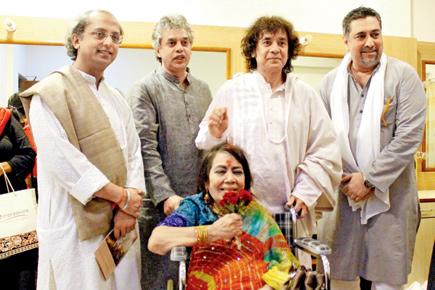
Sitara Devi (centre, seated) with (standing, left-right) Yogesh Samsi, Fazal Qureshi, Zakir Hussain and Sitara Deviu00c3u00a2u00c2u0080u00c2u0099s son, Ranjit Barot at a function in the city last year.
Uma Dogra
Kathak dancer
The first thing that comes to the mind is that for Kathak, the golden era has ended today. She has been performing since the British Raj, when there were no female dancers. She has contributed tremendously for women in dance, and is an inspiration. Whenever I think of Sitara Devi ji, a big, beautiful smile appears. She always wore beautiful-coloured sarees and believed in dressing well; you would never see her in dull shades. In a sense, she was a ‘bindaas’ dancer.

Sitara Devi (centre, seated) with (standing, left-right) Yogesh Samsi, Fazal Qureshi, Zakir Hussain and Sitara Devi’s son, Ranjit Barot at a function in the city last year. File Pic
She was the torchbearer of the Benaras gharana, which is the offshoot of the Lucknow gharana. Her father Sukhdev Maharaj ji learnt from Acchan Maharaj ji, and so did Sitara Devi ji. Benaras (now Varanasi) being the land of temples had a great emphasis on natya (dance). Hailing from the gharana, Sitara Devi ji, despite being 10-15 years older to Pandit Birju Maharaj, she would touch his feet as this is our parampara, where you honour your guru as she comes from the same gharana.
Trending Stories
Latest Photos
Latest Videos
Latest Web Stories
ADVERTISEMENT

Ganeshotsav 2026

ADVERTISEMENT