Home / Mumbai-guide / Things To Do / Article /
Finding Bombay in Bora Bazaar
Updated On: 22 February, 2020 09:00 AM IST | Mumbai | Fiona Fernandez
The third edition of Walk With mid-day gave readers an all-access pass into the 139-year-old Bazaar Gate Police Station before criss-crossing the 19th century commercial hub with varied places of worship in a precinct largely untouched by time



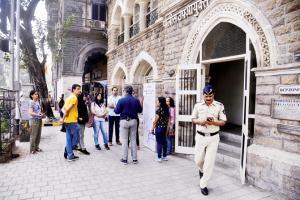
The group outside Bazaar Gate Police Station DCP Zone-1 for an introduction. The site stands near the original Bazaar Gate, one of the three gates that made up the Fort walls; the other two being Apollo Gate and Church Gate. Pics/Pradeep Dhivar
It was high noon on a Saturday. A few Kutchi shopkeepers had rolled down their shutters to beat the heat; in another shop, a group of Marwari traders dug into their multi-tiered tiffins while chatting about 'dhanda'. A walk through Bora Bazaar opposite CSMT with a select group of mid-day readers marked the third edition of this newspaper's curated series, Walk with mid-day, offering the participants a sense of what life might have been like in the 1800s when this was a buzzing commercial hub dominated by mercantile communities invited by Governor Sir Bartle Frere to trade in Bombay, then an emerging city. It was Frere who decided to bring down the walls of the original Fort that protected the city from attack, to open it up for a growing population. Since then, the area's character has remained largely unchanged.
The walk began at the 139-year-old Bazaargate police station DCP Zone-1. Fiona Fernandez, mid-day's Features Editor and author discussed the building's significance; its proximity to where the original Bazaar Gate stood — one of the Fort's three entry points, besides Apollo Gate and Church Gate. UNESCO award-winning conservation architect Vikas Dilawari, who restored the police station last year, guided the group through its insides to share how the site was brought back to its original glory. DCP Sangramsinh Nishandar, pivotal to the restoration, invited the group to an interaction at his office over tea, after which the group walked straight into the bustle and grime of the narrow streets around, soaked in the sights, smells and sounds of the original mercantile city. The trail was marked by stops at the intricately carved Shantinathji Jain Derasar, the 1733-established Maneckji Sett Agiary, and the Sumerian-influenced Wadia Clock Tower and Water Fountain.


How do you like the new new mid-day.com experience? Share your feedback and help us improve.
Trending Stories
Latest Photos
Latest Videos
Latest Web Stories
ADVERTISEMENT
Mid-Day Fast
ADVERTISEMENT

ADVERTISEMENT