Home / Mumbai / Mumbai News / Article /
FSSAI explains colour test for possible ghee adulteration, warns against home experiments
Updated On: 13 October, 2026 07:23 AM IST | Mumbai | Abhitash Singh
Food safety regulator shares a colour-based check for possible adulteration of ingredient with cheaper fats





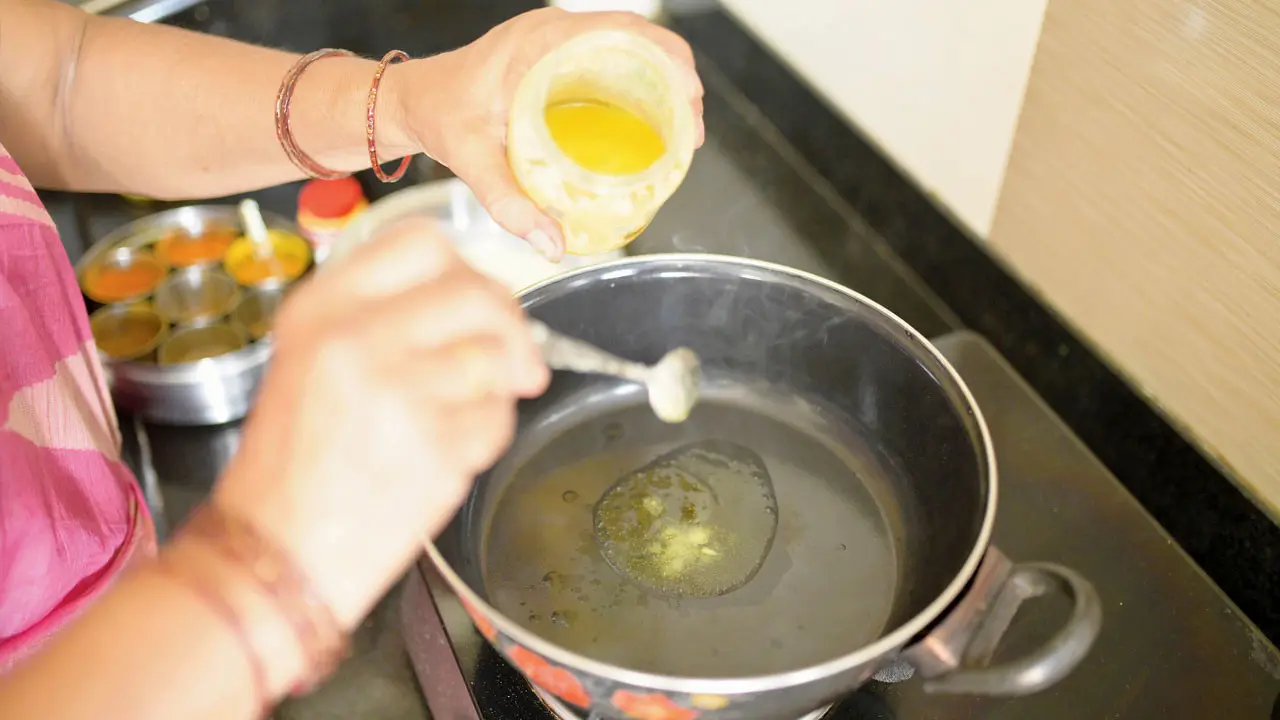
Adulteration can involve the mixing of cheaper fats or oils with ghee, affecting its quality and authenticity. Representation Pic/iStock
That spoonful of ghee added to your dal, roti or khichdi may not be as pure as you think. The Food Safety and Standards Authority of India (FSSAI) has shared a simple test to help consumers identify possible adulteration of ghee with vanaspati or hydrogenated edible fats.
The test relies on a colour change. According to the demonstration shared by the food safety regulator, a sample of melted ghee is mixed with concentrated hydrochloric acid and sugar. A crimson-red or pink colour in the acid layer indicates possible adulteration, while pure ghee shows no such colour change in the demonstration.
Trending Stories
Latest Photos
Latest Videos
Latest Web Stories
ADVERTISEMENT

Ganeshotsav 2026

ADVERTISEMENT