Home / Mumbai / Mumbai News / Article /
Has the BEST impasse really ended?
Updated On: 19 February, 2019 06:20 PM IST | Mumbai | Madhav Pai
For Mumbai's bus service to survive, the BMC must rise above partisan politics and invest capital and attention in it





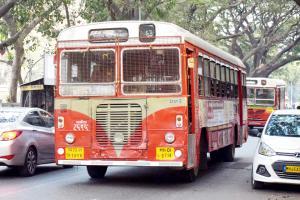
BEST needs to seriously overhaul its operations if it has to stay afloat and relevant. File pic
A nine-day strike by Brihanmumbai Electric Supply and Transport (BEST) employees in January cost the operator up to Rs 20 crore and inconvenienced nearly 25 lakh commuters. Its timing coincided with the operator running out of the R1,600-crore loan it received from the Brihanmumbai Municipal Corporation (BMC) in 2012. The strike was called off following a high court directive to provide a 10-step salary hike to the employees. While this measure has offered interim relief, there is little clarity on how Mumbai's only bus service plans to solve its financial challenges and stay on track.
Today, four primary narratives surround BEST:
Loss making: In 2016, the financially-strapped BEST commissioned PricewaterhouseCoopers (PwC), a global financial consulting firm, and Aakar Architects and Consultants (AAC), to undertake a study on commercial development of its bus depots, stations and staff quarters. PwC's report suggested that BEST could exploit 30-50 per cent of its plots to earn a revenue over R3,000 crore. We have seen Mahim depot developed and others are in discussion. Despite such measures to keep afloat, the bus service struggles to survive. The BMC has an overall budget of R27,000 crore and a road maintenance budget of R2,000 crore. At a time when cities the world over are looking at bus-based transport to reduce pollution and congestion, it would seem reasonable that the BMC allocates about R750-800 crore to run the bus service.
Trending Stories
Latest Photos
Latest Videos
Latest Web Stories
ADVERTISEMENT
Mid-Day Fast
ADVERTISEMENT