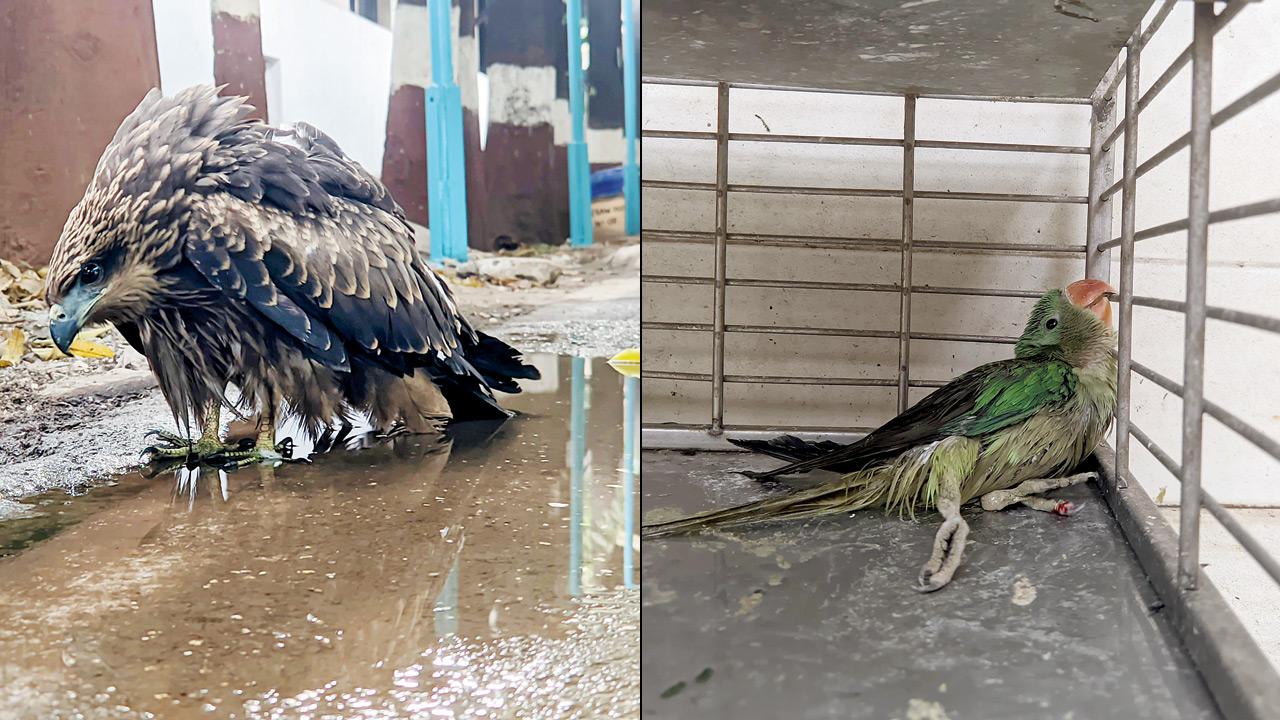
Intense summer heat has affected the animal species, particularly birds, causing dehydration and other heat-associated illnesses

A black kite cooling near shade and water (right) A parrot recovering from dehydration
As the hottest stretch of the year approaches, birds in the city are struggling to cope with extreme heat even as animal hospitals are regularly receiving cases where dehydrated and exhausted birds are falling from heights, ending up getting injured.
Mayur Dangar, manager at Bai Sakarbai Dinshaw Petit Hospital for Animals, shared, “For this month, the hospital has already received 72 cases of birds and 18 cases of dogs and cats involving dehydration. This figure is alarming because last year we received around 70 such cases across the entire month of March.”
Dogs, cats also at risk

An injured and dehydrated barn owl (right) A dehydrated crow resting
Although it’s tough to single out dehydration as a key factor in cases of dogs and cats compared to the birds, it is very common for them as well to experience increased fatigue during heat waves. Dogs and cats make up 20 per cent of dehydration cases at Petit Hospital.
Commonly reported heat-stress cases include...
>> House sparrow
>> Rock pigeon (blue rock pigeon)
>> Black kite
>> Common myna
>> Barn owl
>> Parakeet

A community dog at Petit Hospital (right) An exhausted cat receives treatment. PICS/BY SPECIAL ARRANGEMENT
Birds suffering from heat stress show several visible behavioural and physical signs...
>> Open-mouth breathing (panting)
>> Drooping wings
>> Lethargy or weakness
>> Reduced movement
>> Moderate stress
>> Sitting still on the ground or balcony
>> Unable to fly properly
>> Eyes partially closed
>> Rapid breathing
>> Collapse or unconsciousness
>> Trembling or seizures

Petit Hospital staff rescue a Brahminy kite
Doctor speak
Dr Shahir Gaikwad, Associate professor of surgery, Mumbai Veterinary College, and I/C Surgery Ward, BSDP Hospital
‘There has been a spike in bird rescue calls during intense summer heatwaves. Most rescue calls tend to come from South Mumbai and dense urban and suburban zones, especially where green cover and natural water sources are limited’
Citizen rescue
Harshita Charatker, a resident of Ambekar Nagar, found a barn owl fallen on a road near her building on Thursday. She, along with her family, rescued the bird. “We tried calling different animal helplines, but the calls were not going through. We have been bird parents in the past, so we were well equipped for the rescue,” said Charatker.

Harshita Charatker and family, who rescued a fallen barn owl
Steps citizens can take to help birds
Step 1 Move the bird to shade; place it in a cool, quiet area away from predators (cats, dogs)
Step 2 Reduce body temperature; sprinkle room-temperature water lightly on the bird; wrap it gently in a cool damp cloth if necessary.
Step 3 Do not force-feed water; do not pour water directly into the beak (risk of choking)
Step 4 Let the bird rest; many birds recover after cooling and hydration
Step 5 Contact rescue service
Simple citizen actions like placing water bowls can save thousands of birds every summer. If the bird cannot stand or fly after 30-60 minutes one must contact the Forest Department Control Room: +91 81049 26313
90 cases of dehydration within first 13 days of March
32 pigeons
2 parrots
12 crows
4 owls
22 kites
12 dogs
6 cats
*Data is as of March 13, 2026.
Subscribe today by clicking the link and stay updated with the latest news!" Click here!