Home / Mumbai / Mumbai News / Article /
Mumbai: Shamshan at Worli gets Rs 40 crore facelift
Updated On: 11 October, 2020 05:43 AM IST | Mumbai | Jane Borges
Two doctor brothers, whove spent nearly four decades providing dignified last rites to the dead, and a team of ace architects are behind a Rs 40-crore project at Worli Samshan Bhumi, inspired by Japanese crematoria





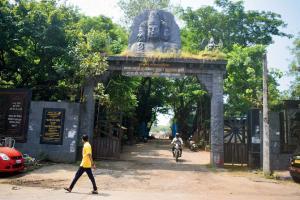
The Worli crematorium, later renamed Mata Ramabai Ambedkar Worli Samshan Bhumi, dates back to nearly a century. The existing crematorium was built in 1994, and restored in 2000. Pics/Ashish Raje
How do you say goodbye to the departed? The question has been at the heart of the work of Mumbai-based siblings, Dr Ramnik and Dr Bharat Parekh. It began 38 years ago, when they lost their father, Hiralal Parekh, in a tragic accident. "His body was taken for a post-mortem. When it was handed over to us, we had to find a sheet to cover it since it was returned without clothes on," remembers Bharat, a senior radiologist. To add insult to injury, the ambulance ferrying the mortal remains from the morgue, broke down at Dongri. The grieving family was forced to wait for another vehicle to transfer the body. The incident, if anything, made the Parekhs realise how insensitive and shoddy the process was. "Even the dead deserve dignity," says Ramnik, an emeritus member of the International Commission on Occupational Health. It led Ramnik to register the Hiralal Parekh Parivar Charity Trust in 1982, and start Antim Samskar Seva, a community service that helps bereaved families from different faiths and communities in Mumbai perform last rites for their loved ones. The trust has helped over 14,000 families.
Despite being lauded for their efforts, at the back of their minds, the Parekhs felt that their work was far from complete. The brothers had first-hand observed the decrepit and unkempt conditions of crematoria across the city. Apart from being poorly maintained, mounds of floral and plastic waste, as well as logs of wood were often strewn within the premises. Lack of green cover also meant increased toxicity in the air, due to emission of carbon dioxide from burning of wood. The issue has been a point of contention even in the court of law. In 2016, the Delhi High Court, moved by the "horrific and terrible sights" at crematoria and burial grounds in the national capital, had called for their urgent maintenance.
Trending Stories
Latest Photos
Latest Videos
Latest Web Stories
ADVERTISEMENT

Ganeshotsav 2026

ADVERTISEMENT