Home / News / India News / Article /
The fall of the sparrow
Updated On: 10 May, 2015 06:45 AM IST | | Anand Pendharkar
As toddlers, the house sparrow tops the list of birds we were introduced to in our childhood





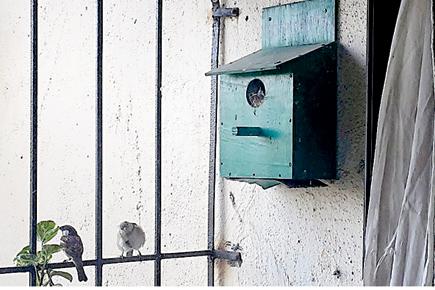
It is easy to create a breeding space for house sparrows by setting up a feeding plate at a balcony
 As toddlers, the house sparrow tops the list of birds we were introduced to in our childhood. Our memories of the bird include the time we refused to finish our food and mothers and grannies warned us about the little sparrow that would eat the morsel.
House sparrows are known by many local names — Chimni/Chiu (Marathi), Guraiya (Hindi), Chakli (Gujarati) and are associated with fertility, familiarity, agriculture and civilisation. Although house sparrows are originally from the Middle East and went on to occupy parts of Eurasia and North Africa, today they inhabit suburban regions. House sparrows avoid dense rainforests, extremely cold and warm deserts and the Polar Regions — in fact, they thrive in the saline and dry areas of our country. Over the years, they have been accidentally introduced into the North and South Americas, South and Western Africa, Australia, New Zealand and many other islands, giving them the distinction of being the most widely distributed 'wild bird' in the world.
Trending Stories
Latest Photos
Latest Videos
Latest Web Stories
ADVERTISEMENT

Ganeshotsav 2026

ADVERTISEMENT