Dev bhasha pe charcha
Updated On: 27 May, 2021 04:38 PM IST | Mumbai | Sumedha Raikar Mhatre
A Sanskrit scholar and academician, through his online classes, is exploring the possibilities of a living language, otherwise relegated to theological discourse





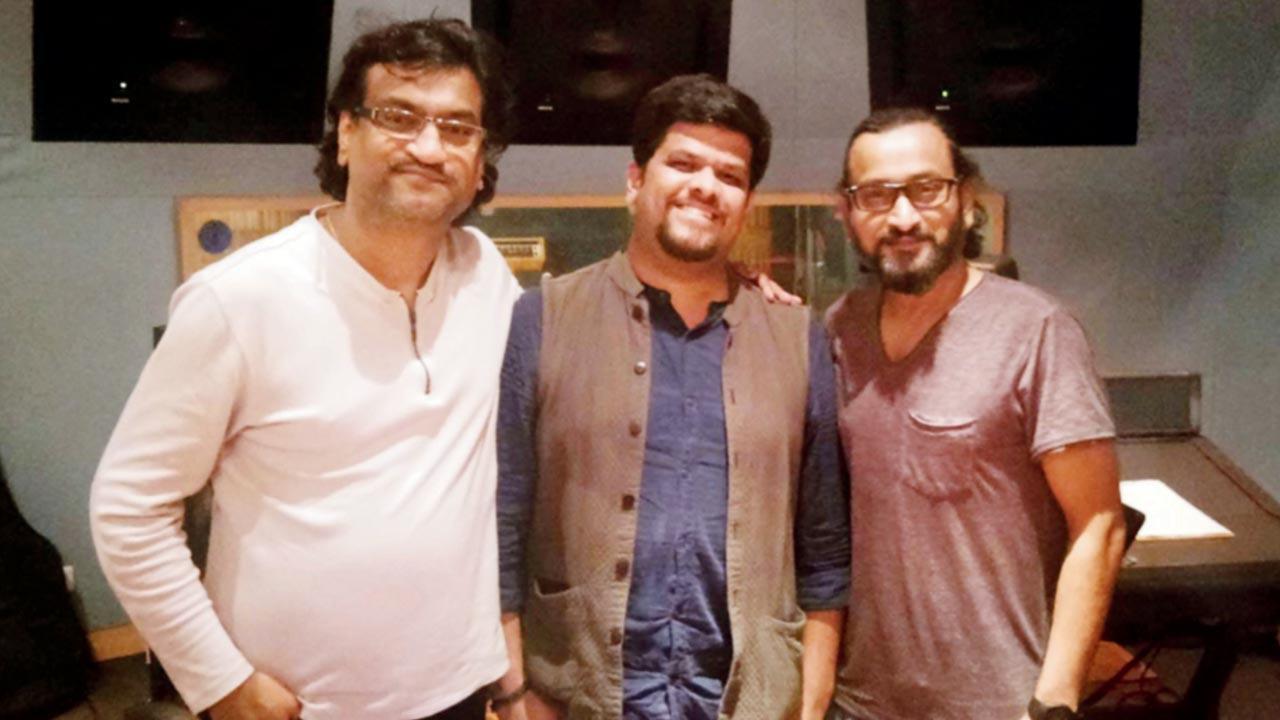
Hemant Rajopadhye with Ajay and Atul
 A serious-minded bespectacled patriarch, who occasionally administers the neighbour’s satyanarayan pooja and quotes moral science from sixth century AD treatise, Niti Shataka: This kind of stereotyped Indian Sanskrit scholar is not acceptable to Hemant Rajopadhye. He is opposed to treating a living language like an exotic herb—a lesson he underlines for students, even those currently enrolled in his online modules on Indian religiosity in the context of classical Sanskrit texts.
Rajopadhye’s Dharma Charcha classes urge the modern-day student to scrutinise the political power and social authority wielded by the Vedas, the Puranas, the epic creations of Ramayana and Mahabharata, in order to better understand the Indian subcontinent. “If we see Sanskrit as a bridge to get to the core of the Indic religious identity, we will enjoy its full potential. Otherwise, it will be restricted to token unintelligible fundamentalist rituals and pedantry,” says the Erasmus Mundus doctoral fellow, who has studied Indology at the University of Gottingen, Germany. His thesis focuses on public memory about the Dattatray Sampradaya in the Marathi-speaking region.
Trending Stories
Latest Photos
Latest Videos
Latest Web Stories
ADVERTISEMENT

Ganeshotsav 2026

ADVERTISEMENT