Ending the fast
Updated On: 24 July, 2022 07:16 AM IST | Mumbai | Devdutt Pattanaik
This made him realise that extreme torture of the body does not lead to enlightenment



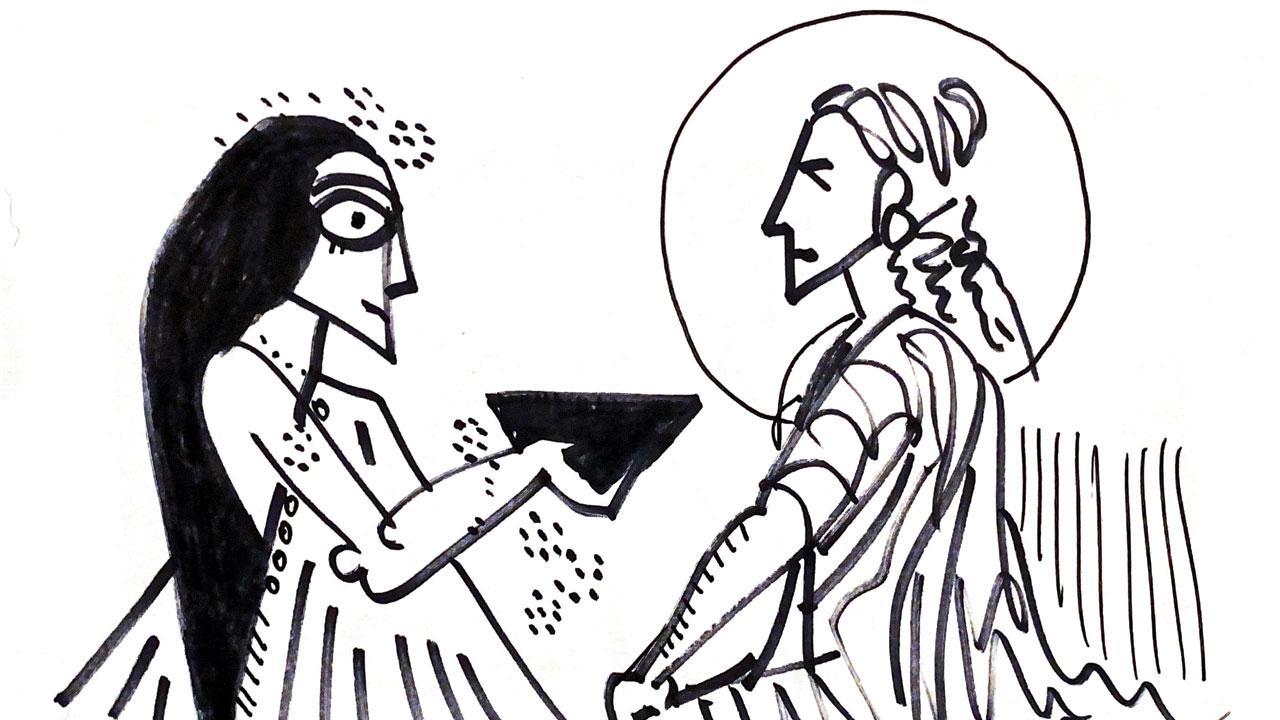
Illustration/Devdutt Pattanaik
 Fasting is a very important spiritual practice. It is about denying the body the pleasure it seeks. It is supposed to earn merit and help us rise up in the karmic ladder. This thesis is an essential part of Buddhism, Jainism and Hinduism. And so, in all three traditions, there are many stories related to fasting, and to breaking the fast. For example, in his initial search to find the answer to life’s suffering, Siddhartha Gautama was advised by monks to fast. While fasting, he became so weak that he could barely walk. At this time, a woman called Sujata fed him rice cooked in milk, and nourished him to health. This made him realise that extreme torture of the body does not lead to enlightenment.
Later, when he achieved enlightenment, Buddha was given food by two travelling merchants. They had been stopped on their path by a celestial being, who revealed that by serving the Buddha food, the merchants would attain merit, which would bring them prosperity in life. These two merchants fed the Buddha and received his hair from him; using this hair, they built Stupas. One of the merchants then spread Buddhism to the northern part of the world: to Gandhara and the bulk region. The second took it to the southern region: to Amravati, Sri Lanka, and Burma.
Trending Stories
Latest Photos
Latest Videos
Latest Web Stories
ADVERTISEMENT
Mid-Day Fast
ADVERTISEMENT

ADVERTISEMENT